
What does a drone look like at night and what is worth knowing about flying at night?
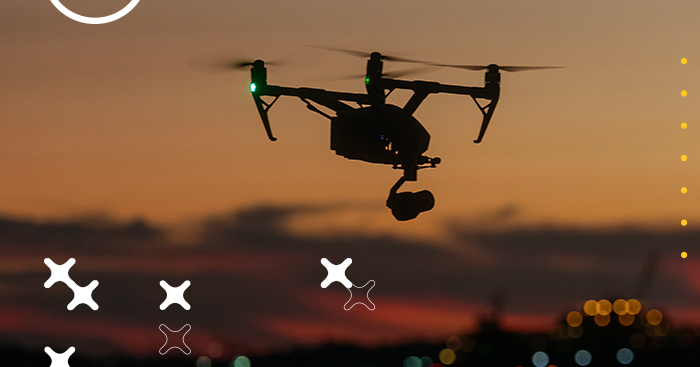
Night is a very different environment for drones than daytime. When the lights go out, UAVs must rely on other sources of data - standard cameras and sensors are no longer enough. The drone's low-light cameras allow it to capture images in minimal light conditions, which is crucial in police and rescue operations. However, it is worth knowing what the drone looks like at night, what the operator sees, and what the drone itself "sees" using its sensors.
Police drones - specifics and equipment
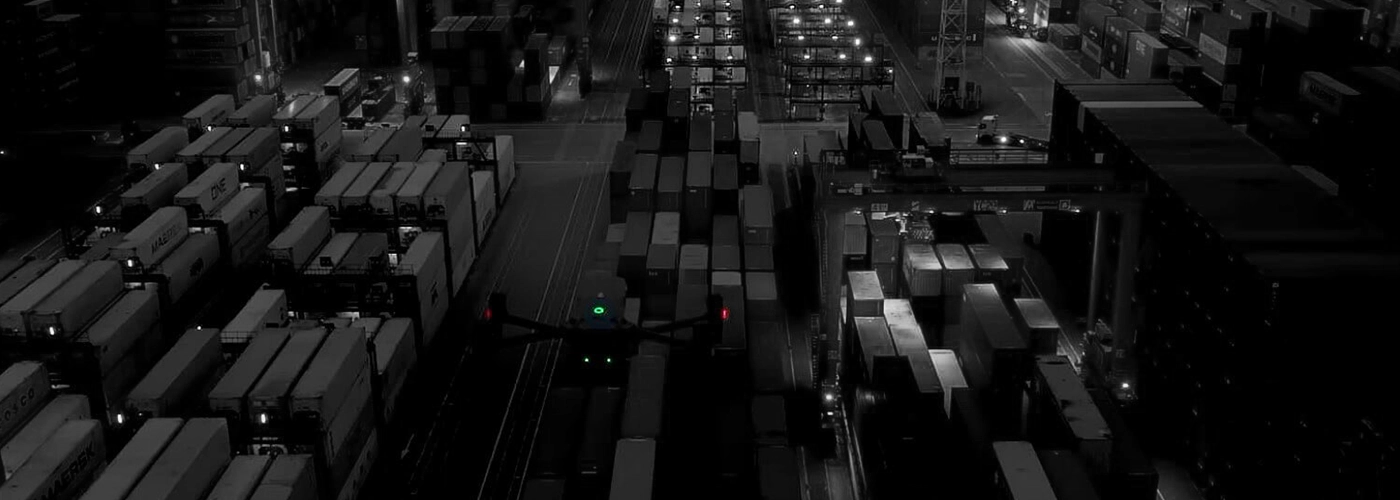
What police drones are used for? Night operations
Police drones are used in many activities. Their main tasks are site observation, intervention support and monitoring of major events. In addition, night drone applications include search for missing persons, border patrols, and inspection of power lines and pipelines. This, in turn, translates into real benefits for the services - faster detection of threats, better orientation and the ability to act where humans do not have access.
What the control looks like in night conditions? Currently, in most cases human participation is minimal, and the flight path is controlled by the hardware and its software. Drones equipped with GPS systems and automatic navigation algorithms can accurately conduct missions without direct operator supervision.
Night vision cameras in drones - types and capabilities
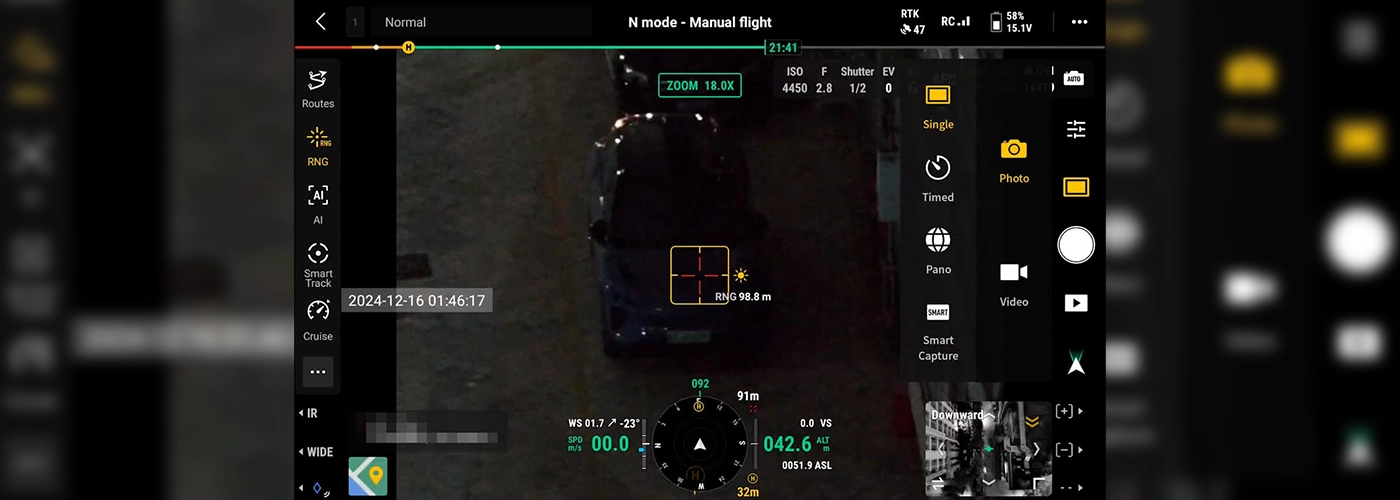
Various night imaging solutions can be found in drones, including:
low-light cameras,
classic night vision cameras,
thermal imaging cameras.
How drones help in difficult nighttime conditions during rescue operations?
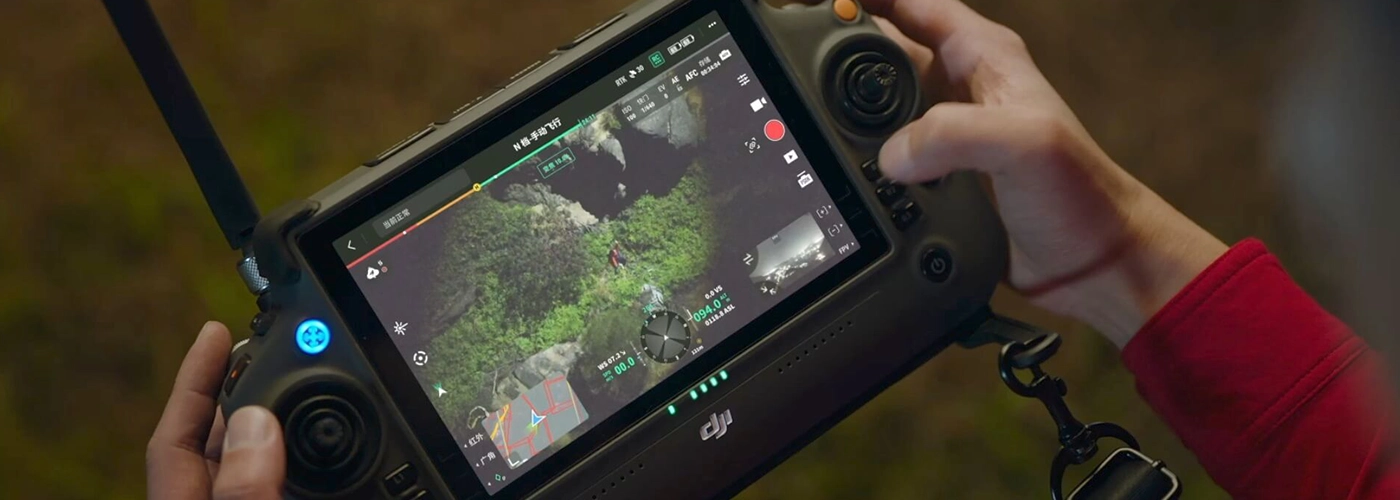
One of the most common areas of police drone use at night is carrying out rescue operations. Such devices can be used to search for missing persons, monitor fires or support operations in difficult terrain. What's more, night drones can be used to monitor large areas, which is particularly useful for rescue and patrol missions.
Advanced cameras and GPS systems allow operators to quickly reach areas that previously would have required helicopters or large foot patrols. The key point here is that drones can transmit images in real time. This, in turn, translates into faster decision-making and the concentration of emergency resources where they are needed most. As a result, police drones at night can realistically improve public safety.
How to spot a police drone? Features
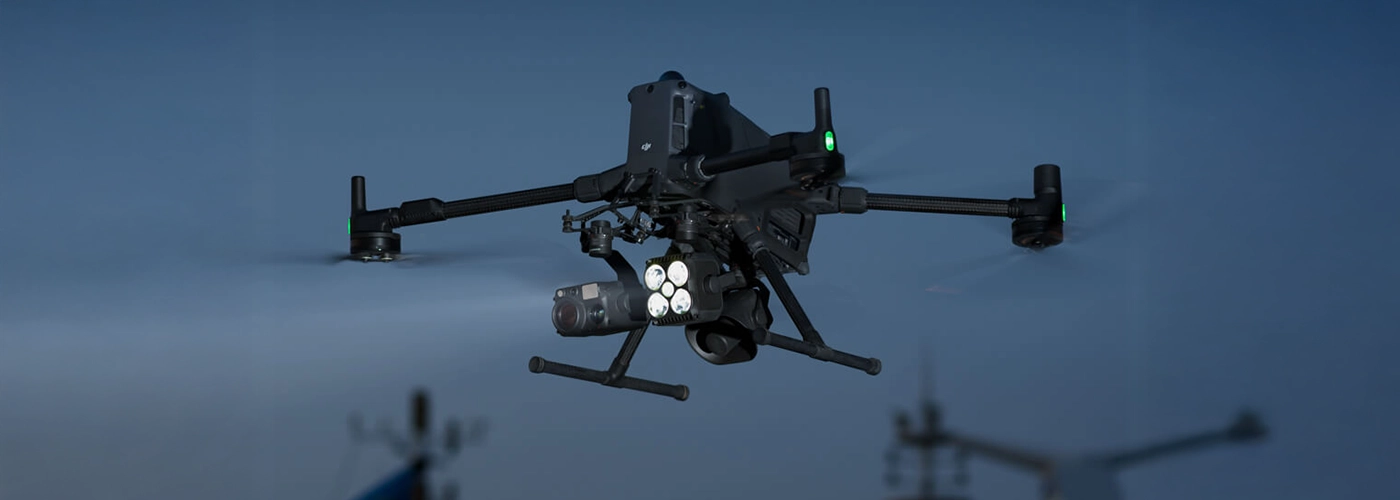
Staying within the monitoring range of a police drone requires extreme caution so as not to disrupt the activities carried out by the services. Therefore it's worth learning how to spot a police drone at night. They look a bit different from commercial drones - not only because of their different dimensions. Police drones are additionally usually equipped with powerful LED lights. The diodes emit light in different colors - such as white, red or blue. In addition, police drones generate a distinctive low sound that makes them easy to identify at night. Navigation lights are also important. Required flashing green light and red and white navigation lights are used for identification and safety of night drones. Thanks to both services and bystanders can more easily identify the presence of the device over a given area.
Night flight rules - regulations and requirements
Traffic control - do modern drones help after dark?
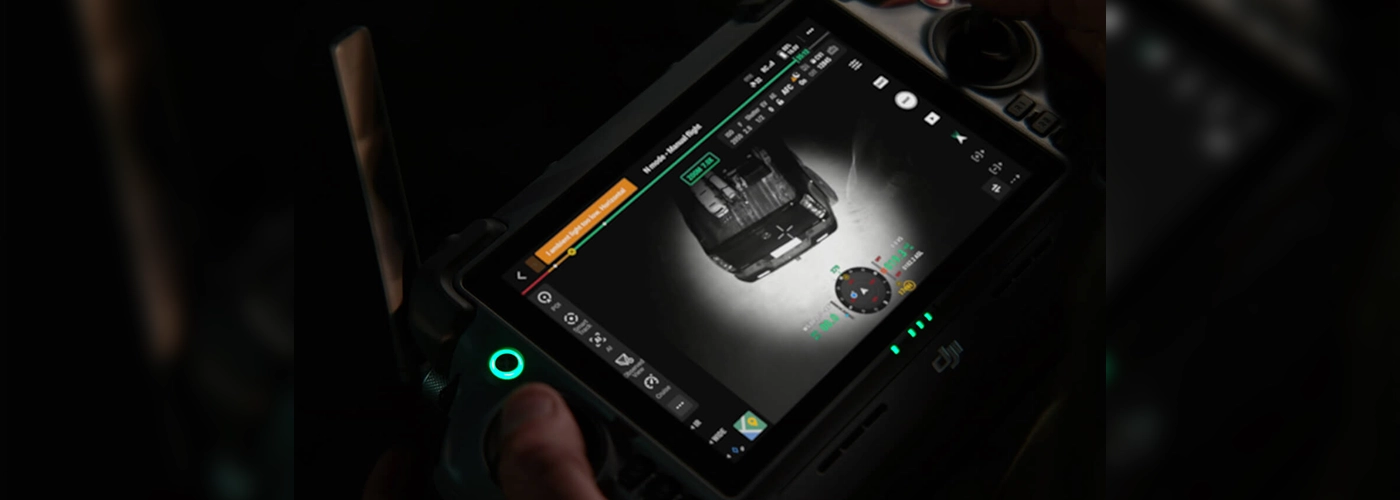
GPS systems, LEDs - accuracy and identification
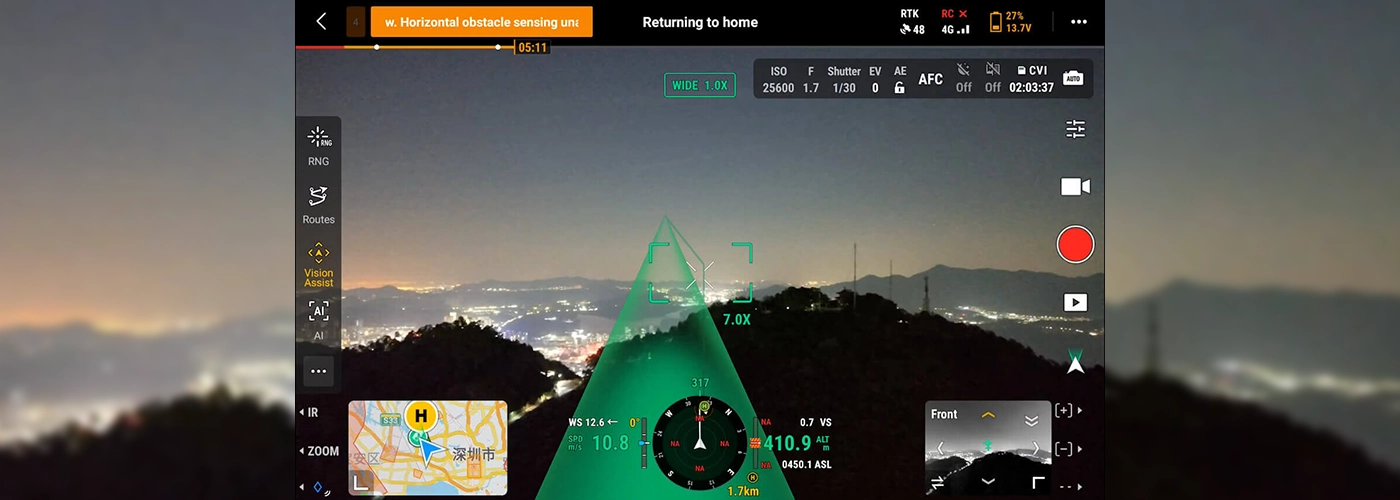
Accurate GPS and obstacle avoidance sensors are key to drone positioning systems, but their effectiveness at night can be limited. Therefore, in terms of operational needs, it is important to redundancy - vision systems, barometers and ultrasonic sensors should work as a backup source of information needed for flight. You should also pay attention to the flight conditions. For example, in urban areas, GPS can experience interference by signal reflections, so the flight plan should take into account the possibility of switching to manual mode.
Importantly, lights are not just about aesthetics. This is an essential element of security. The key element here is the already mentioned green lights, which are a requirement throughout the European Union. For public services, additional LEDs can signal the mode of operation (e.g., patrol, intervention) or make it easier to locate equipment in difficult conditions.
Is every drone capable of flying at night?
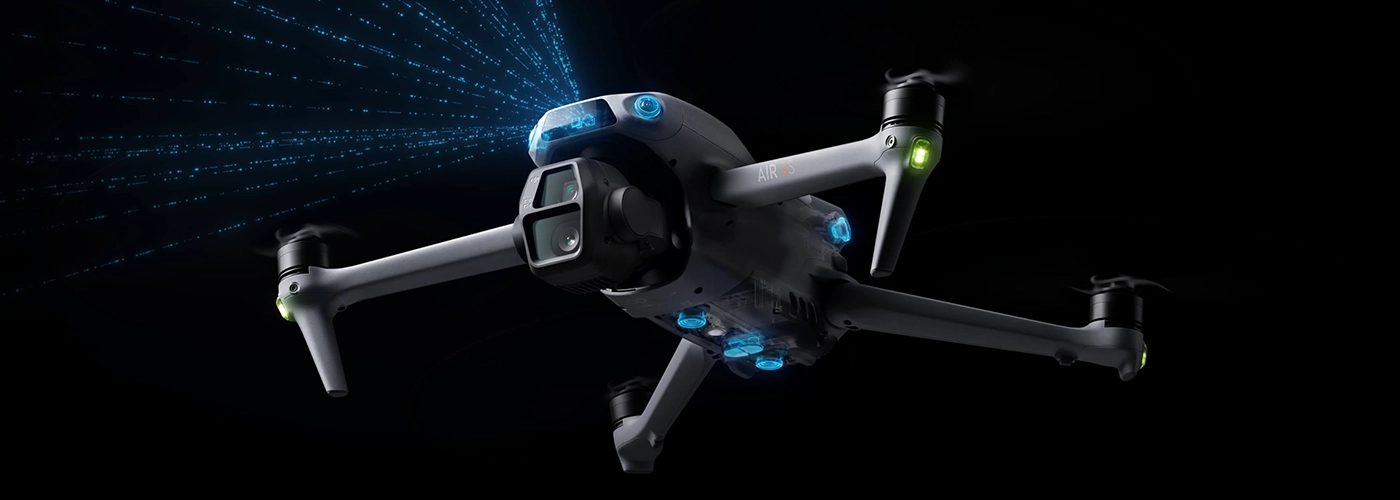
Night flight capabilities are highly dependent on drone equipment. It is worth noting here that police drones and other devices used by the services often offer different functionality than commercial drones. If a drone without support for night vision, thermal imaging or other systems does not have a suitable reference point in low light, it may not even take off. Wanting to perform operations with a drone at night, it is therefore necessary to carefully check its specifications. Currently, there are more and more "regular" drones with night flight support available on the market - many of them can be found in our offerings.
One example of a commercial drone for night flight is new DJI Mini 5 Pro. The professional variant of the popular compact model DJI is equipped with a advanced video cameras and liDAR system. As a result, it can better detect obstacles in low light - even in light levels of less than 1 lx, according to the manufacturer. However, we still point out that exercise heightened caution and be mindful of all safety procedures, as flying at night is more difficult and the operator does not have full visibility of the flight path. MegaDron also offers special thermal imaging cameras for drones, which will work well in both amateur and professional applications.
Summary
More and more pilots are performing night drone flights. The emergency services or the police carry out missions regardless of whether conditions are favorable or not. If you plan to fly at night, it's best to take a head-on approach. Prior Check:
- Will your drone take off, some models may refuse to take off when it is too dark.
- See if your model meets night flight requirements such as green lighting.
- In addition, if possible, examine the place where the flight will be made already in the daytime, this will allow you to reduce collisions with hard-to-see objects such as ropes or cables.