
Premiere of DJI Osmo Action 6 - a solid step forward!
25.11.2025 premieres new camera DJI Action 6. This is another launch this month and another positive surprise. The manufacturer introduces new features and goes beyond the scheme of a classic sports camera. In this article, we will look at the most important features and changes that have been applied.
Image quality
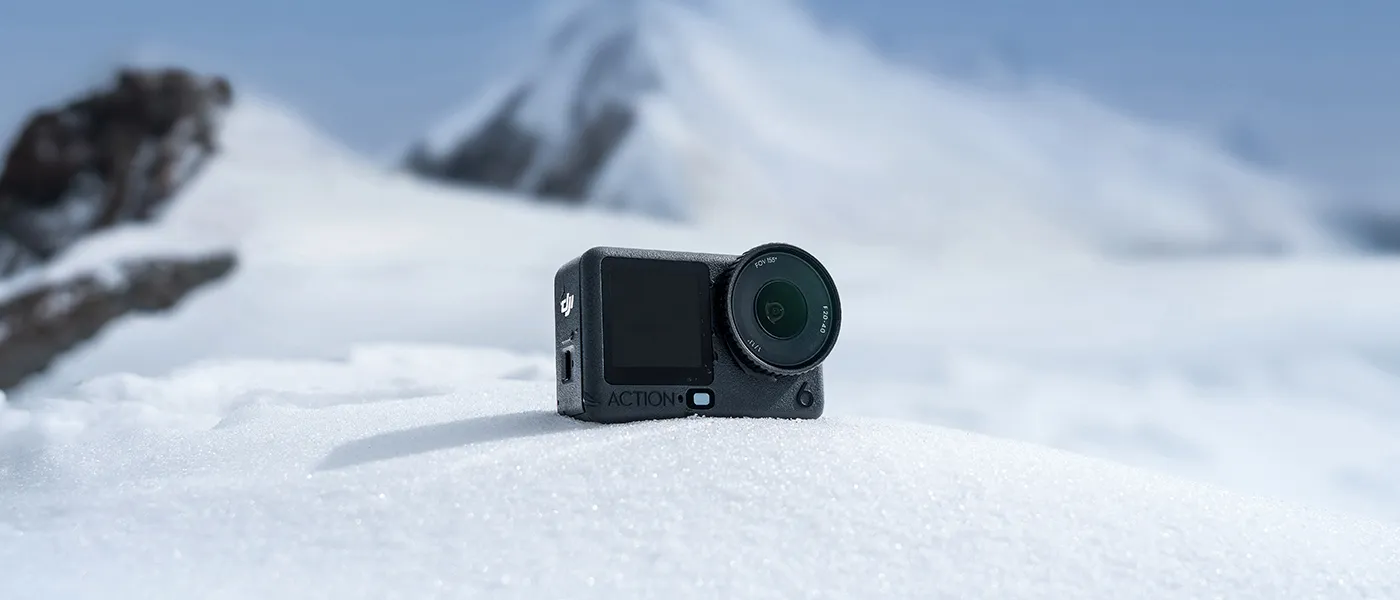
DJI decided to move away from the idea of just a sports camera and went one step further. It is the first camera in the DJI range with a variable aperture f/2.0-f/4.04. In addition, the camera can automatically adjust to difficult lighting conditions, providing good images.
It also uses a a new 1/1.1" square sensor, which is larger than the previous one, which also translates into increased photo and video quality. Allows you to record videos at 4 K/120 FPS in a 4:3 aspect ratio.
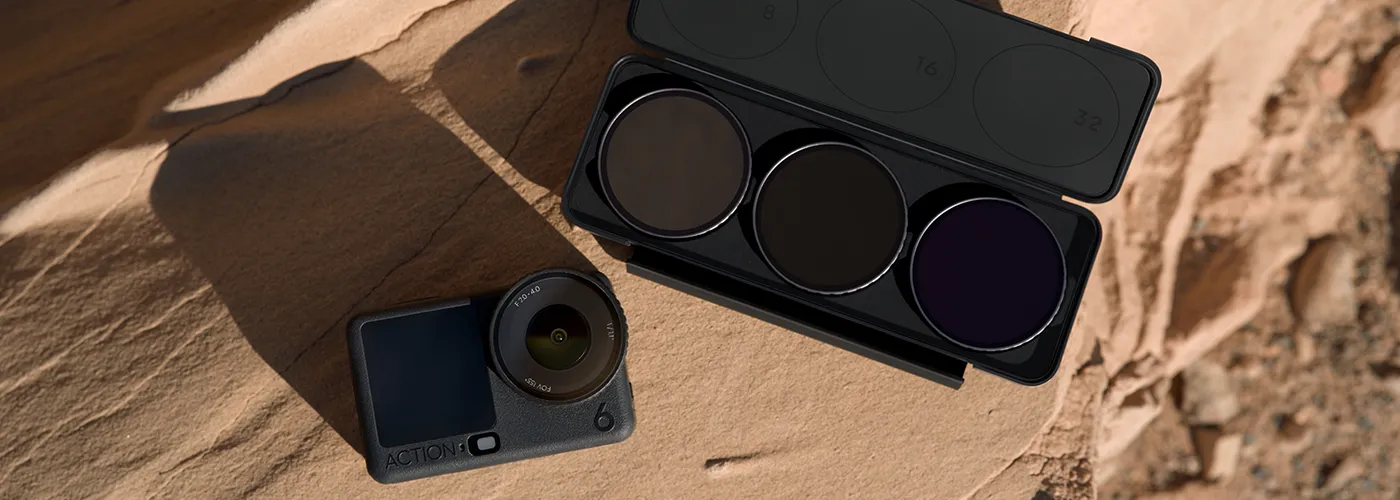
Since sports cameras have wide-angle lenses - an an interesting accessory (available for sale separately) is a macro lens, which allows you to take close-up shots - of details such as a car brand stamp.
Design and durability
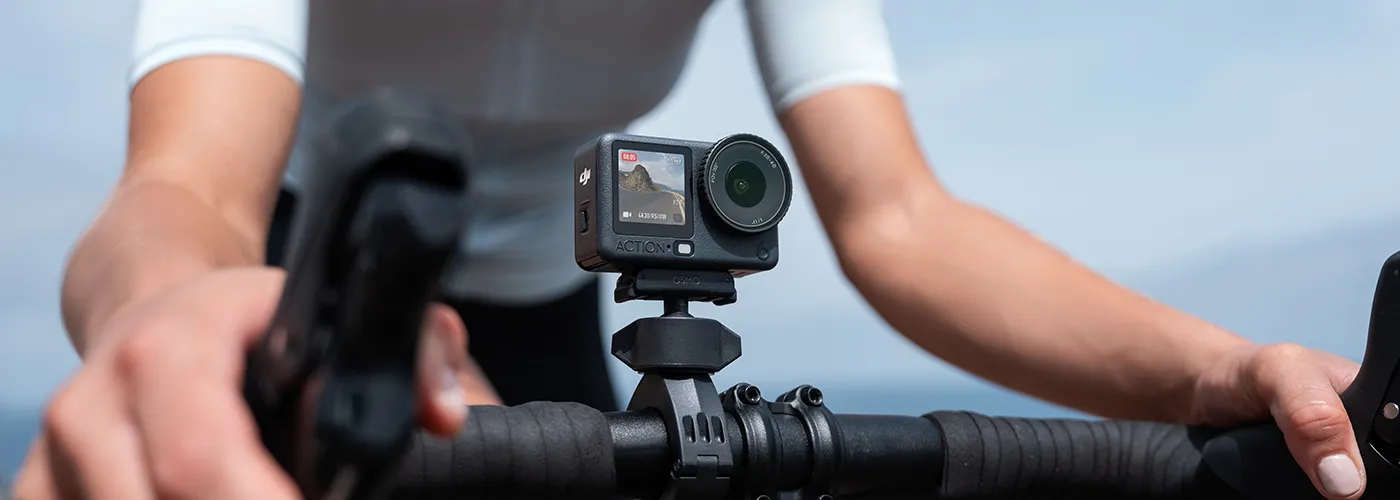
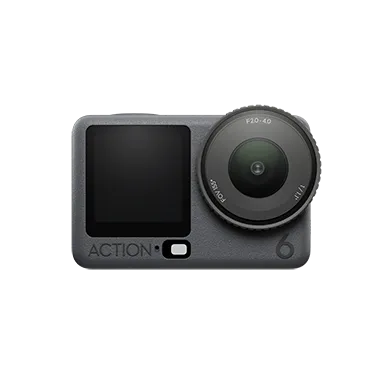
A familiar design with dimensions and weight slightly larger than previous Action series models, to be precise 72.8×47.2×33.1 mm (D×S×W) and 149 g.
The camera has water resistance up to 20 meters without housing and up to 60 meters with housing. The temperature range in which it can operate is -20 to 45°C, and it is worth mentioning that this is a sports camera, which, like all such cameras, does not have its own built-in cooling and can overheat if left idle for an extended period of time.
Two large OLED touchscreens make working with the camera much easier, and 3 built-in microphones take care of high-quality audio recording. DJI Action 6 also has 50 GB of built-in memory, which can come in handy when you forget your memory card :)
Stabilization and additional features

When it comes to stabilization DJI is the absolute top and so is the camera DJI Action 6. There are various stabilization modes to choose from such as RockSteady 3.0 and Horizon Balancing, which allow us to adjust the type of stabilization to our needs. The result is an image without vibration or unwanted shake that flows even in highly dynamic shots.
Of the new features worth mentioning, we get:
- 2x lossless zoom - allows for close-up shots without loss of quality like a digital zoom
- Starburst - starburst effect on light sources in night scenes
- Tracking - keeps the main subject in the center of the frame
- Supernight - used in really heavy night conditions, an algorithm that allows for noise reduction
Specification
In the table below, we present the most important parameters from the camera's specifications:
| Camera |
|
| Dimensions | 72.8×47.2×33.1 mm (D×S×W) |
| Weight | 149 g |
| Screens | Front screen: 1,46" Rear screen: 2.5" |
| Waterproof | Up to 20 meters |
| Built-in memory | 50 GB |
| Memory card slot | Yes (up to 1 TB) |
| Microphones | 3 |
| Matrix | 1/1.1-inch CMOS |
| Viewing angle | 155° |
| Aperture | f/2.0 - f/4.0 |
| Image resolution | to 7168×5376 px |
| Optical zoom | 2x |
| Video format | 10-bit D-log M |
| Image stabilization | RockSteady 3.0, 3.0+, HorizonBalancing, HorizonSteady |
| Night mode (AI) | Yes |
| Slow Motion | Yes (4K) |
| Hyperlapse/Timelapse | 4K |
| Battery life | Up to 4 hours |
Summary

DJI takes a giant step forward when it comes to sports cameras. This is a change definitely for the better, the camera retains all the values of its predecessor such as battery life, night modes, 2 screens - slightly increasing the weight and size of the camera, while significantly improving the quality of photos and video. As users we can say that we want more launches like this, good job.