


 Drone service
 Rental
 Reliability
 Trust
Trust Own warehouse
  Warranty
Discover the DJI AP100 Parachute—a parachute system for the DJI Matrice 400 that enhances flight safety and supports operations in compliance with C5 and C6 requirements.



Engineered for excellence, built for versatility
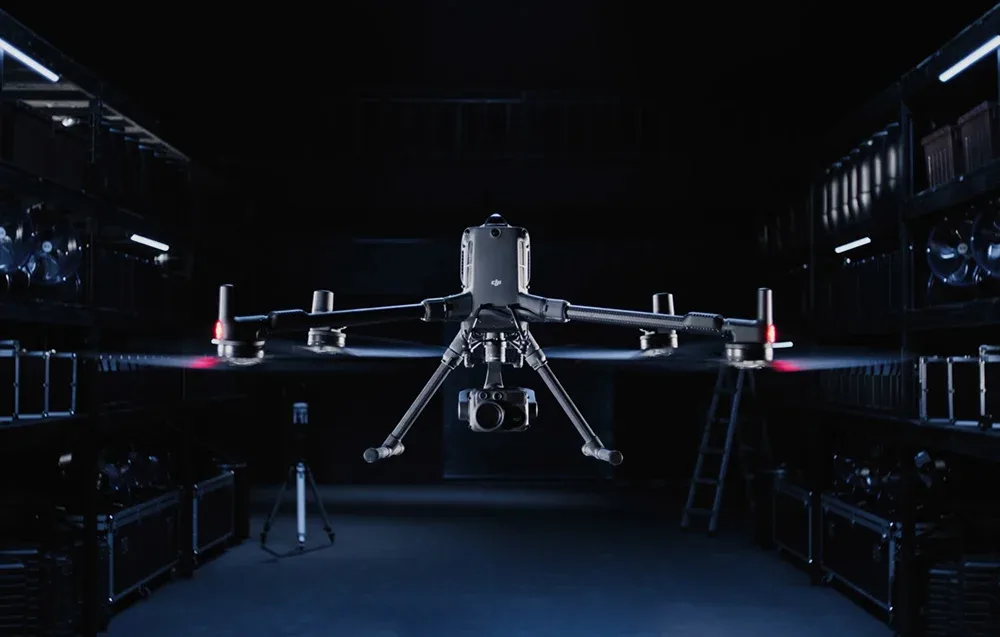
The DJI Matrice 400 is a powerful and highly versatile drone designed for demanding missions and advanced aerial work. With up to 59 minutes of flight time, a payload capacity of up to 6 kg, and an IP55 protection rating, it is ready for challenging environments and complex tasks. Compatible with a wide range of modules including cameras, speakers, spotlights, and third-party accessories, the Matrice 400 gives you the flexibility to adapt your setup to the mission at hand. It also features a rotating LiDAR sensor and mmWave radar for precise obstacle detection and enhanced flight safety.
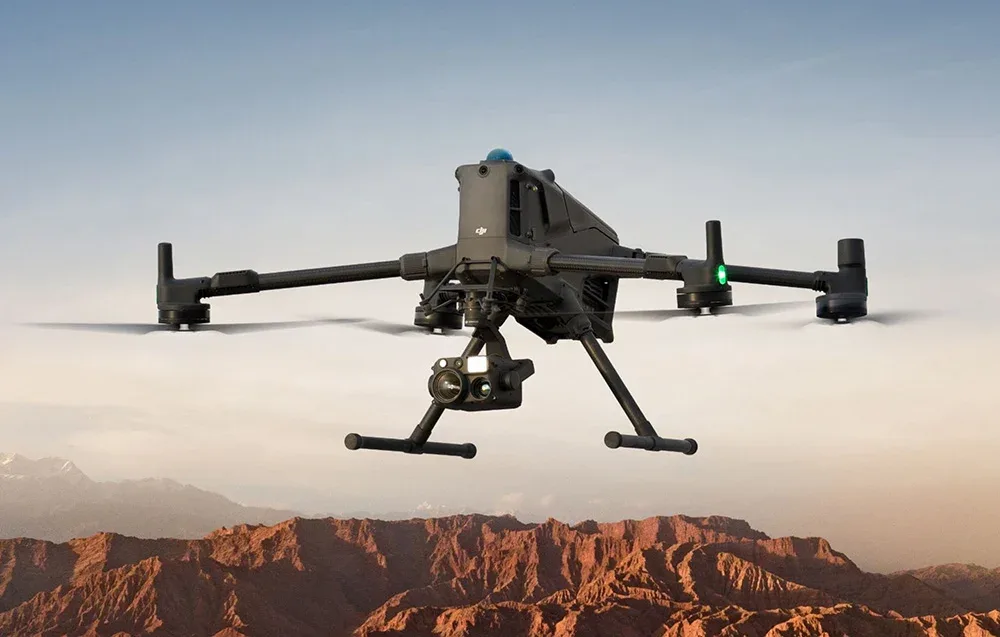
The DJI Matrice 400 delivers up to 59 minutes of flight time, even when flying with a light payload. This makes it a great choice for long inspections, large-area mapping, search operations, and many other advanced use cases. It can also hover for up to approximately 53 minutes. On top of that, the drone can travel at speeds of up to 25 m/s while smoothly avoiding obstacles such as buildings or terrain features, making it ideal for work in challenging environments.

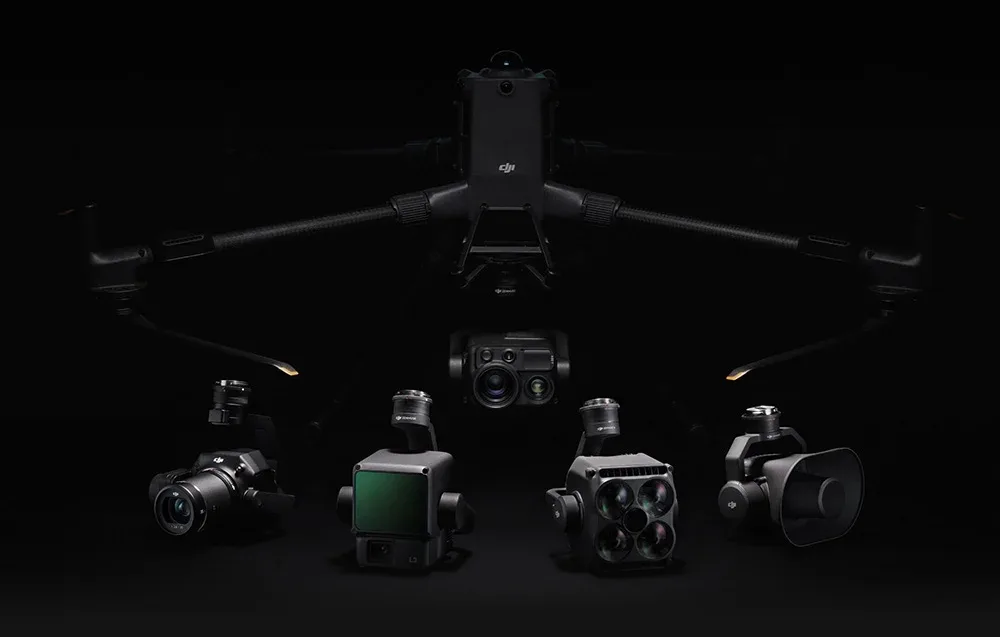
With an impressive payload capacity of up to 6 kg, the DJI Matrice 400 can be configured for a wide range of applications. It supports Zenmuse H30 series cameras, the Zenmuse P1, and the Zenmuse L2 laser scanner. You can also attach accessories such as the Zenmuse S1 spotlight, Zenmuse V1 speaker, or compatible third-party modules. Four external E-Port V2 ports allow the drone to carry up to seven payloads at the same time.
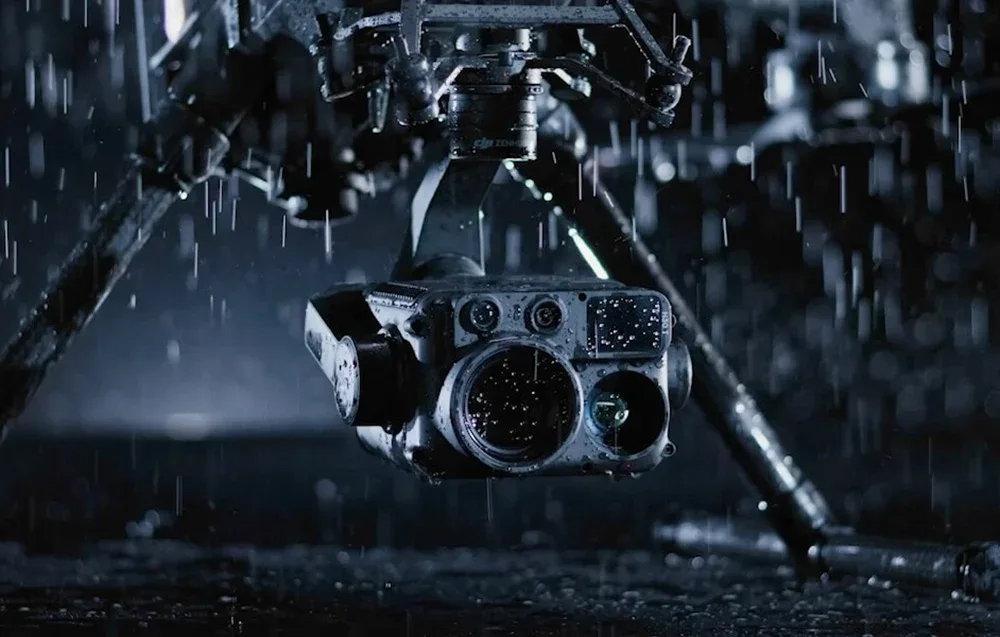
The Matrice 400 is built to perform in demanding environments. Its IP55 rating helps protect it against water and dust, so it can operate in rain or dusty areas with confidence. It also handles extreme temperatures, working in conditions from -20°C to 50°C.
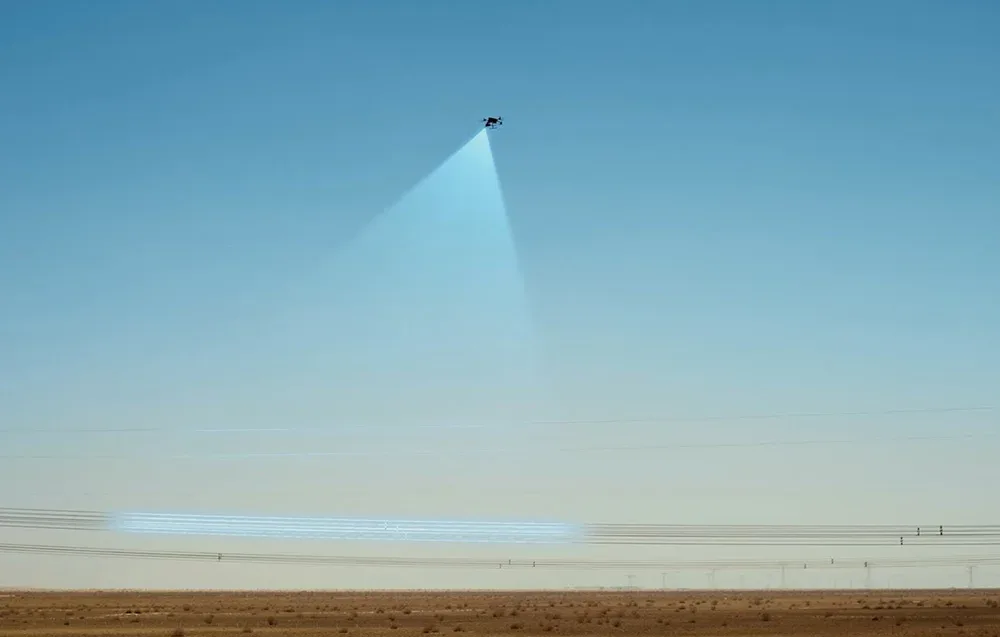
The drone uses a sophisticated obstacle sensing system that combines a rotating LiDAR sensor, high-precision mmWave radar, and low-light fisheye vision sensors. Thanks to this setup, it can effectively detect obstacles including power lines, even in darkness, rain, or fog. The result is a safer and more reliable flight experience in complex environments.
Ten antennas on the drone, a high-gain antenna system in the controller, and DJI O4 Enterprise Enhanced Video Transmission work together to provide stable video transmission over distances of up to 20 km. The Matrice 400 also supports the sub2G frequency band and, when paired with two DJI Cellular Dongle 2 units available separately, can automatically switch to the better network for a more reliable signal in difficult conditions. The built-in relay module also allows the drone to act as a relay drone for other UAVs, extending operational range in mountainous or hard-to-reach areas.
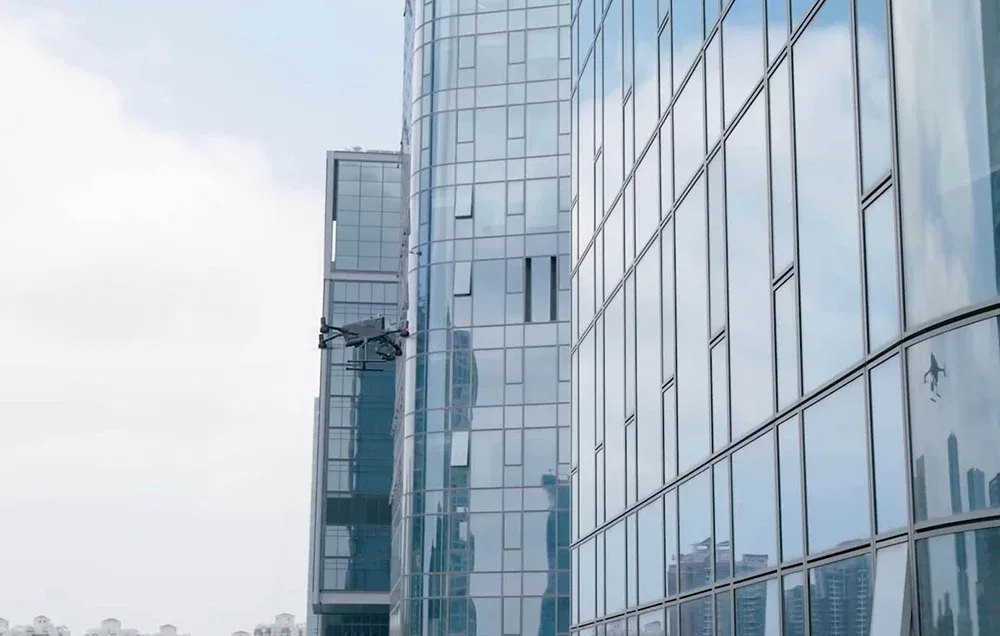
Rotating LiDAR, mmWave radar, and fisheye sensors provide all-direction obstacle awareness and dependable positioning. This helps ensure stable flight near glass buildings, wind turbine blades, and other difficult structures. The drone also supports safer return flights from the edges of bridges or buildings, even if the home point has not been updated. A full-color vision assistance system further improves situational awareness during flight.
The available flight modes help streamline every mission. Cruise mode allows the drone to fly in a selected direction without constantly holding the control sticks, which is especially useful for long-distance flights and linear inspections. FlyTo automatically adjusts route and speed based on the surrounding environment to reach a target location with minimal manual input. Smart Track enables precise subject tracking, automatic zoom adjustment, and seamless switching between targets. There is also a POI mode for continuous observation and 3D modeling of buildings while orbiting a selected area.
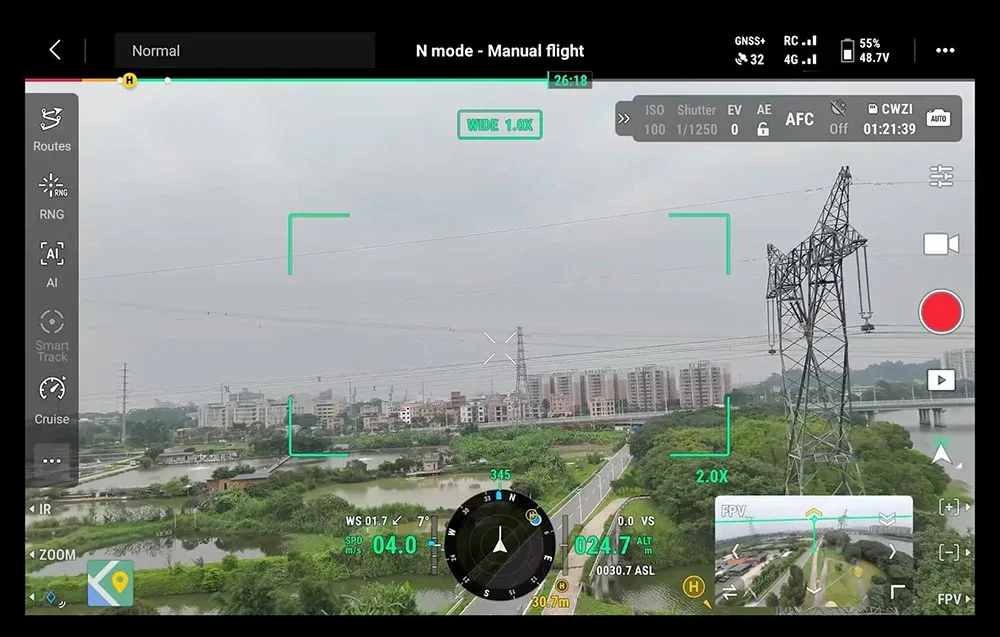
When paired with a Zenmuse H30 series camera, the DJI Matrice 400 can detect vehicles, vessels, and other objects during search missions or routine observation tasks. It also supports high-resolution imaging and smooth subject tracking. Additional AR features improve operational awareness: Power Line AR highlights wire obstacles on the controller display, Map View AR shows building names and landmarks in real time, and AR Flight Waypoint displays the route during RTH, obstacle avoidance, or FlyTo operations. You can also mark points or outline areas on the screen to calculate their size, then sync the measurement data with DJI FlightHub 2.
The DJI Matrice 400 supports Real-Time Terrain Follow, allowing it to maintain a flight path that follows the terrain in any horizontal direction. During search and rescue operations, this helps keep the size of ground objects more consistent on the controller screen, reducing the need for constant zoom adjustments. During mapping missions, the drone can maintain a consistent ground sampling distance for highly accurate data capture. It can also take off from stationary vessels and land on moving ships, making it a strong option for maritime patrol operations.
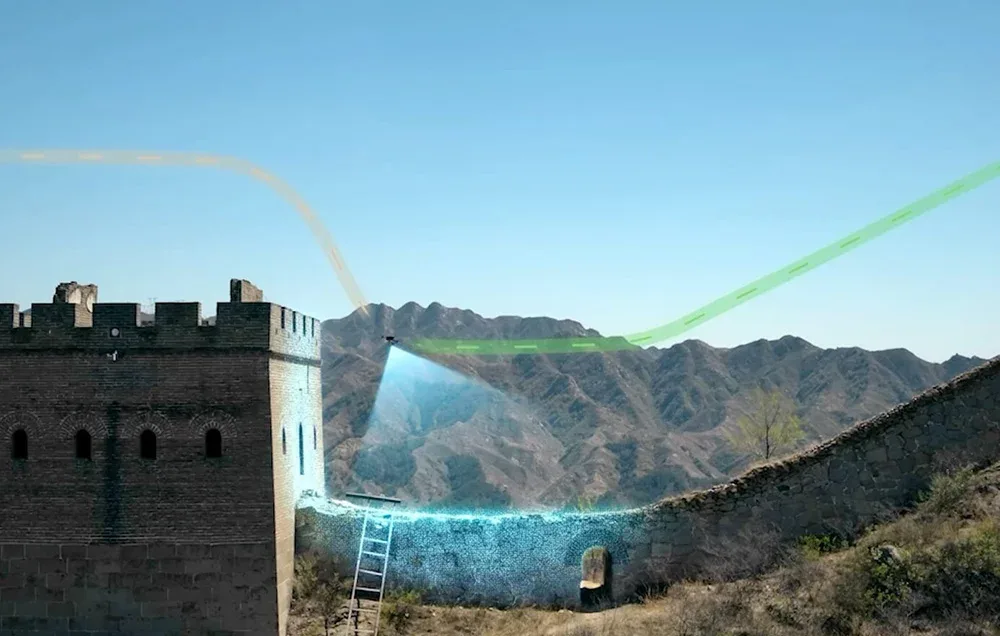
When used with the optional Zenmuse L2 LiDAR module, the Matrice 400 can perform automated flights along transmission and distribution power lines. It uses the rotating LiDAR to detect obstacles in real time during the mission. The drone also supports sloped and geometric route planning through DJI Pilot 2 or DJI FlightHub 2, making it suitable for detailed facade inspections and precise mapping of selected structures.
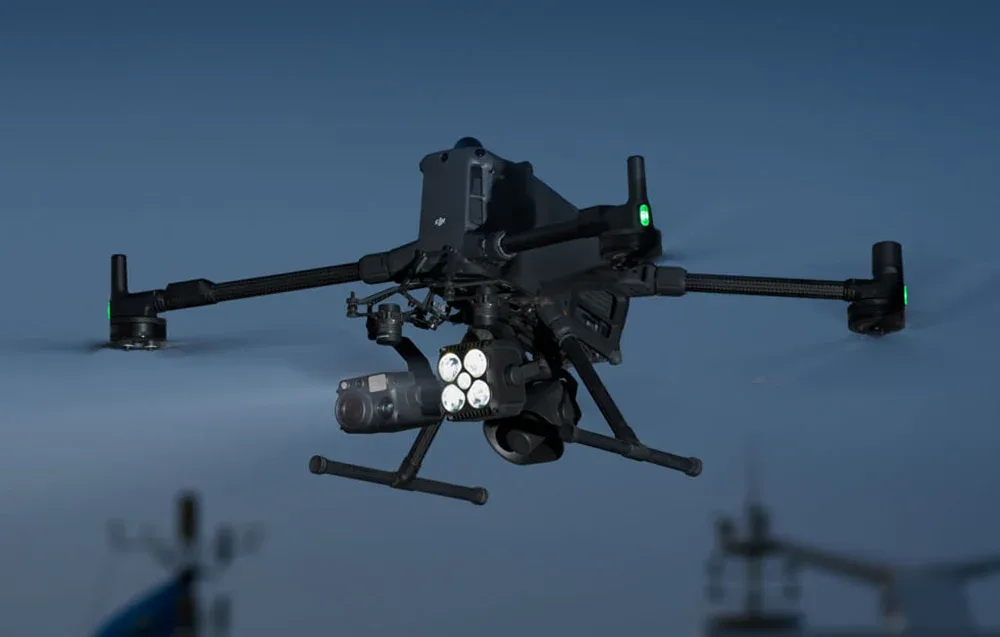
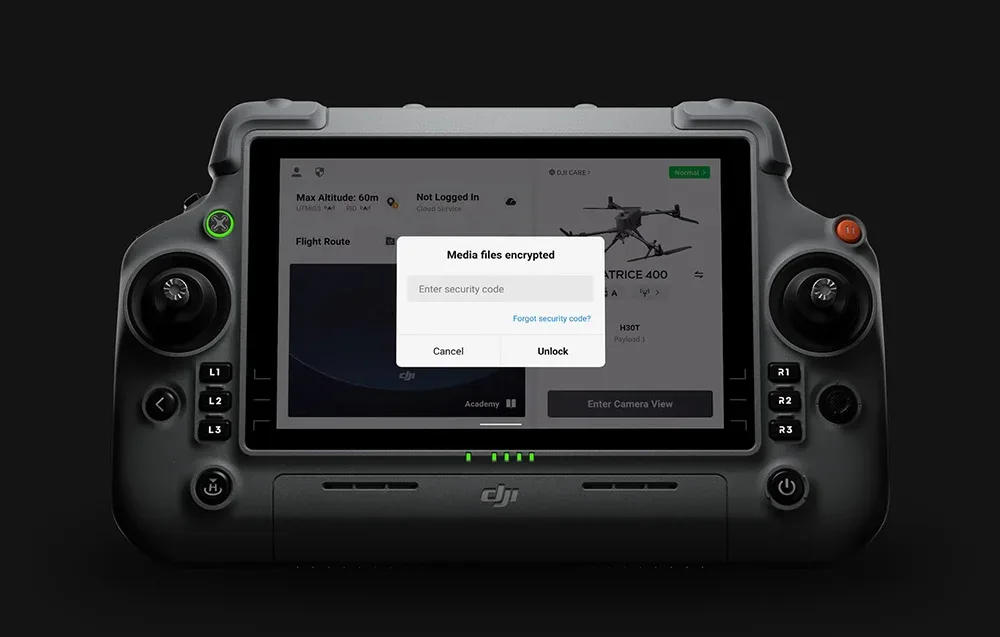
The DJI Matrice 400 is compatible with the D-RTK 3 station and the DJI Cellular Dongle 2, which enables video transmission via a 4G network. It also works with DJI FlightHub 2 for mission management, DJI Terra for 2D and 3D reconstruction, and DJI Modify for model editing. Support for PSDK, MSDK, Cloud API, and model training tools gives advanced users even more room to expand functionality. To protect your data, the drone also offers features such as AES-256 encryption and Local Data Mode for fully offline operation.
| Takeoff weight (with propellers) | Without batteries: 5020±20 g; With batteries: 9740±40 g; actual weight may vary depending on materials and external factors. |
|---|---|
| Max takeoff weight | 15.8 kg |
| Dimensions | Unfolded with landing gear: 980 × 760 × 480 mm; Folded with landing gear and gimbal: 490 × 490 × 480 mm; maximum dimensions without propellers. |
| Carrying case dimensions | 779 × 363 × 528 mm |
| Max payload | 6 kg; measured at the third gimbal connector at sea level. Payload decreases with altitude. |
| Propeller size | 25 inches |
| Diagonal wheelbase | 1070 mm |
| Max ascent speed | 10 m/s |
| Max descent speed | 8 m/s |
| Max horizontal speed | 25 m/s |
| Max takeoff altitude | 7000 m |
| Max flight time | 59 min |
| Max hover time | 53 min |
| Max flight distance | 49 km |
| Max wind resistance | 12 m/s |
| Max yaw angular velocity | 100°/s |
| Max tilt angle | 35° |
| Operating temperature | From -20°C to 50°C |
| GNSS | GPS + Galileo + BeiDou + GLONASS |
| ADS-B In | Built-in ADS-B In receiver and dual antennas, range up to 20 km |
| Hovering accuracy range | Vertical: ±0.1 m (vision), ±0.5 m (satellite), ±0.1 m (RTK); Horizontal: ±0.3 m (vision), ±0.5 m (satellite), ±0.1 m (RTK) |
| RTK GNSS positioning accuracy | RTK Fix: 1 cm + 1 ppm (horizontal), 1.5 cm + 1 ppm (vertical) |
| RTK heading accuracy | Supports RTK heading with accuracy better than 2° |
| Internal storage | Not applicable |
| Ports | USB-C debug ×1 (USB 2.0), E-Port V2 ×4, Cellular Dongle 2 interface ×2 |
| Propeller model | 2510F |
| Beacon | Built into the drone |
| IP rating | IP55 |
| Max load for single gimbal connector | 1400 g |
|---|---|
| Max load for dual gimbal connector | 950 g |
| Max load for third gimbal connector | 3 kg with quick release, 6 kg with screw mount |
| Sensing system type | Omnidirectional binocular vision system, rotating horizontal LiDAR, upper LiDAR, downward 3D infrared sensor, six-directional mmWave radar |
|---|---|
| Front | Measurement range: 0.4–21 m; Detection range: 0.4–200 m; FOV: 90° horizontal, 90° vertical |
| Rear | Measurement range: 0.4–21 m; Detection range: 0.4–200 m; FOV: 90° horizontal, 90° vertical |
| Side | Measurement range: 0.6–21 m; Detection range: 0.5–200 m; FOV: 90° horizontal, 90° vertical |
| Downward | Measurement range: 0.5–19 m; Forward/backward FOV 160°, left/right FOV 105° |
| Operating environment | Works best with textured surfaces and adequate lighting; downward sensing requires diffuse reflection and reflectivity above 20% |
| Rotating LiDAR | Standard range: 0.5–100 m; 360° horizontal FOV, 58° vertical FOV; 520,000 points/sec; 905 nm; Class 1 eye-safe laser |
| Upper LiDAR (3D ToF) | 0.5–25 m at night; 60° FOV |
| Downward 3D infrared sensor | Measurement range: 0.3–8 m; 60° FOV |
| mmWave radar | Power line detection up to 36 m or 50 m depending on cable type; FOV ±45° |
| Resolution | 1080p |
|---|---|
| Field of view | DFOV: 150°; HFOV: 139.6°; VFOV: 95.3° |
| Frame rate | 30 FPS |
| Night mode | Starlight grade |
| Transmission system | DJI O4 Enterprise Enhanced Video Transmission System |
|---|---|
| Live view quality | Remote controller: 3 channels, 1080p/30FPS |
| Max transmission range | 40 km (FCC); 20 km (CE/SRRC/MIC) |
| Max download speed | Standard mode: 80 Mbps downlink |
| Antennas | WLAN antenna ×8, sub2G antenna ×2, 4G antenna ×4; 2T4R mode |
| Other | Supports dual control mode and 2-channel Cellular Dongle 2 |
| Model | TB100 |
|---|---|
| Capacity | 20254 mAh |
| Nominal voltage | 48.23 V |
| Max charging voltage | 54.6 V |
| Cell type | Li-ion 13S |
| Energy | 977 Wh |
| Weight | 4720 ± 20 g |
| Charging temperature | From 5°C to 45°C |
| Discharge temperature | From -20°C to 75°C |
| Battery heating | Supported |
| Discharge rate | 4C |
| Max charging power | 2C |
| Low-temperature charging | Supports self-heating during low-temperature charging |
| Cycle count | 400 |
| Model | BS100 |
|---|---|
| Net weight | 11.8 kg |
| Dimensions | 605 × 410 × 250 mm |
| Supported batteries | TB100, TB100C, WB37 |
| Operating temperature | From -20°C to 40°C |
| Input | 100–240 V (AC), 50–60 Hz, 10 A |
| Charging channels | Three TB100 batteries and two WB37 batteries |
| Charging mode | Ready-to-Fly 90%; Standard 100%; fast charging and silent mode supported |
| Charging time | Approx. 45 min in fast charging mode at 220 V |
| Transmission system | DJI O4 Enterprise Enhanced Video Transmission System |
|---|---|
| Max transmission range | 40 km (FCC); 20 km (CE/SRRC/MIC) |
| Antenna | 2T4R high-gain multi-beam antenna, 2.4 GHz / 5.8 GHz; sub2G module: 2T2R |
| Extended transmission | Supports DJI Cellular Dongle 2 |
| Wi-Fi | Wi-Fi Direct, Wireless Display, IEEE 802.11 a/b/n/ac/ax |
| Bluetooth | Bluetooth 5.2 |
| Screen resolution | 1920 × 1200 |
| Screen size | 7.02 inches |
| Refresh rate | 60 FPS |
| Brightness | 1400 nits |
| Touch control | 10-point multitouch |
| Built-in battery | 6500 mAh @ 7.2 V, 46.8 Wh |
| External battery | Optional WB37, 4920 mAh @ 7.6 V, 37 Wh |
| Charging | Supports PD fast charging up to 20V/3.25A via USB-C |
| Memory | 8 GB RAM + 128 GB ROM UFS, expandable via microSD card |
| Charging time | Approx. 2 hours |
| Operating time | Approx. 3.8 h internal battery; approx. 3.2 h external battery |
| Output port | HDMI 1.4 |
| Operating temperature | From -20°C to 50°C |
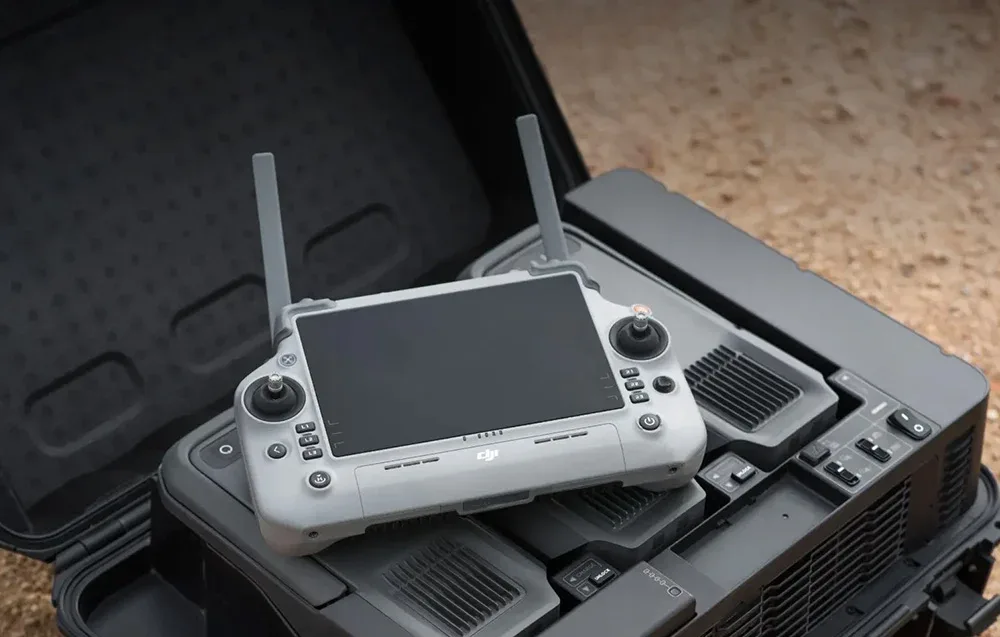
| Supported drone model | DJI Matrice 400 |
| Satellite navigation | GPS + Galileo + BeiDou |
| Dimensions | 268 × 163 × 94.5 mm |
| Weight | 1.15 kg |
| System version | Android 11 |
| External interfaces | HDMI 1.4, SD 3.0, USB-C with OTG, PD charging up to 65W, USB-A with USB 2.0 support |
| Accessories | Strap / waist support |
| DJI products compatible with DJI Matrice 400 | Cameras: Zenmuse H30, Zenmuse H30T, Zenmuse L2, Zenmuse P1; Accessories: Zenmuse S1 spotlight, Zenmuse V1 speaker, Manifold 3, DJI RC Plus 2 sub2G SDR module, DJI Cellular Dongle 2; RTK stations: D-RTK 3 Multifunctional Station, D-RTK 2 Mobile Station; Ecosystem accessories: DJI X-Port, DJI E-Port V2 Development Kit, DJI E-Port V2 Coaxial Cable Kit, DJI SKYPORT V3 Adapter Set, DJI SKYPORT V3 Coaxial Cable Kit |
|---|
 Get expert advice


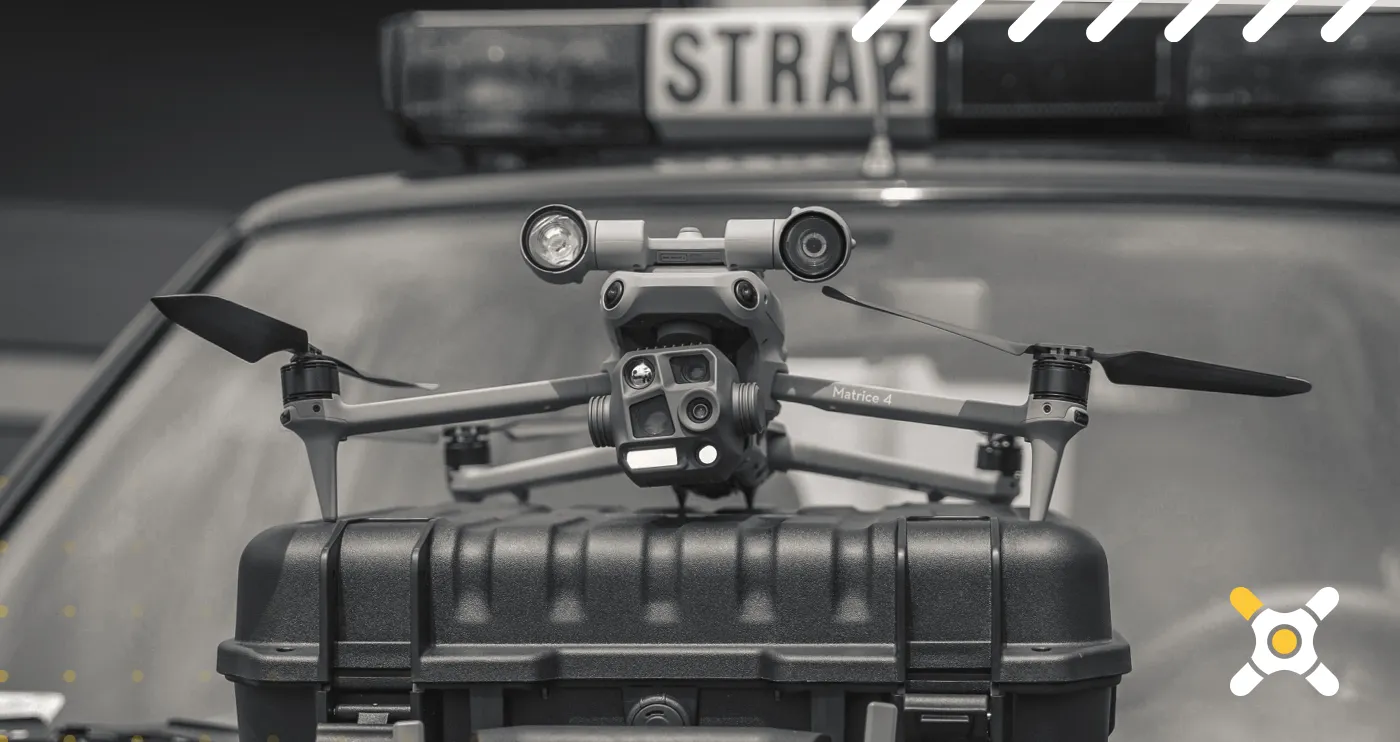

DJI improves the Matrice series by introducing new useful features in the latest model DJI Matrice 400.