DJI Matrice 400 vs. DJI. Matrice 350 RTK — A Comparison of Enterprise Drones

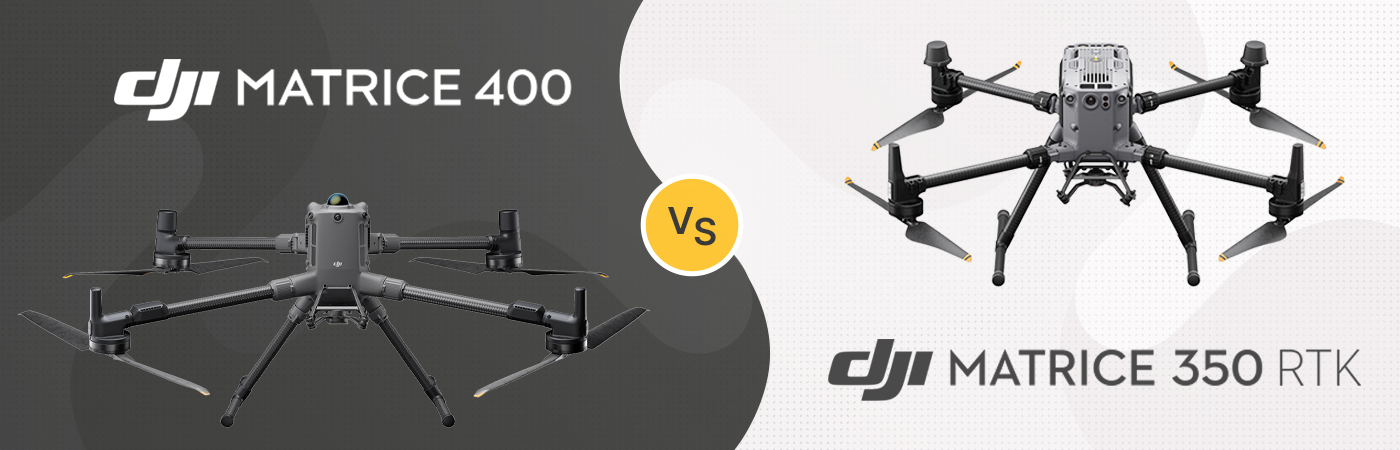
DJI Matrice 350 RTK has long been one of the most important enterprise-class drones in the lineup DJI.It is a proven, stable, and widely used platform that has found applications in, among others, surveying, technical inspections, the energy sector, emergency response, law enforcement operations, and advanced industrial missions.One of its major advantages was—and still is—its compatibility with professional payloads, such as the Zenmuse series of cameras, LiDAR modules, and mapping solutions.
However, the launch of theDJI Matrice 400 is not merely a cosmetic generational update.It is clearly a more powerful and comprehensive enterprise platform, designed for even more demanding operations.The Matrice 400 offers greater lifting capacity, support for a wider range of payloads, a newer transmission system, more advanced safety features, and greater expandability.
Below are the key differences between DJI Matrice 400 and DJI Matrice 350 RTK.
DJI Matrice 400 vs. DJI. Matrice 350 RTK – Comparison of Key Specifications
Before we move on to a detailed discussion, it’s worth looking at both models in terms of their key technical specifications.These are the features that best demonstrate that DJI the Matrice 400 is not just a newer version of the Matrice 350 RTK, but a significantly more powerful platform designed for more demanding enterprise tasks.
| Model | DJI Matrice 350 RTK | DJI Matrice 400 |
|---|---|---|
| Model Positioning | A proven enterprise platform | A newer, more powerful enterprise platform |
| Maximum flight time | up to 55 minutes without a charge | to 59 min with the H30T as specified DJI |
| Maximum lifting capacity | 2.7 kg | 6 kg |
| Number of payloads / expansion | 3 payloads | 7 payloads |
| Maximum takeoff weight | 9.2 kg | 15.8 kg |
| Horizontal speed | up to 23 m/s | to 25 m/s |
| Ascent / Descent | 6 m/s climb, 5 m/s vertical descent | 10 m/s climb, 8 m/s descent |
| Video Transmission | DJI O3 Enterprise, up to 20 km FCC / 8 km CE | DJI O4 Enterprise Enhanced, up to 40 km FCC / 20 km CE |
| Safety and Obstacle Avoidance | 6-directional video and IR sensors, optional CSM radar | LiDAR, vision sensors, 6-directional mmWave radar |
| IP Rating | IP55 | IP55 |
| Operating temperature | -20°C to 50°C | -20°C to 50°C |
| Wind resistance | 12 m/s | 12 m/s |
| Batteries | TB65, dual-battery system | TB100, a single high-capacity battery |
The biggest difference isn't just one specific factor, but an entire work philosophy.DJI The Matrice 350 RTK remains a proven and very reliable enterprise drone, while the Matrice 400 offers greater future-proofing—especially when it comes to heavier payloads, complex configurations, and missions where maximum flexibility is essential.In practice, this means that the M350 RTK will still perform well in many standard applications, but the M400 is better suited to the needs of companies looking to develop more advanced drone operations.
Greater lifting capacity— DJI 's Matrice 400's biggest advantage
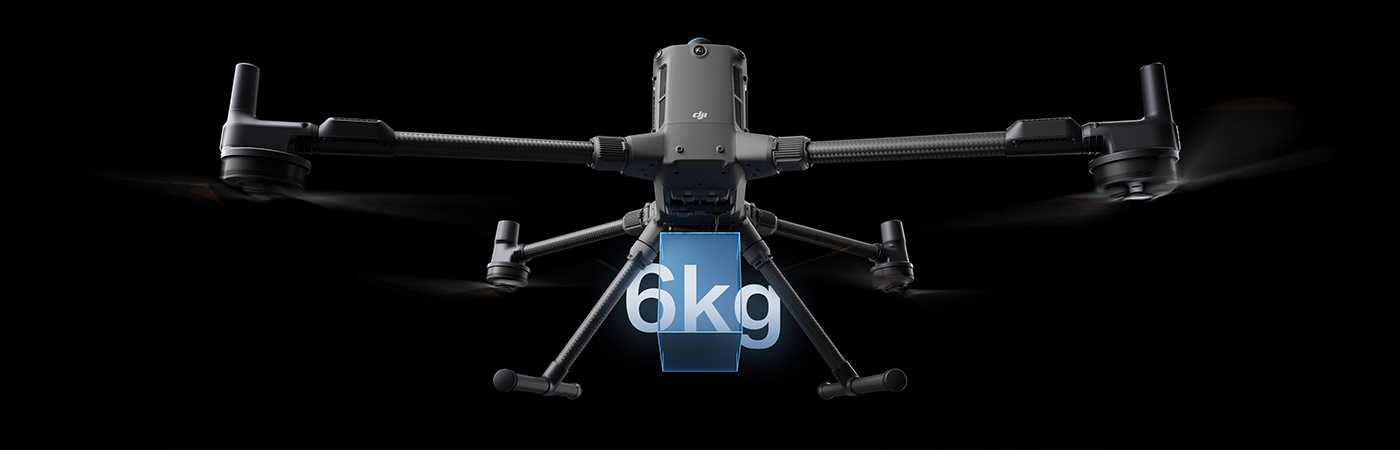
One of the most important differences between the DJI Matrice 400 and the DJI Matrice 350 RTK is the maximum lifting capacity.The Matrice 350 RTK offers a payload of up to 2.7 kg, which is still more than sufficient for many applications.For companies that perform standard inspections, measurements, photographic documentation, or missions using thermal imaging cameras, the M350 RTK remains a highly effective tool.
DJI However, the Matrice 400 increases this value to 6 kg.That’s more than double the workspace for specialized sensors, additional modules, and more complex hardware configurations.In practice, this means greater flexibility when planning missions and the ability to operate with heavier equipment that might previously have required a different class of platform.
For the end user, this translates to greater freedom of action.The Matrice 400 is better suited for situations where a single drone needs to handle various types of tasks—from inspections and mapping to specialized operations requiring the use of multiple devices simultaneously.
Up to 7 payloads — the Matrice 400 as a multisensor platform
Another significant difference is the number of supported payloads.DJI The Matrice 350 RTK supports configurations with up to 3 payloads.This solution is sufficient for many standard industrial applications, especially when the operator uses a single main camera or a set of sensors selected for a specific type of work.
DJI However, the Matrice 400 goes much further.The new platform can support up to 7 payloads, making it more than just a camera drone—it becomes a full-fledged operational system for specialized tasks.
This is particularly important in industries where the simultaneous collection of different types of data is crucial.One example is infrastructure inspections, where the operator may need an RGB camera, a thermal imaging camera, a rangefinder, a spotlight, a speaker, or an additional module for analyzing the surroundings.A larger number of payloads makes it possible to reduce the number of separate flights and better tailor the drone to a specific mission.
Better image transmission and greater range
The difference between DJI Matrice 350 RTK and DJI Matrice 400 is also evident in the transmission system.The Matrice 350 RTK uses DJI O3 Enterprise, offering a range of up to 20 km under the FCC and up to 8 km under the CE.These are still very solid specifications, which are more than sufficient for many applications.
DJI The Matrice 400 uses a newer system DJI O4 Enterprise Enhanced.According to the specifications at DJI, it can reach up to 40 km of range in FCC and up to 20 km in CE.In practice, it's not just about the maximum distance itself.What matters more is having a greater margin of connection stability, especially when working over large areas, in difficult terrain, or in environments where signal interference may occur.
For the operator, this means greater confidence during flight, a smoother view, and better control over the mission.In enterprise applications, stable transmission is crucial because it affects not only work comfort but also operational security.
Flight Safety - Advanced Obstacle Detection
DJI The Matrice 350 RTK offers 6-directional obstacle detection and support for visual and infrared sensors.This is a proven system that helps the operator maintain a higher level of safety during flight, especially near buildings, industrial structures, power lines, or other terrain obstacles.
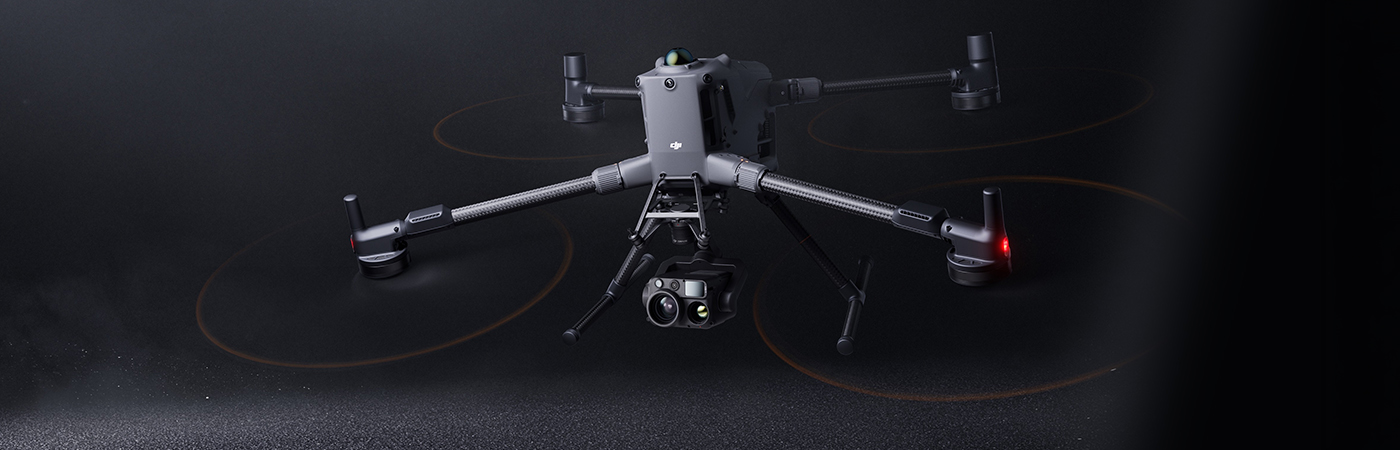
In the Matrice 400 DJI, the security system has been significantly enhanced.Among other things, the new platform has been equipped with LiDAR, vision sensors, and 6-directional mmWave radar.This combination improves obstacle detection capabilities in complex environments and provides the operator with greater support during challenging missions.
This is particularly important in applications where the drone operates near infrastructure: near bridges, masts, power lines, wind turbines, roofs, chimneys, or industrial facilities.A greater number of systems that aid spatial orientation means a lower risk of error and a greater margin of safety.
Flight Time and Performance - Matrice 400 Has a Slight Edge
The Matrice 350 RTK offers up to 55 minutes of flight time without a payload, while the Matrice 400 DJI, according to the specifications at DJI, achieves up to 59 minutes with the H30T camera.The difference in minutes alone doesn't seem huge, but when combined with greater payload capacity and a larger number of payloads, it shows that the Matrice 400 was designed for more demanding operations.
The new model also offers higher horizontal speed— up to 25 m/s compared to 23 m/s in the M350 RTK.The differences are also visible during ascent and descent.The Matrice 400 reaches speeds of up to 10 m/s during climb and up to 8 m/s during descent, while the Matrice 350 RTK offers 6 m/s for ascent and 5 m/s vertical descent.
In practice, this means more efficient movement between mission points, shorter flight times, and greater efficiency when working over large areas.
Durability and Operation in Harsh Conditions
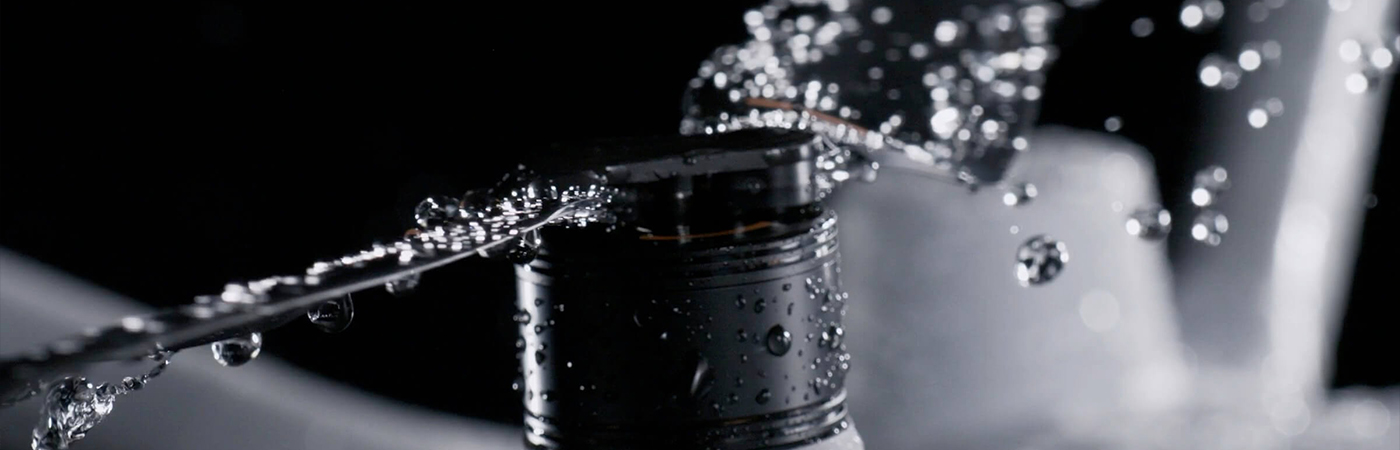
Both models offer IP55 protectionand an operating temperature range from -20°C to 50°C , and wind resistance up to 12 m/s.This means that both DJI Matrice 350 RTK and DJI Matrice 400 are designed for professional use in demanding environments.
So we're not dealing with a situation where the older model suddenly becomes obsolete.The Matrice 350 RTK remains a robust, durable, and proven enterprise platform.However, the Matrice 400 takes this concept a step further, offering greater flexibility, a more powerful configuration, and more future-proof expansion capabilities.
Batteries—a new power concept for the Matrice 400 at DJI
DJI The Matrice 350 RTK uses TB65 and a dual-battery system.This solution, which is well known to operators, ensures redundancy and safety during flight.
DJI The Matrice 400 uses a battery TB100 - a single high-capacity battery.This is a design change that simplifies operation and aligns with the platform's new architecture.For companies that operate fleets, this can have organizational implications, as the way batteries are charged, transported, and managed affects the day-to-day logistics of their operations.
Does the Matrice 350 RTK from DJI still make sense??
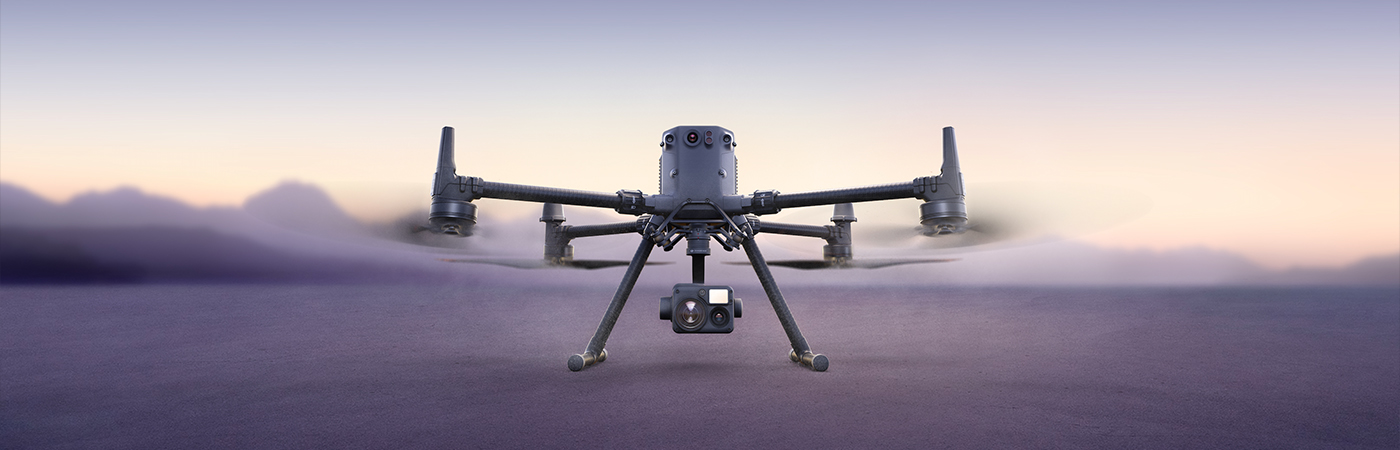
Yes— DJI 's Matrice 350 RTK is still a very good enterprise drone.For many companies, this platform will be more than sufficient, especially if their primary applications include surveying, inspections, thermal imaging, mapping, or working with popular DJI payloads such as the H20, H30, P1, or L2..
The Matrice 350 RTK also has a major advantage in terms of market maturity.This design is well known to operators, has been proven in practice, and is widely used in many industries.If a company needs a stable, reliable tool for everyday tasks, the M350 RTK may still be a very sensible choice.
Who Should Choose the Matrice 400 DJI??
DJI The Matrice 400 is the best choice for users who want to take their operations to the next level and need a more advanced operating platform.This is a drone for companies that plan to use heavier sensors, multiple payloads simultaneously, more complex missions, and larger operational areas.
The Matrice 400 is particularly well-suited for situations where the long-term viability of an investment is key.Greater payload capacity, support for up to 7 payloads, the newer O4 Enterprise Enhanced transmission, and more advanced safety systems make this a platform well-suited for the development of drone applications in the coming years.
Summary - DJI Matrice 400 or DJI Matrice 350 RTK?
DJI Matrice 350 RTK is still a proven and highly valuable enterprise drone.For many companies, it will be a sufficient tool for inspections, surveying, thermal imaging, mapping, and standard industrial operations.
DJI Matrice 400 is, on the other hand, clearly a more forward-looking platform.It offers greater lifting capacity, the ability to handle a wider range of payloads, more robust data transmission, enhanced safety features, and greater scalability.So this isn't just a successor to the M350 RTK, but a platform designed for more advanced drone systems.
If proven technology and classic enterprise applications are your priority, the DJI Matrice 350 RTK is still a great choice.However, if the company wants to prepare for more demanding missions and expand its operational capabilities in the coming years, the DJI Matrice 400 will be a natural next step.