Comparison of drones DJI Avata 360 vs Antigravity A1

360° drones are still a fresh segment, but it's already clear that manufacturers are approaching it in different ways.Antigravity A1 and DJI Avata 360 at first glance do a very similar thing - they record everything around you and allow you to frame the shots after the flight.In practice, however, they differ much more than it may seem.See what they represent.
Image quality
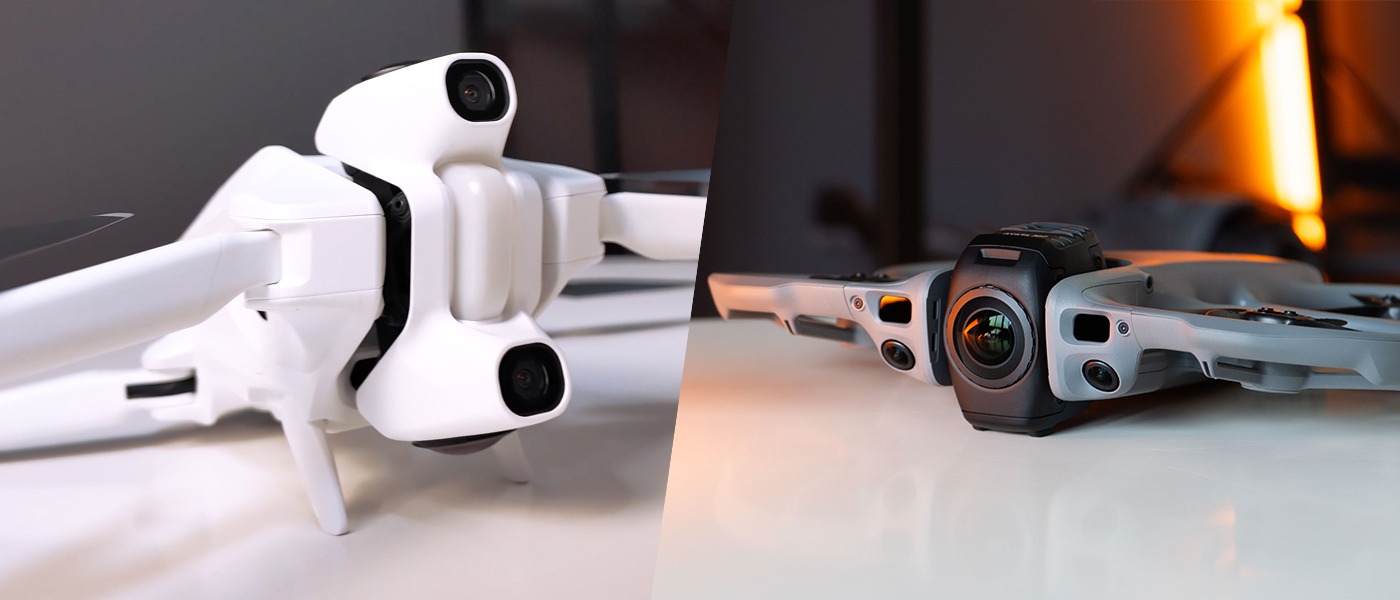
DJI Avata 360 - offers larger sensors and an aperture , which lets in more light resulting in better image illumination and potentially higher quality, especially in more challenging conditions.Additionally, it records at a higher frame rate in 8K (up to 60 FPS).And this is where DJI gains the biggest advantage - the smoothness of the shots is very high and especially with dynamic scenes it makes a big difference.
On the other hand, Antigravity A1 is doing very well color-wise.The image is natural and pleasing to the eye, without the need for additional processing.This is a big plus for people who just want to record material and use it right away.
Also worth noting is the Single Lens mode in Avat 360 , which you won't find in Antigravity.This means that DJI can also act like a classic drone - we record standard shots without the need to frame the 360 footage later.
Construction and security systems
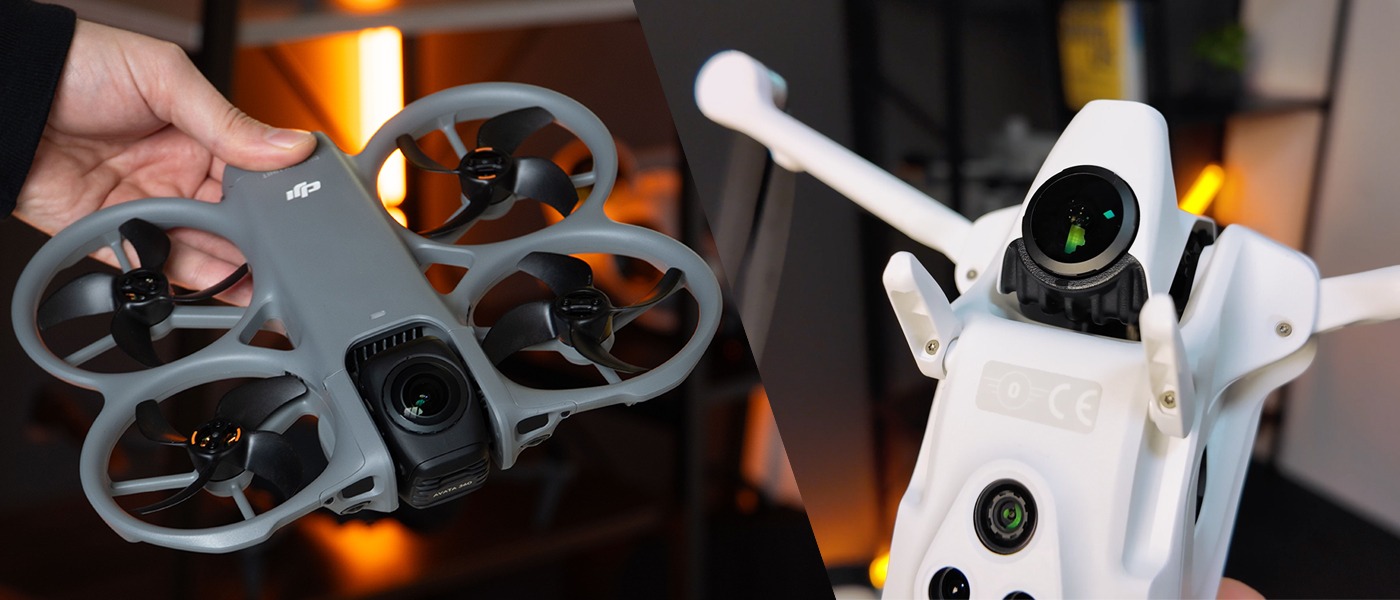
The build quality of both drones stands at a very high level.You can see the attention to detail - solutions such as the automatically lifting legs in the Antigravity A1 or the unusual design of the gimbal in the Avat 360 can definitely please many a gadgeteer.
In practice, however, two things are most important - weight and design.
Antigravity A1 falls under 250 g (class C0) , which means that it can be flown without a license (operator registration is sufficient).That's a big plus to boot.Structurally it resembles the Mini series - it is lightweight and open.Despite the presence of sensors, however, it must be remembered that this equipment is more susceptible to damage , especially when flying more risky flights or flying close to obstacles.
DJI Avata 360 is already a "heavier caliber" - about 455 g and class C1.However, in return we get a closed, more armored design , which withstands contact with obstacles much better.In practice, even light impacts, such as against branches or walls, do not immediately end up damaging the equipment.
The sensor system also makes a huge difference.Avata 360 is equipped with an advanced LiDAR-supported vision system , which gives a very strong sense of security - especially when flying in tight spaces or inside buildings.
Range, flight time and charging
DJI The Avata 360 provides about 23 minutes of flight , the Antigravity A1 performs very similarly on a standard battery(about 22-25 minutes ), but has one major advantage - an optional higher-capacity battery that allows you to extend the flight up to 35-39 minutes (at the expense of the C1 class).Battery charging time:
Antigravity A1:
- about.45-60 min (1 battery, standard vs augmented)
- about.2-3 h (3 batteries in hub, standard vs augmented)
DJI Avata 360:
- about.47 min (1 battery, 100W hub)
- about.~100 min (3 batteries, hub)
In terms of coverage, DJI again shows that it is targeting more extended applications.With O4+ system offers transmission up to 10 km (CE) , with very stable viewing and good immunity to interference.Antigravity A1 offers up to about 6 km (CE) , which is still a very good result, but more typical of lighter designs.These are values measured under very ideal conditions in reality these drones have a very similar range of about 1-1.5 km in the city.
Are these 360 FPV drones?
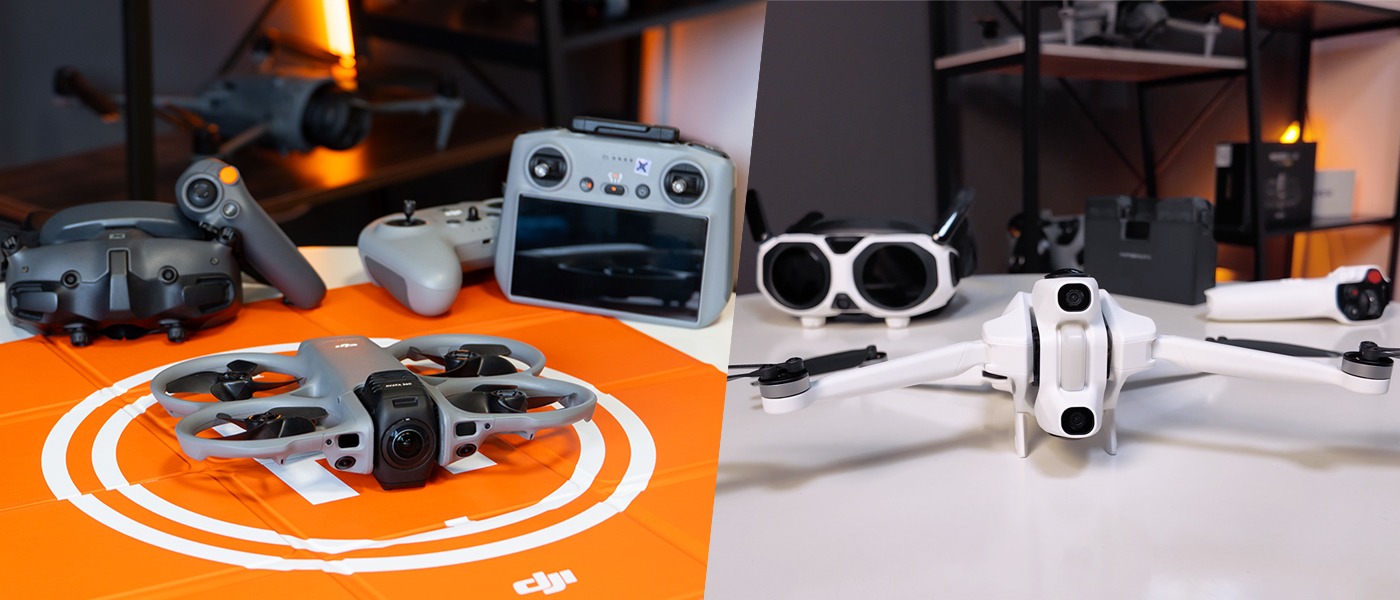
Support goggles and allow you to view images from a first-person perspective.In practice, however, their nature is quite different.
Antigravity A1 despite goggle support, it still behaves like a classic drone.It flies stably, predictably, and is geared more towards comfort and ease of control than aggressive maneuvering.Modes like FreeMotion further simplify flying, so even with no experience you can quickly start creating dynamic shots - but it's still not full FPV.
DJI Avata 360 on the other hand, is much closer to the world of FPV in terms of feel - especially once the goggles and motion controller are connected.You have more dynamics, more control over movement and more "direct" control.At the same time, it is worth noting one important thing - at this time the Avata 360 does not offer full manual mode (Acro) , known from classic FPV drones.
Comparison of specifications
| Antigravity A1 | DJI Avata 360 | |
|---|---|---|
| Weight | 249 g (standard) / 291 g (larger battery) | about.455 g |
| EU class | C0 / C1 (with a larger battery) | C1 |
| Camera | 1/1.28" CMOS, 55 MP | 2 × 1/1.1" CMOS, 64 MP |
| 360° video | 8K up to 30 fps | 8K to 60 fps (HDR) |
| 360° Photos | up to 55 MP | up to 120 MP (16K) |
| Classic mode | no | Single Lens (up to 4K 60 fps) |
| Stabilization | digital 360° | digital + 1-axis gimbal |
| Sensors | front | omnidirectional + LiDAR + IR |
| Range (CE) | up to 6 km | up to 10 km |
| Flight time | about.22-25 min (up to 35-39 min larger battery) | about.23 min |
| FPV | simplified (FreeMotion) | more extensive + goggles + motion controller |
| Manual mode (Acro) | no | no |
For whom which drone?
DJI Avata 360 will be a very good choice for people who are already in the DJI ecosystem - have a goggle or controller and just want to expand their "stable" with new capabilities.Despite its built-in design and advanced sensors, it's a drone that will naturally tempt you to take more adventurous shots - and those are the ones that give you the most fun with it.Therefore, it will work better for those with more experience or those who take a conscious approach to the subject (or, for example, secure the equipment DJI Care).
Antigravity A1 on the other hand, is an interesting case - the first 360 drone from Insta360 and also one of the pioneers of this segment.And it must be said that the manufacturer has done really well.The drone offers high image quality, predictable behavior in the air and great simplicity of operation , making it suitable for beginners as well as more creative users.
Summary
It must be admitted that both drones present a very high level - both in terms of the quality of the recordings, as well as the flying itself and stability.We are curious which way this segment will go and how Antigravity will respond to the move DJI with Avata 360.