
Comparison of DJI Pocket 4 vs DJI Pocket 3 - is it worth it?

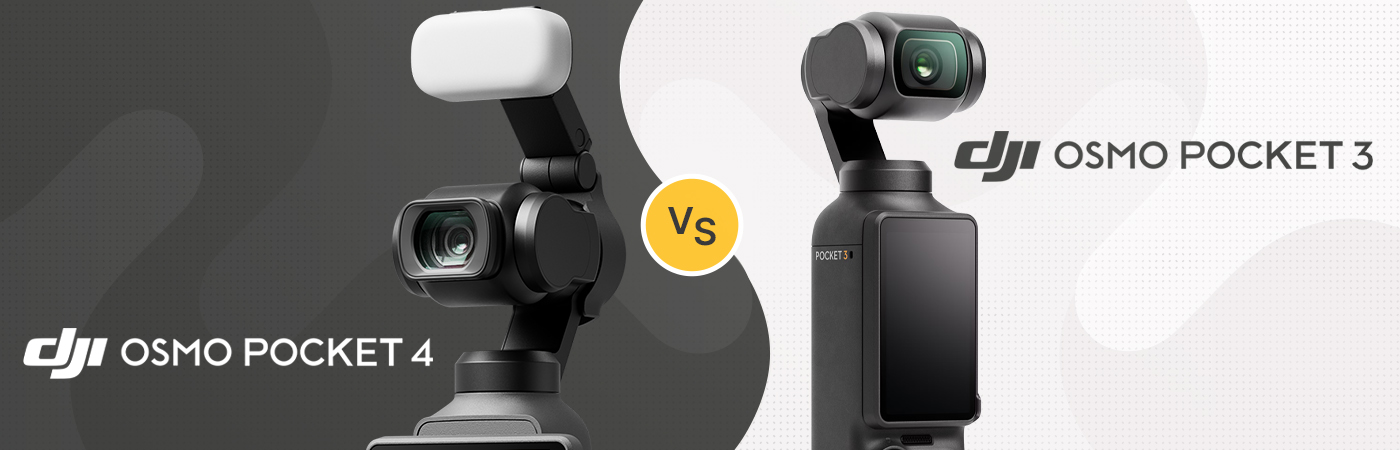
DJI The Osmo Pocket 4 looks almost identical to the Pocket 3 and łt is easy to think that this is just a slight refresh.Also looking at the specification itself, the differences do not seem immediately large.Only on closer comparison, it becomes clear that the new model has been clearly refined in several key aspects that matter in everyday use.In this overview, we look at what has actually changed and whether these are changes for which it would be worth moving from the previous model.
Camera design DJI Osmo Pocket 4 and DJI Osmo Pocket 3
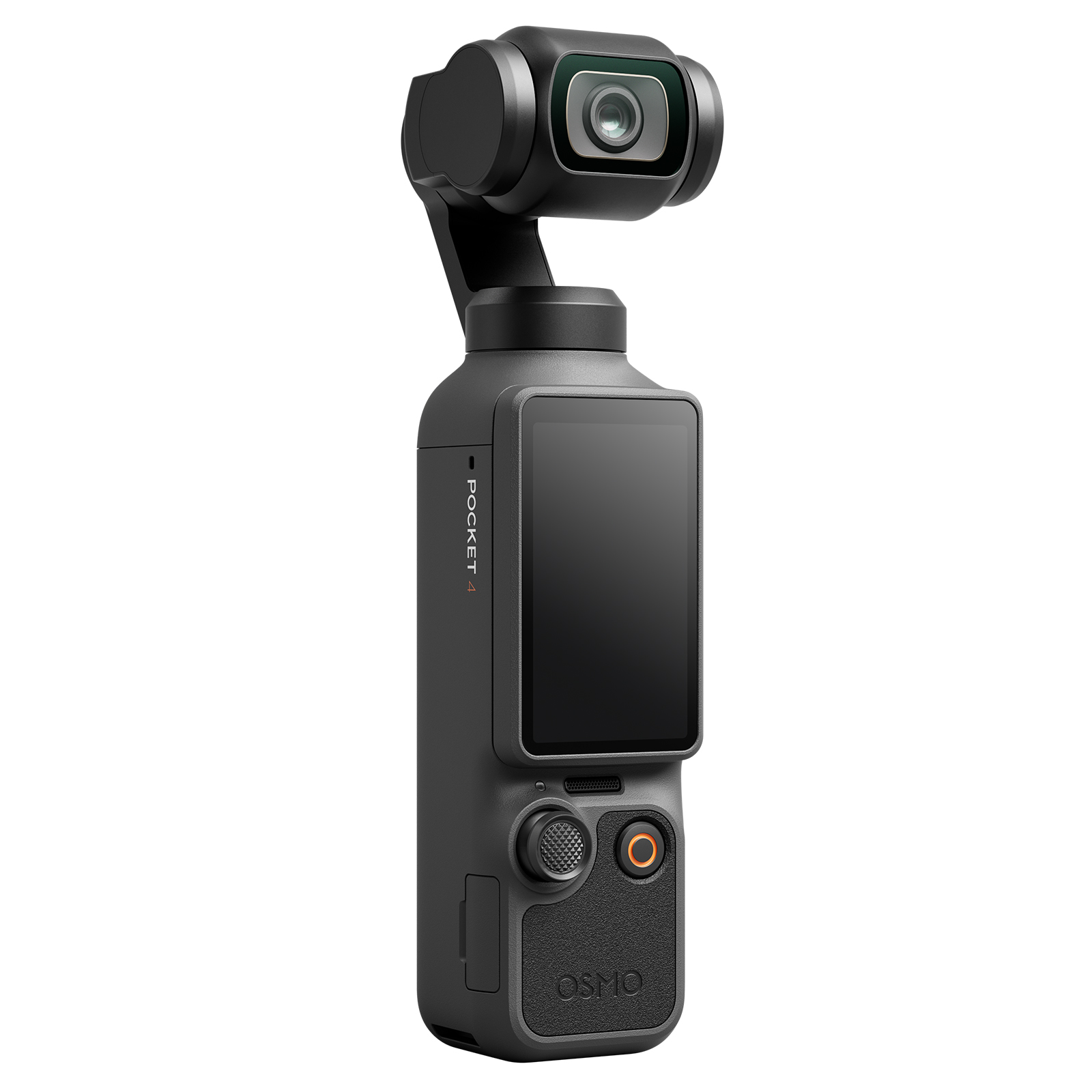
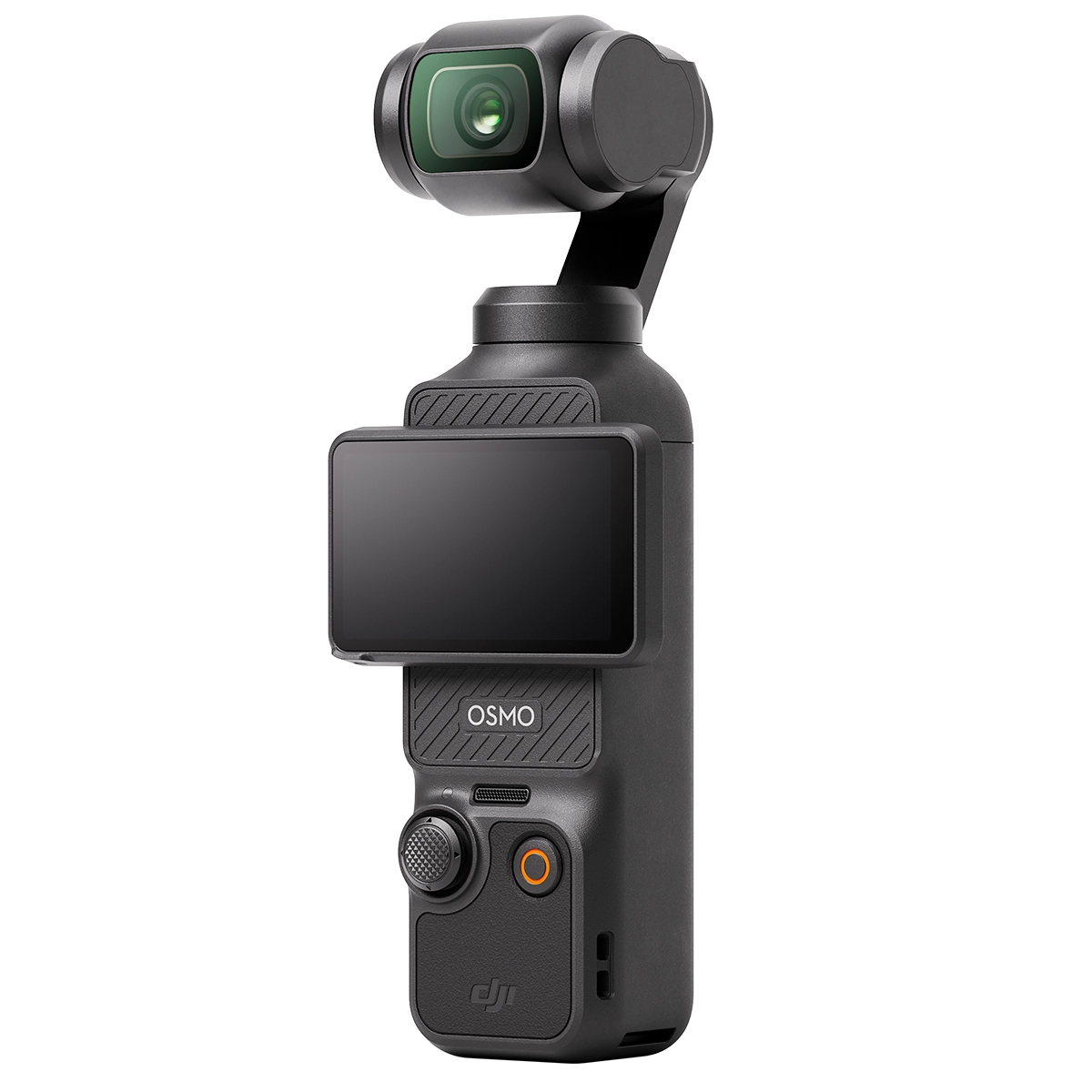
In terms of design, the DJI Osmo Pocket 4 and DJI Osmo Pocket 3 are very similar, as they both models are based on the same compact form factor with built-in 3-axis gimbal and 2-inch touch screen.However, the Pocket 4 is a tad larger and heavier than the Pocket 3, although in daily use this difference remains virtually imperceptible.In both cases, the user gets 3 microphones and a very similar control layout, but the newer model offers a brighter screen with a brightness of 1000 nits instead of 700 nits, which improves visibility in bright sunlight.Pocket 4 is also distinguished by 107 GB of built-in memory, which the Pocket 3 lacks, and is additionally equipped with two physical buttons under the screen, making it easier to quickly change the zoom and operate selected functions.From a convenience perspective, this means that the Pocket 4 is more self-sufficient and simply more convenient for daily use.
Camera differences
The biggest differences between DJI Osmo Pocket 4 and DJI Osmo Pocket 3 can be seen in the capabilities of the camera itself, i.e. how they capture photos and video.Both models have a 1-inch CMOS sensor and an f/2.0 aperture lens, but the Pocket 4 received a new stacked CMOS sensor that catches more light and translates into less blurry images in dynamic shots.In photos, the advantage of the newer model is very clear, as the Pocket 4 offers a resolution of up to 37 MP, while Pocket 3 offers about 9.4 MP.For video, both devices record in 4K to 60 fps as standard./s, however, the Pocket 4 supports slow motion even at 4K/240 fps./s, while the Pocket 3 ends up at 4K/120 fps./s.The newer model also offers a higher video bitrate and wider ISO range, so it gives more flexibility for recording in lower light and post-processing.That's why the Pocket 4 is clearly stronger where image quality counts.
Specification comparison - DJI Osmo Pocket 4 vs DJI Osmo Pocket 3
| Camera |
|
|
| Dimensions | 144.2 × 44.4 × 33.5 mm | 139.7 × 42.2 × 33.5 mm |
| Weight | 190,5 g | 179 g |
| Screen | Size: 2", Resolution: 314×556 px, Brightness: 1000 nits | Size: 2", Resolution: 314×556 px, Brightness: 700 nits |
| Waterproof | Not | Not |
| Built-in memory | 107 GB | - |
| Maks.memory card | up to 1 TB | up to 512 GB |
| Microphones | 3 | 3 |
| Matrix | 1" CMOS | 1" CMOS |
| Aperture | f/2.0 | f/2.0 |
| Image resolution | up to 37 MP (7680×4320 / 6144×6144) | about.9.4 MP (3840×2160 / 3072×3072) |
| Digital zoom | Digital Zoom: Photos: 7680×4320, 2× Video: 1080p, 4×; 3K, 4×; 4K, 4×UVC and DP: 4K, 4× Live streaming: 1080p, 4× Low light/Slow motion/Timelapse: unavailable | Digital Zoom: Photos: 3840x2160: unavailable; Video: 1080p, 4x; 2.7K, 3x; 4K, 2x; UVC & Livestream: 1080p, 4x; Slow Motion / Timelapse: not available; |
| Video recording | 4K to 60 FPS; 3K to 60 FPS vertical modes | 4K to 60 FPS; 3K to 60 FPS vertical modes |
| Video format | MP4 (HEVC) | MP4 (H.264 / HEVC) |
| Image stabilization | 3-axis gimbal | 3-axis gimbal |
| Night mode | 4K / 1080p @ 24-30 FPS | 4K / 1080p @ 24-30 FPS |
| Slow motion | 4K up to 240 FPS; 1080p up to 240 FPS | 4K up to 120 FPS; 1080p up to 240 FPS |
| Hyperlapse | 4K / 1080p, up to ×30 | 4K / 2.7K / 1080p, up to ×30 |
| Battery life | about.240 min | about.166 min |
| Charging time | 80%: 18 min; 100%: 32 min | 80%: 16 min; 100%: 32 min |
| Data transfer (cable c) | 800 MB/s | 30 MB/s |
Convenience of use
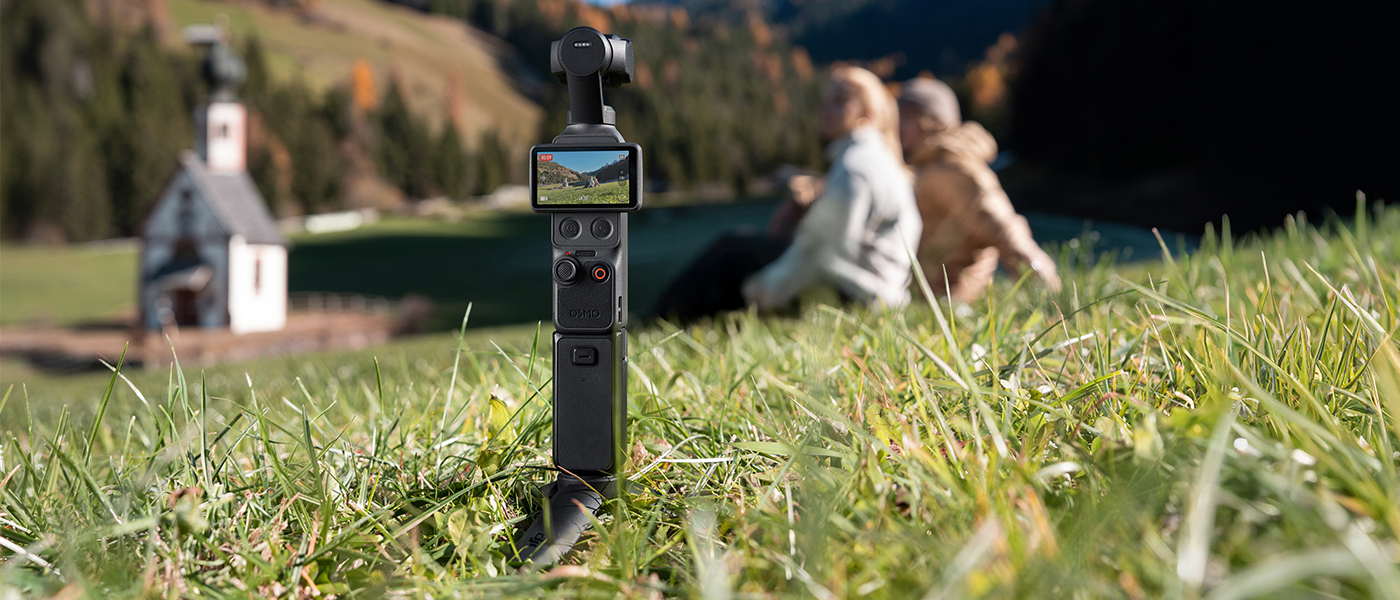
In terms of everyday use, DJI Osmo Pocket 4 performs noticeably better than Pocket 3, primarily due to its longer working time and faster file management.The newer model runs for up to about 240 minutes, while the Pocket 3 offers about 166 minutes of operation on a single charge, which in practice means fewer interruptions during recording.The differences in charging are slight, as both devices reach 100% in about 32 minutes, although the Pocket 3 charges to 80% minimally faster.
A much bigger advantage Pocket 4 can be seen when transferring data - over a USB-C (USB 3.1) cable it can copy files at up to 800 MB/s, while the Pocket 3 offers about 30 MB/s.With more recordings it makes a very big difference and after saves time.Also working in the Pocket 4's favor is a wider range of accessories, including m.in.handle with battery, additional lighting, gimbal lock, ND filters or wide angle lens.
Summary
Honestly, DJI Osmo Pocket 4 looks like a model that has simply been solidly refined.This is not a revolution, but rather a sensible improvement of what already worked well in Pocket 3.The manufacturer has sped up operation, added built-in memory, increased the speed of file transfer and improved several features that really make a difference in everyday use.However, if you look only at the standard quality of the recordings, then, apart from slow motion, there is not so much of a leap to speak of a gap here.Therefore, if you already have DJI Pocket 3 and you work well on it, it is unlikely to be the hardware you necessarily need to switch to.If, on the other hand, this is your first camera, it is worth opting for the Pocket 4.Mainly by a better matrix, built-in memory and much faster file transfer, because these are the things that make work easier on a daily basis.