Autonomous drones for the police and the State Fire Service—how does DFR work in Poland?

Automated drones for police and fire services – how does DFR work in Poland?
Imagine a report to the police: someone is believed to have a weapon. It takes over ten minutes for a patrol to arrive. Officers enter the situation without knowing what awaits them. With DFR and DJI Dock 3, an automated drone is on the scene in 100 seconds – the command centre operator sees a live feed and can relay crucial information to the patrol: is there a weapon or not? This is not the future – it is a reality already implemented around the world and gradually reaching Poland.
Poland on the verge of a drone revolution in public safety
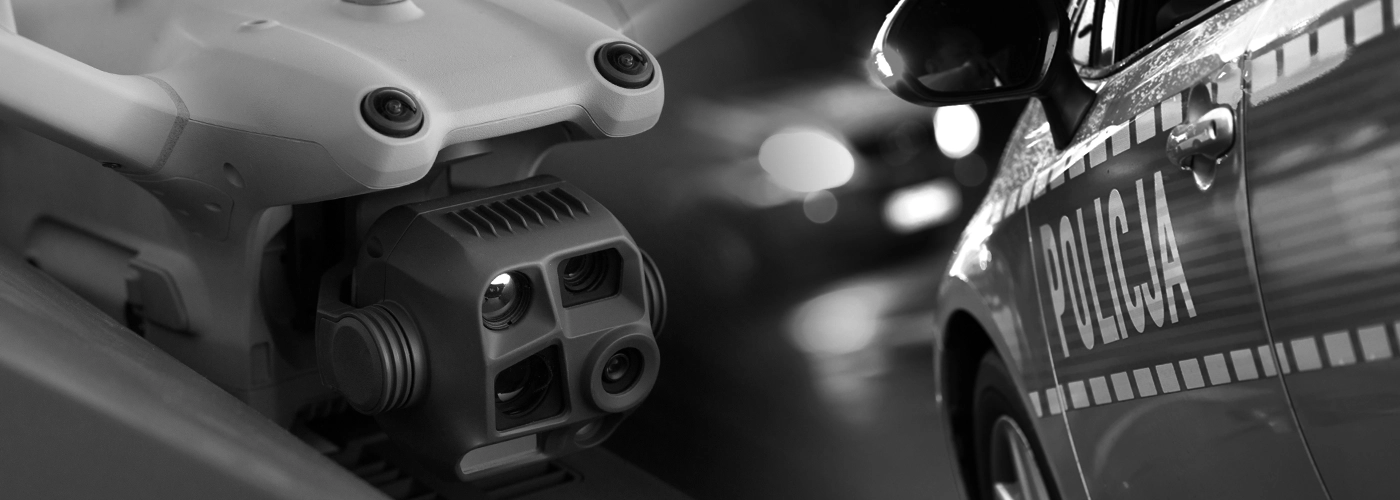
Polish uniformed services are increasingly turning to drones. In 2024, police pilots carried out nearly 6,000 UAV operations – from searches for missing persons and traffic monitoring to securing mass events. In March 2024, the Polish Police established its first permanent operational team of drone pilots (ZO BSPP), a breakthrough paving the way for a systematic approach to automated aerial support.
At the same time, the State Fire Service (PSP) is implementing an ambitious UAV fleet expansion programme: every district and municipal PSP headquarters is being equipped with at least one drone, and in the first quarter of 2025 drones became standard equipment for light reconnaissance and rescue vehicles. C6-class drones are planned for specialised tactical operations in four voivodeships: Podlaskie, Pomeranian, Greater Poland and Silesian.
What is Drone as a First Responder?
DFR is an operational model in which an automated drone – rather than a patrol vehicle – is the first to reach an incident. The system automatically dispatches a drone after receiving an alert from CAD, a sensor or VMS, provides a live feed and enables assessment before anyone arrives.
Polish services face the same challenges as their counterparts worldwide: staffing shortages, long distances between units and too many simultaneous tasks. An automated DFR drone does not replace an officer – it provides the information needed to make better decisions.
DJI Dock 3 – a system ready for Polish conditions
Poland's climate presents challenges: freezing winters in the east and north, heavy precipitation and strong winds. DJI Dock 3 operates at temperatures from -30°C to +50°C (IP56 rating), withstands winds of up to 12 m/s, and its lid opens even with a 10 mm layer of ice. The system is ready for year-round, round-the-clock operations, regardless of the season.
Four pillars of the DFR solution
1. Fly to Location – automated deployment in 100 seconds
The operator clicks a point on the map – the system selects the nearest Dock and initiates an automated flight. The drone takes off in 10 seconds and covers 1,000 m in 100 seconds. The destination can be changed in flight.
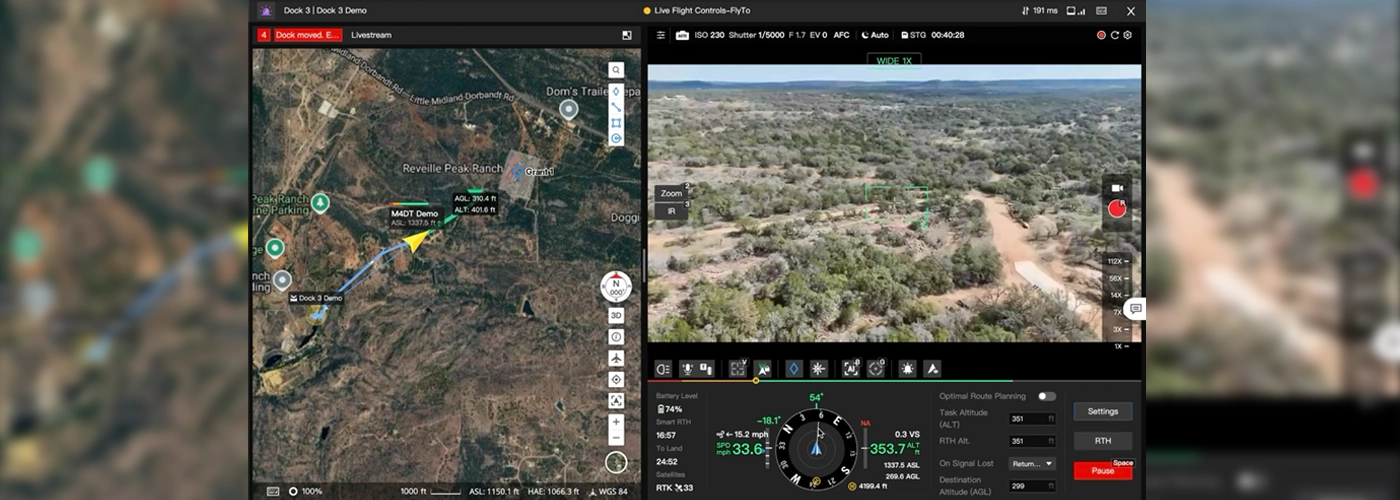
FlightHub 2: automated drone dispatch – clicking the map initiates an immediate flight. Top: dock selection view; bottom: Virtual Cockpit with the drone in flight and an AR overlay.
The zoom camera enables target identification before the drone reaches the incident site directly. Dock 3's quiet propellers reduce detectability, which is useful for operations requiring discretion, typical of police operational activities.
2. Virtual Cockpit – full situational awareness in flight
Virtual Cockpit is the operator interface in FlightHub 2, combining the drone feed, map and telemetry in one window. The AR overlay displays street names and house numbers just like police helicopter systems. The operator can indicate the exact location to the patrol before officers arrive.
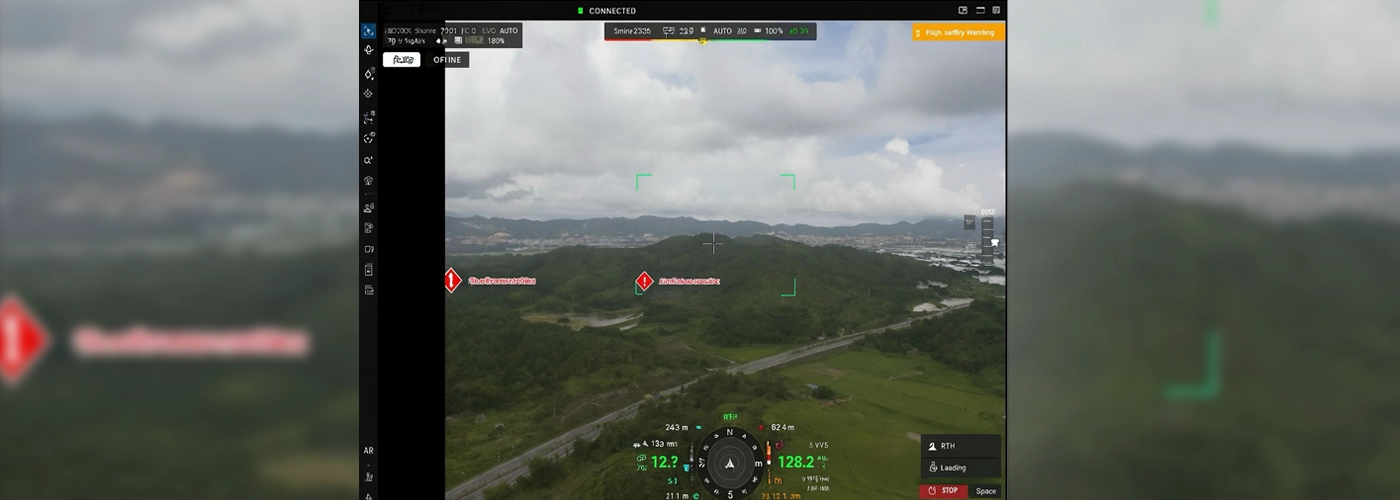
Virtual Cockpit: live feed, AR overlay with street names and house numbers, and telemetry – an environment familiar from tactical helicopters.
The live stream can be shared via a web link – the commander monitors the situation remotely, while the patrol and command centre see the same feed in real time.
3. Auto Dispatch – automated response to alerts
Auto Dispatch closes the loop between the alarm system and an automated drone flight. A signal from CAD, a licence plate reader, sensor or VMS reaches FlightHub 2 via API (HTTP POST/JSON) and automatically triggers a mission. Configuration: the drone flies to the location, orbits for 2 minutes, records footage and automatically returns to the dock unless the operator takes control.
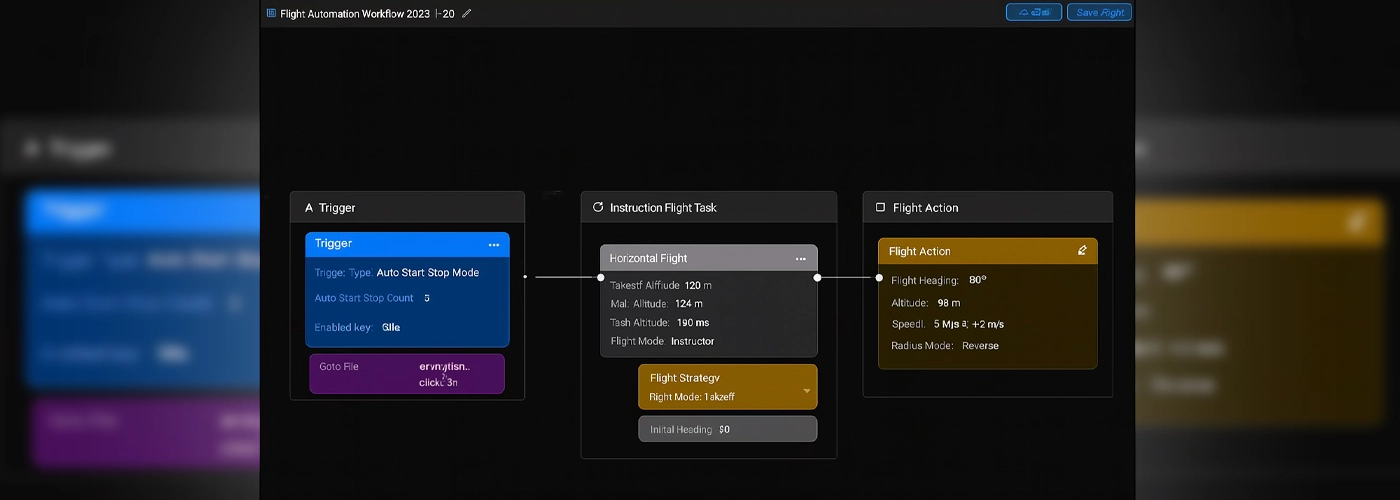
Auto Dispatch: from an external trigger to an automated mission. The system receives an alert, assigns a Dock and dispatches the drone.
4. Operational safety and data
- Automatic RTH: return to the dock when the minimum battery level is reached.
- ADS-B: built-in air traffic receiver with configurable alerts.
- D-RTK3 Relay: extends range from approximately 1.6 km to 8 km in built-up urban areas.
- Onboard flight zones: Fly Zone, No-Fly Zone, No-Landing Zone – remain active even if connectivity with the command centre is lost.
| Data model | Description | Who it is for |
|---|---|---|
| FlightHub 2 Cloud | EU servers – GDPR compliant | Municipal guards, local government units |
| FlightHub 2 Sync | Own S3 bucket or server | Regional police headquarters, municipal headquarters |
| FlightHub 2 On-Prem | Complete isolation, own servers | Police, Internal Security Agency (ABW), Central Anti-Corruption Bureau (CBA), Ministry of National Defence (MON) |
Certifications: ISO 27001, NIST FIPS 140-2, TÜV SÜD Germany. AES-256 encryption at all levels. DJI does not retain user data.
Auto Swap – 12 hours of automated monitoring
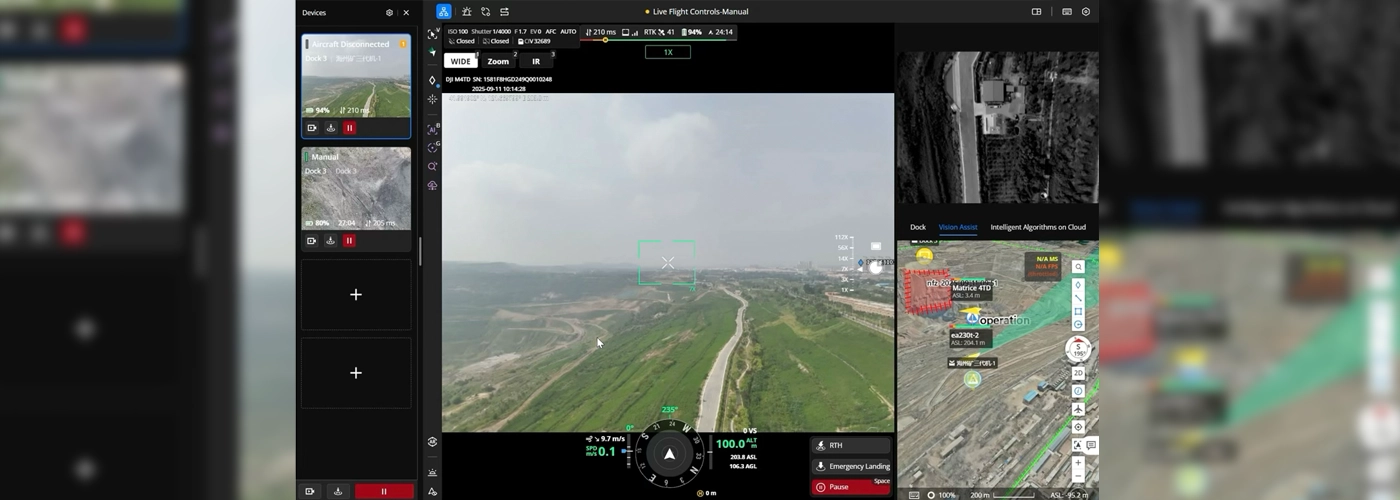
Virtual Cockpit 2.0 (since October 2025): one operator manages four automated Docks simultaneously, with split-screen live feeds and Auto Swap without transmission interruption.
With two Docks within range of the location, the system automatically coordinates the rotation of drones without interrupting transmission. Total continuous automated monitoring time from one pair of stations: 12 hours – sufficient for any critical incident.
Case study: El Paso – 22 automated stations for three services
El Paso (USA): 22 deployed DJI Dock 3 stations, a shared network for police, fire services and the airport, and 64+ km of coverage across complex terrain. Operational data: the automated drone network shared across departments became municipal infrastructure rather than a tool for a single department. An analogy for Poland: this approach could work in major urban areas, with a shared network for the Police, PSP and municipal guards, and on-premises data for each institution.
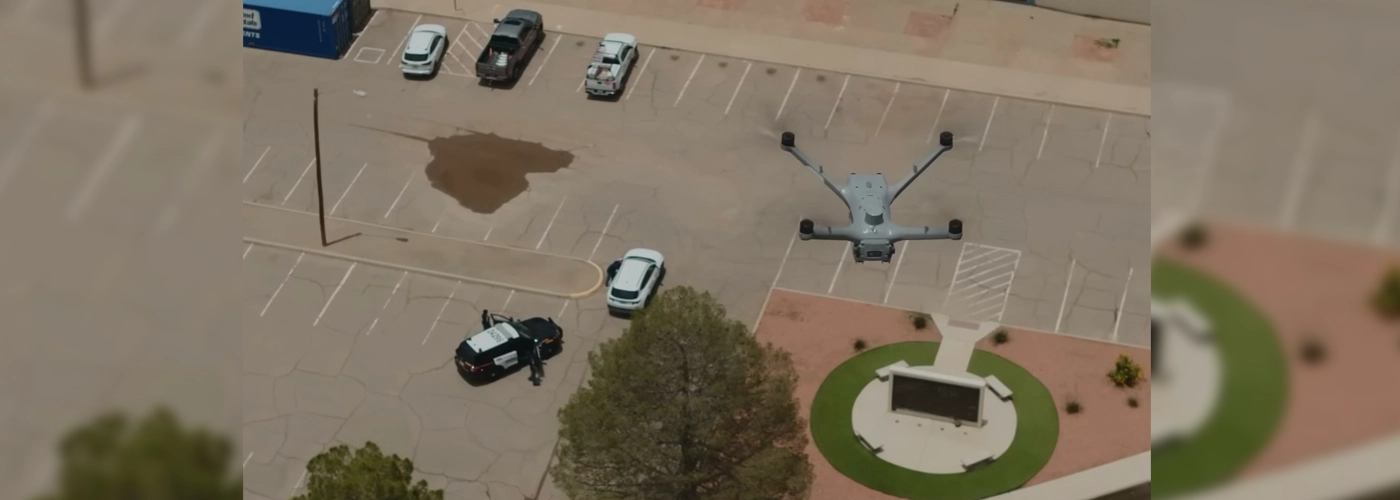
El Paso: 22 automated Dock 3 stations for three services – a model that could serve as an example for Polish urban areas
Funding in Poland – where to obtain funding?
Polish local government units and public services can finance UAV system purchases through sources including:
- National Population Protection and Civil Defence Programme 2025–2026 – dedicated funding for local government units and public services
- Police Support Fund and PSP Support Fund – equipment funding from voivodeship budgets
- European Social Fund Plus – training and equipment for uniformed services
- Local government budgets – local authorities already purchase drones for the police and PSP (Świętokrzyskie Voivodeship allocated PLN 348,000 for drones and PLN 7.3 million for service training)
Deploy an automated DFR drone system in your organisation
As an official DJI partner in Poland and a specialist in UAV deployments for public services, we help you through every stage – from needs analysis and system design to operator training and obtaining the required aviation authorisations.
- Free consultation and site assessment
- Assistance with funding applications (KPOL, support funds, EU)
- VLOS and BVLOS pilot training for public services
- Integration with existing CAD and VMS systems
- After-deployment servicing and technical support