


 Drone service
 Rental
 Reliability
 Trust
 Own warehouse
 Warranty
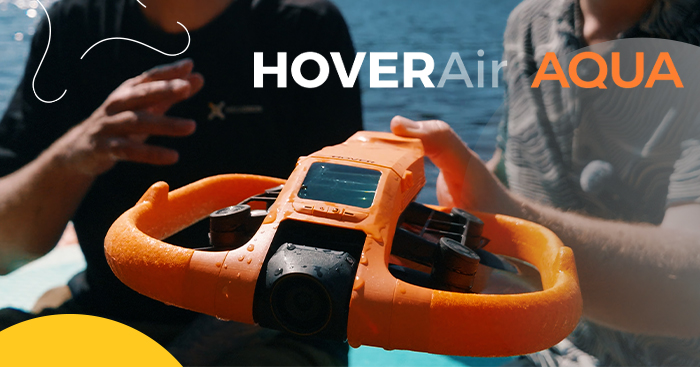
See how the HOVERAir AQUA performs in real-world use and find out if this waterproof drone is right for you.


HOVERAir AQUA is a drone designed from the ground up for flying over water and capturing water sports. This is not simply a device that can withstand a few splashes. AQUA features an IP67 waterproof rating, positive buoyancy, and the ability to take off directly from the water's surface and land on it. It also uses millimeter-wave radar to maintain stable flight at low altitudes above water. Despite these capabilities, it weighs just 249 g, reaches speeds of up to 55 km/h, and offers up to 23 minutes of flight time.
This drone is primarily designed for anyone who wants to capture paddleboarding, kayaking, surfing, wakeboarding, foiling, jet skiing, sailing, or simply holidays by the water without constantly worrying about what might happen if the drone comes into contact with water.
The biggest difference between HOVERAir AQUA and a conventional drone is its water-ready design. The IP67 rating means complete protection against dust and resistance to temporary immersion in water up to 1 meter deep, typically for approximately 30 minutes. AQUA also has positive buoyancy, meaning it remains afloat rather than sinking after landing on water.
More importantly, the drone can take off directly from water and land on the water's surface. You do not need a dry boat deck, a beach, or an awkward attempt to catch the drone by hand while your kayak or paddleboard is rocking.
The manufacturer has incorporated more than 15 waterproofing and anti-corrosion solutions. The construction uses composite materials, corrosion-resistant components, and protected propulsion system parts. However, after flying in salt water, we still recommend rinsing AQUA with clean fresh water. Salt left on the housing for extended periods is not good for any device.
There is another important detail: the battery itself is not waterproof when removed from the drone. It is protected only when correctly installed in AQUA. Before replacing the battery, both the contacts and the battery compartment must be dry.
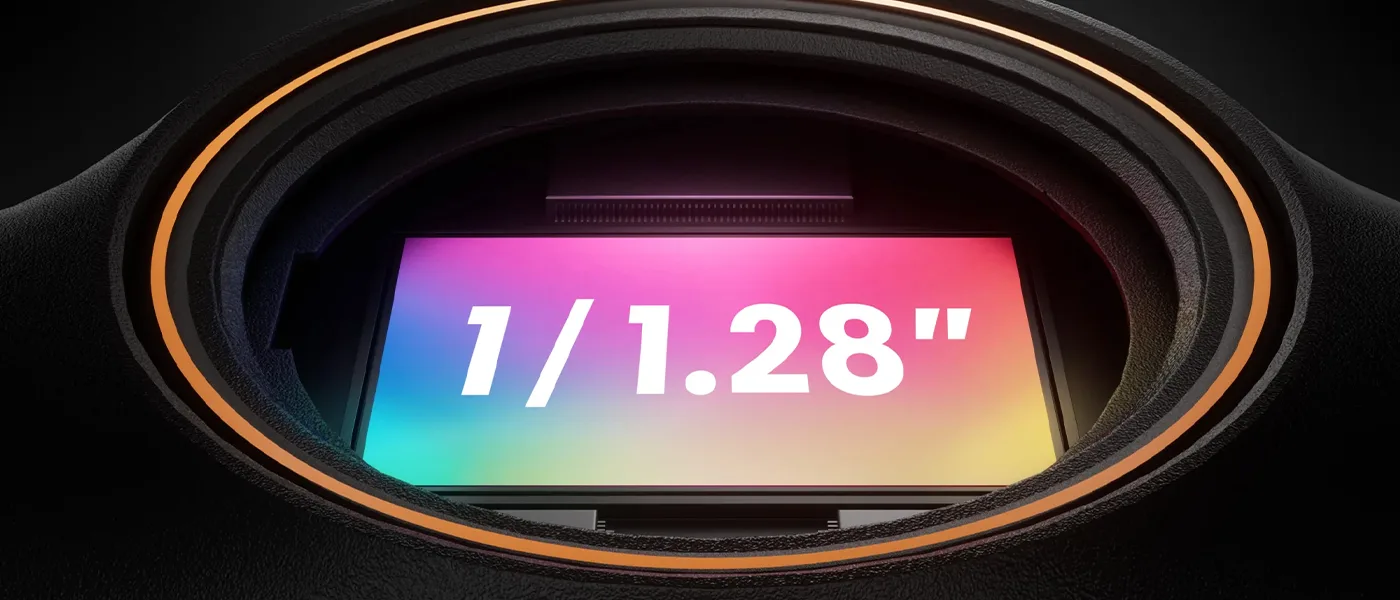
Waterproofing would mean little if the image quality were mediocre. That is why HOVERAir has equipped AQUA with a relatively large 1/1.28-inch CMOS sensor and a lens with a 24 mm equivalent focal length, an 85° field of view, and an f/2.55 aperture. The focus range extends from 0.75 m to infinity.
HOVERAir AQUA records horizontal video at up to 4K 3840 × 2160 at 100 fps. Frame rates of 60, 50, 30, 25, and 24 fps are also available. For vertical recording, the maximum resolution is 4K 2160 × 3840 at 30 fps, while 2.7K recording supports up to 60 fps. The maximum video bitrate is 160 Mbps. Videos are saved in MP4 format using H.264 or H.265 encoding.
The 4K 100 fps mode is particularly useful for water sports. It allows you to slow down footage of jumps, riding into waves, high-speed maneuvers, and water splashes without dropping the resolution to Full HD.
You also get 10-bit H-Log, HDR mode, and automatic face exposure optimization. The latter is designed to adjust exposure to the challenging conditions found over water, where bright reflections from the surface can often make it difficult to expose faces correctly.
Photos are captured at a maximum resolution of 12 MP – 4000 × 3000 pixels and saved in JPEG format.
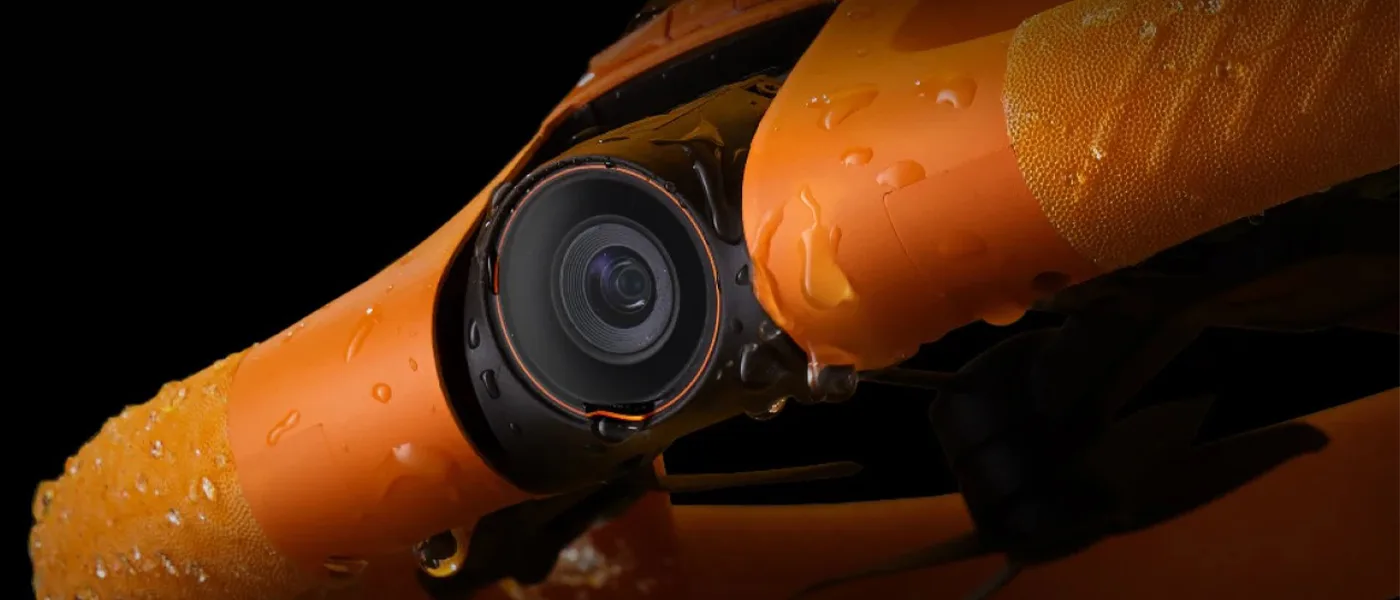
If you have ever filmed near water with an action camera, you know the problem: the camera works perfectly, but a single droplet on the lens can ruin the entire shot.
HOVERAir AQUA features a hydrophobic lens coating designed to reduce water droplets sticking to the lens. According to the manufacturer, laboratory tests showed that the coating repelled up to 80% of water droplets. The lens also features an automatic heating system that helps prevent fogging in humid environments.
These are precisely the kinds of features that show AQUA is not merely a conventional drone placed inside a waterproof housing. Its camera has also been specifically designed for operation over water.
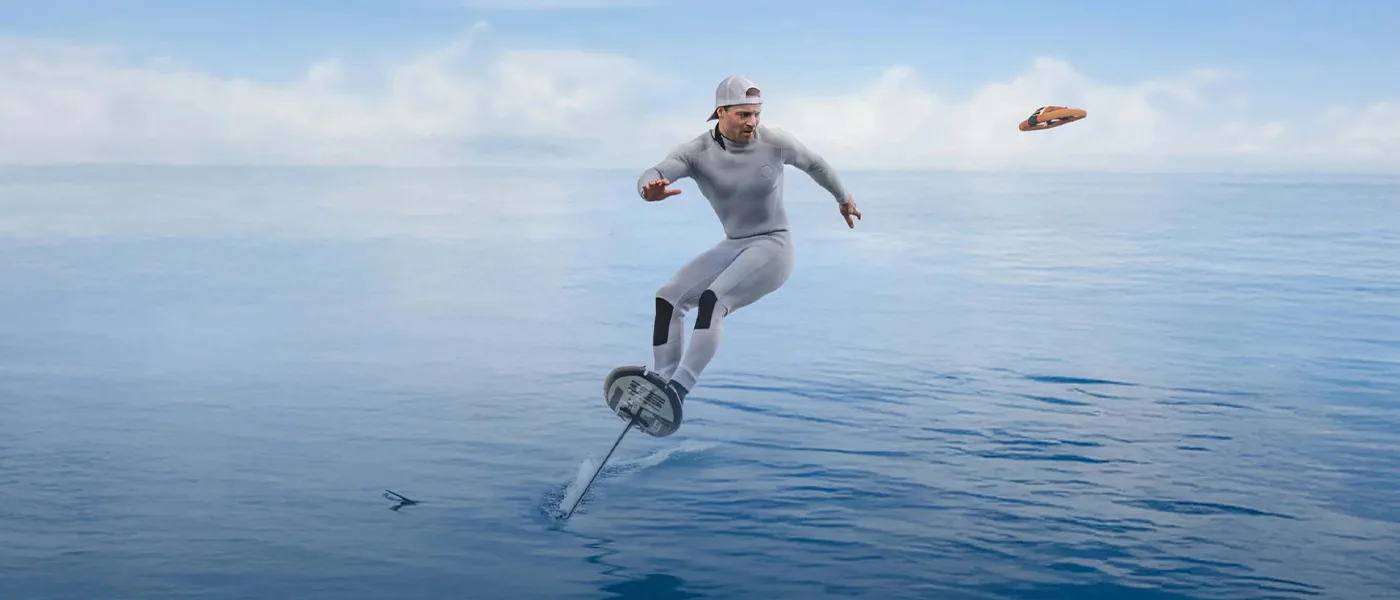
Image stabilization is provided by a combination of a single-axis mechanical gimbal, electronic image stabilization (EIS), and horizon leveling as part of SmoothCapture 3.0 technology. The camera's controllable tilt range is -90° to +30°.
The mechanical gimbal helps reduce sudden camera movements, while electronic stabilization further smooths the footage and maintains a level horizon. In gusty coastal winds or when filming a fast-moving subject, this becomes far more important than during a calm flight over land.
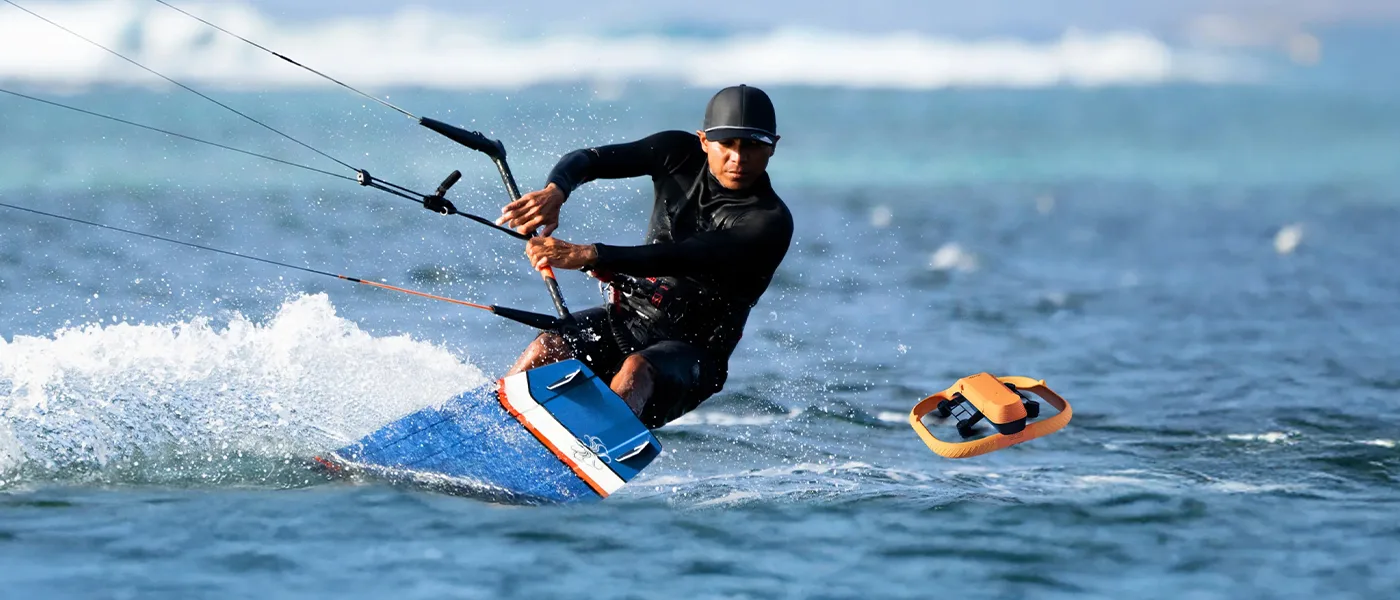
HOVERAir has long focused on automatic subject tracking, but AQUA faces a more demanding challenge. On water, a person's silhouette can regularly disappear behind waves, while the surrounding environment provides fewer visual reference points for tracking systems.
That is why HOVERAir AQUA combines visual tracking with the Lighthouse system and RTK positioning. AQUA and Lighthouse continuously determine their positions relative to each other, with the manufacturer claiming centimeter-level accuracy. This allows the drone to continue tracking even when it temporarily loses visual contact with you, for example while you are surfing behind a wave.
Lighthouse is a wearable controller. It allows you to start a flight, change direction, initiate return, and use the VirtualTether function. If AQUA moves farther away than intended, VirtualTether can automatically call the drone back toward the user.
Lighthouse itself has an IP67 waterproof rating, positive buoyancy, and approximately 5 hours of operating time.
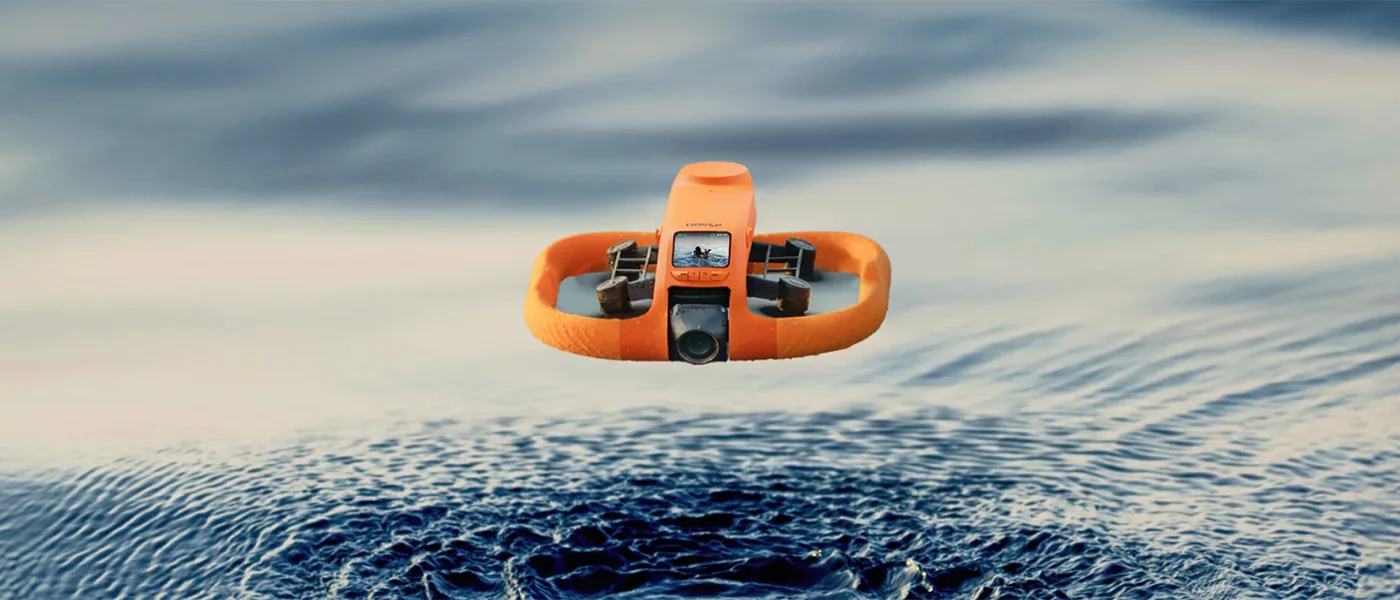
HOVERAir AQUA offers more than 10 automatic flight modes, including features developed specifically for activities on water.
SUP Mode adapts tracking to paddleboard movement and different body positions while paddling. Kayak Mode is optimized for the user's seated position and the more consistent movement of a kayak, while Foil Mode takes into account the distinctive movement of a board as it rises above the water's surface.
Other available modes include Follow, Dolly Track, Angle Track, Orbit Follow, Orbit, Hover, Zoom Out, Bird's Eye, Spiral, and 360° Spin. This means AQUA is not simply a camera that follows you, but a tool capable of performing specific camera movements automatically.
The manufacturer has also introduced Snorkel Mode, in which AQUA stays on the water's surface with its camera pointing downward, as well as the possibility of using the device as a camera mounted on a paddleboard or kayak.
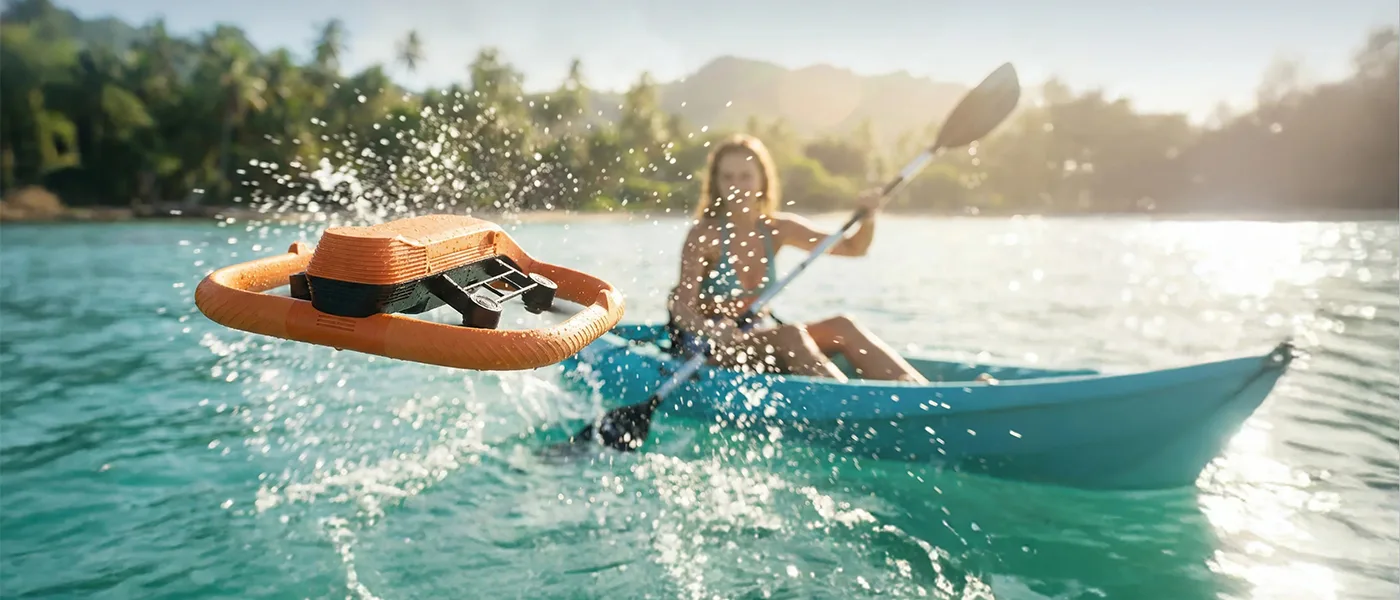
One of the more interesting features of this drone is its downward-facing millimeter-wave radar, which works together with the Visual-Inertial Odometry system.
Why does this matter? The water's surface is a challenging environment for conventional optical systems. It reflects light, moves continuously, and constantly changes its appearance. The radar helps AQUA determine conditions above the water's surface during takeoff, landing, and low-altitude flight. According to the manufacturer, the drone can fly as low as approximately 50 cm above the waves.
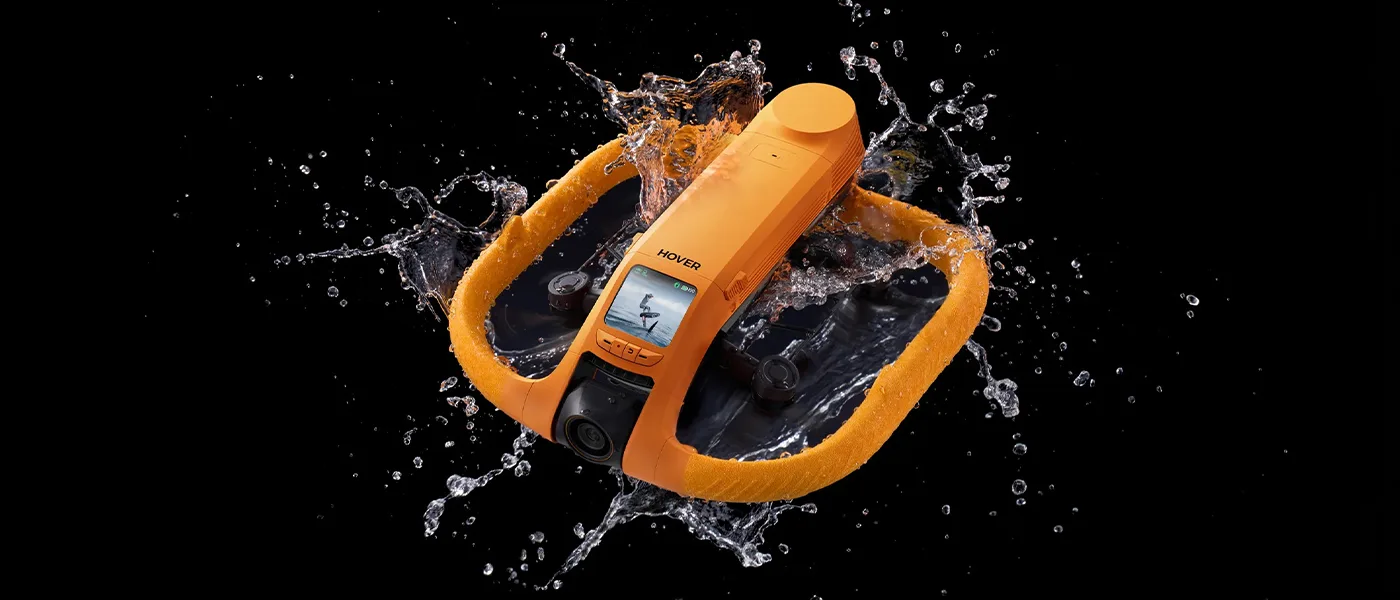
HOVERAir AQUA weighs exactly 249 g. At the same time, its maximum horizontal speed reaches 55 km/h, while its wind resistance is rated at Level 7, up to 33 knots.
This combination is important. A drone designed for water sports needs to be lightweight but also fast enough to keep up with a moving subject and maintain sufficient performance in windy conditions.
AQUA also carries the C0 class marking in the European Union. However, remember that a drone's low weight does not automatically exempt you from all applicable flight regulations.
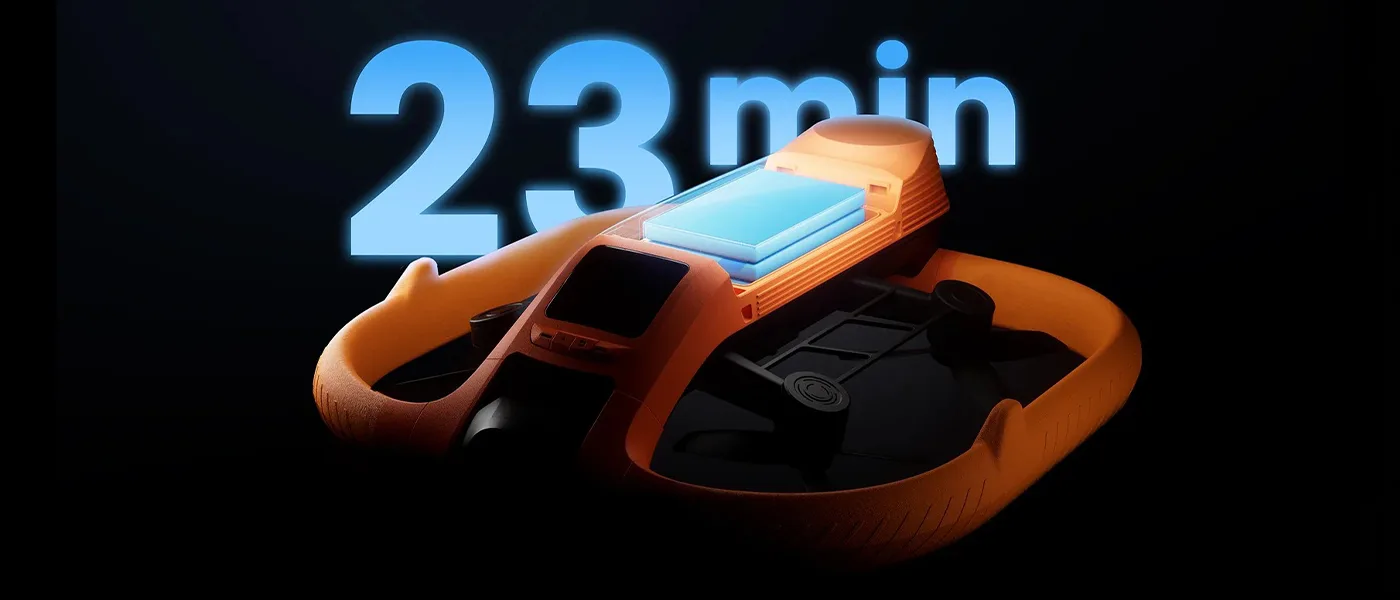
The maximum declared flight time of HOVERAir AQUA is 23 minutes. Its lithium-ion battery has a capacity of 2013 mAh, a nominal voltage of 10.74 V, and an energy rating of 21.62 Wh.
When charging the battery directly inside the drone, a full charge takes approximately 55 minutes. Using the Charging Hub and a 65 W USB-C PD power adapter, one battery can be charged in approximately 52 minutes, while two batteries can be charged simultaneously in approximately 85 minutes.
If you are planning a long day on a paddleboard, boat, or at the seaside, we believe carrying additional batteries makes far more sense than trying to squeeze every last minute out of a single battery pack.
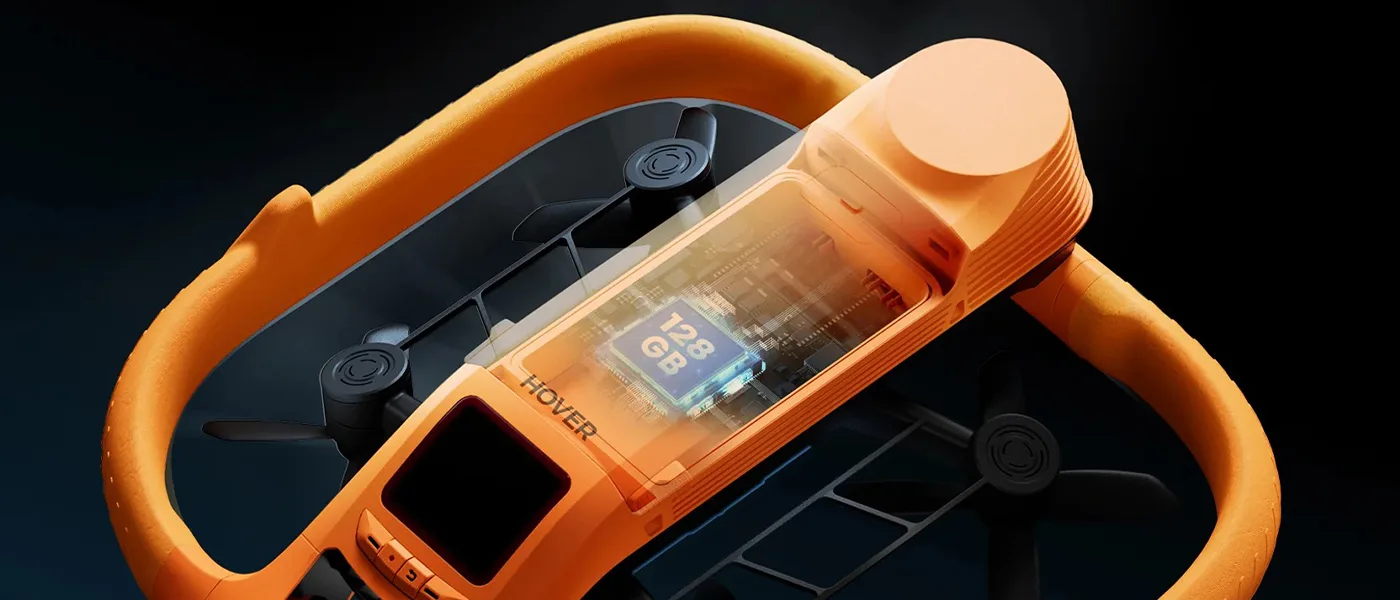
HOVERAir AQUA features 128 GB of built-in UFS 2.2 storage. You do not need to purchase a memory card, but there is a trade-off: AQUA does not support external microSD cards.
When recording in 4K at 100 fps with a bitrate of up to 160 Mbps, it is therefore worth transferring your footage regularly after filming.
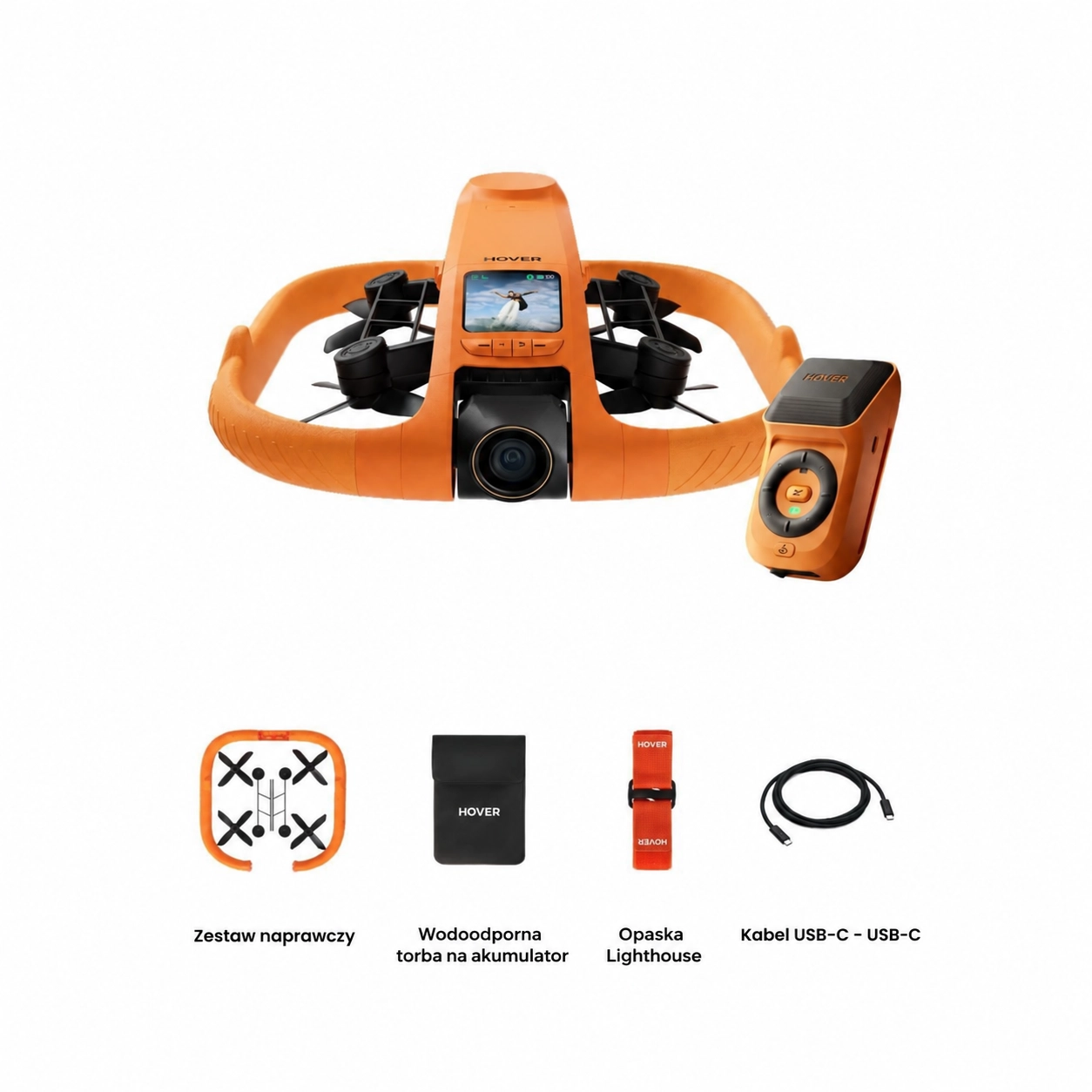
Package Contents:
| HOVERAir AQUA Specifications | |
|---|---|
| Weight | 249 g |
| Waterproof Rating | IP67 |
| Buoyancy | Positive – capable of taking off from and landing on water |
| Image Sensor | 1/1.28" CMOS |
| Photo Resolution | Up to 12 MP, 4000 × 3000 px |
| Horizontal Video | Up to 4K 3840 × 2160 at 100 fps |
| Vertical Video | Up to 4K 2160 × 3840 at 30 fps |
| Slow Motion | 4K 100 fps / 1080p 100 fps |
| Lens | 24 mm equivalent, 85° FOV, f/2.55 |
| Focus Range | 0.75 m to infinity |
| Maximum Video Bitrate | 160 Mbps |
| Image Modes | Standard, HDR, 10-bit H-Log, Slow Motion, Vertical |
| Stabilization | Single-axis gimbal + EIS + horizon leveling |
| Gimbal Range | -90° to +30° |
| Maximum Speed | 55 km/h |
| Wind Resistance | Level 7, up to 33 knots |
| Maximum Flight Time | Up to 23 minutes |
| Battery | Li-ion, 2013 mAh, 21.62 Wh |
| Internal Storage | 128 GB UFS 2.2 |
| microSD Card Support | Not supported |
| Positioning | GPS + Galileo + BeiDou + GLONASS, RTK with Lighthouse, VIO |
| Downward Sensor System | VIO + millimeter-wave radar |
| Intelligent Flight Modes | Follow, Dolly Track, Angle Track, Orbit Follow, Orbit, Hover, Zoom Out, Bird's Eye, Spiral, 360° Spin, SUP Mode, Kayak Mode, Foil Mode |
| Operating Temperature | -5°C to 40°C |
| EU Class | C0 |
 Do you need help?Get expert adviceWe answer promptly, and make the most interesting questions available to everyone.