
HOVERAir AQUA in Action—Is It the Best Drone for Use Over Water?
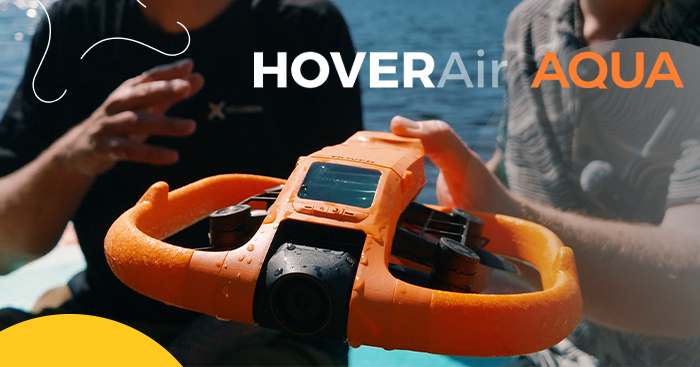
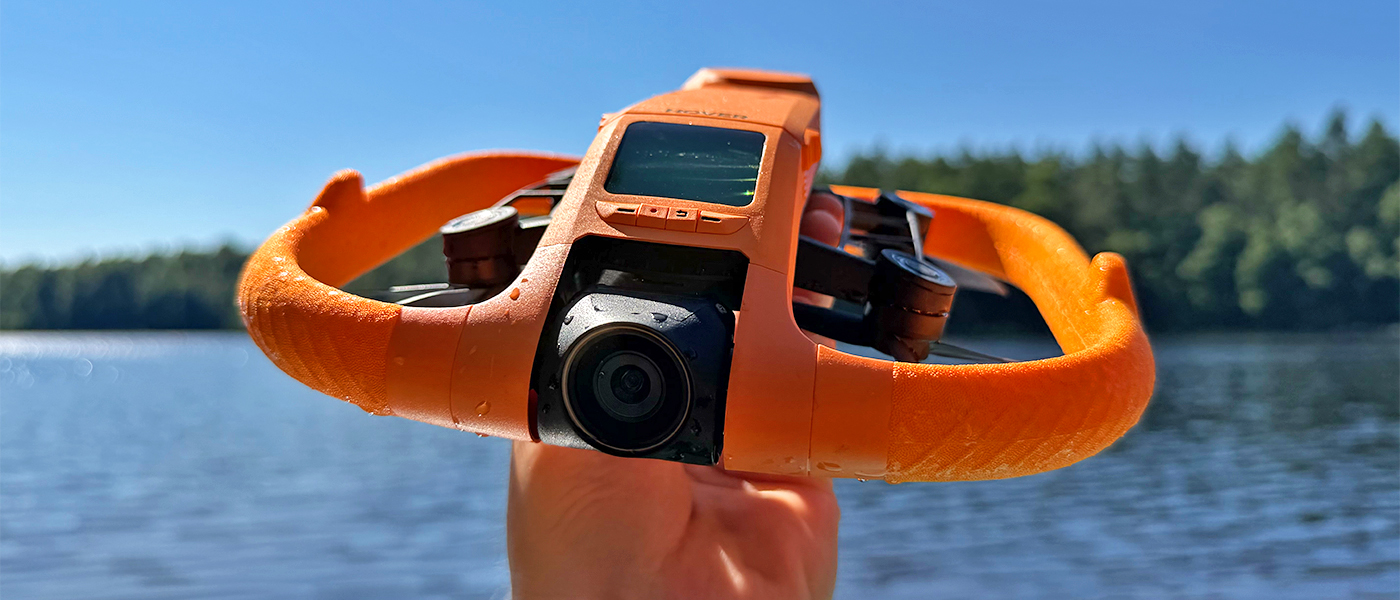
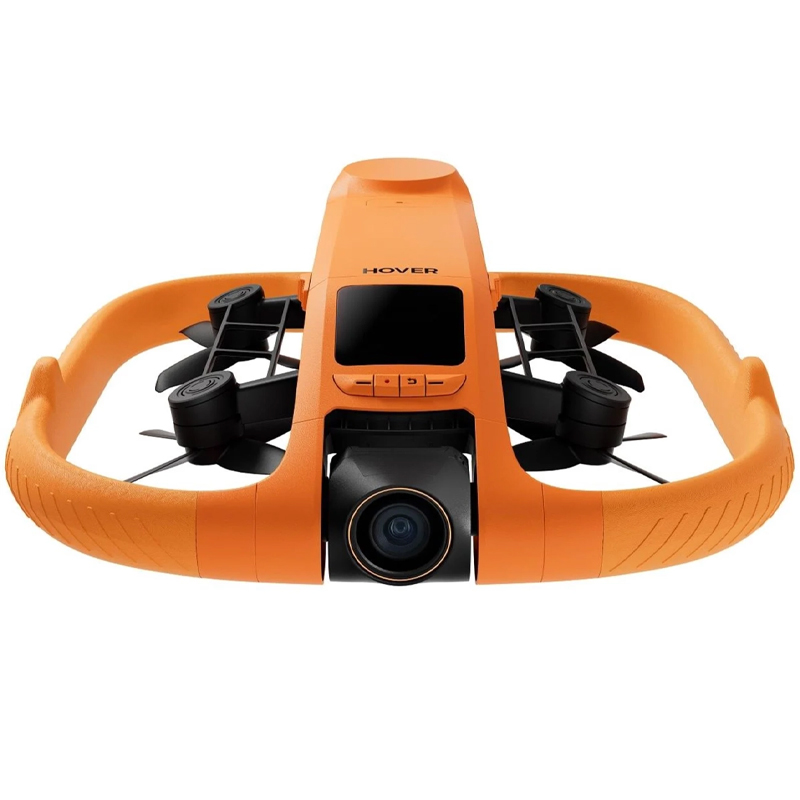
HOVERAir AQUA It is a waterproof drone designed specifically for recording over water and directly from the water's surface. Weighs 249 g, has class C0, water resistance IP67, records 4K at up to 100 fps./s, reaches a maximum of 55 km/h and offers up to 23 minutes of flight time. On top of that, it can take off from the water, land on it, and even right itself if it tips over “onto its back”. It sounds impressive, but the most important question is a different one: Does HOVERAir AQUA actually make sense??
We put it to the test. We dropped the drone directly into the water, flew it in stronger winds, and tested its tracking capabilities, automatic modes, flight time, and manual control. And it's precisely after a test like this that you can best see what AQUA is—and what it isn't.
This isn't a classic drone like the DJI Mini, to which a waterproof seal was added as an afterthought. AQUA is a more autonomous water sports camera that can fly. If you surf, stand-up paddleboard, kayak, or spend most of your vacation by the water, its features make a lot of sense. Later on, we'll show you the detailed specifications for the HOVERAir AQUA, its strengths and weaknesses, current price, and the differences between HOVERAir AQUA and HOVERAir X1 PROMAX.
If you want to see how it all works in practice, check out our HOVERAir AQUA review on YouTube.
Construction of the HOVERAir AQUA Drone
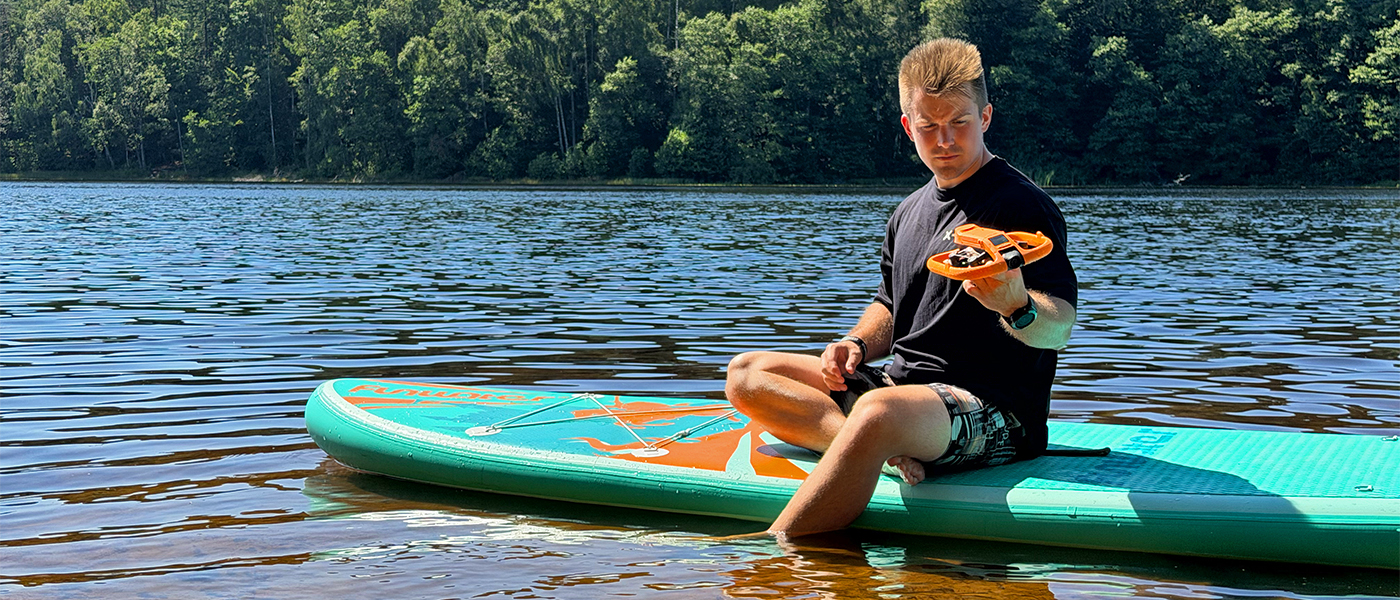
Your first experience with AQUA is a little strange, especially if you've flown traditional drones before. In our test, the moment when we simply placed the working drone on the water felt downright unnatural. With a traditional drone, you do everything you can to make sure that situation never happens. That's exactly what it was designed for.
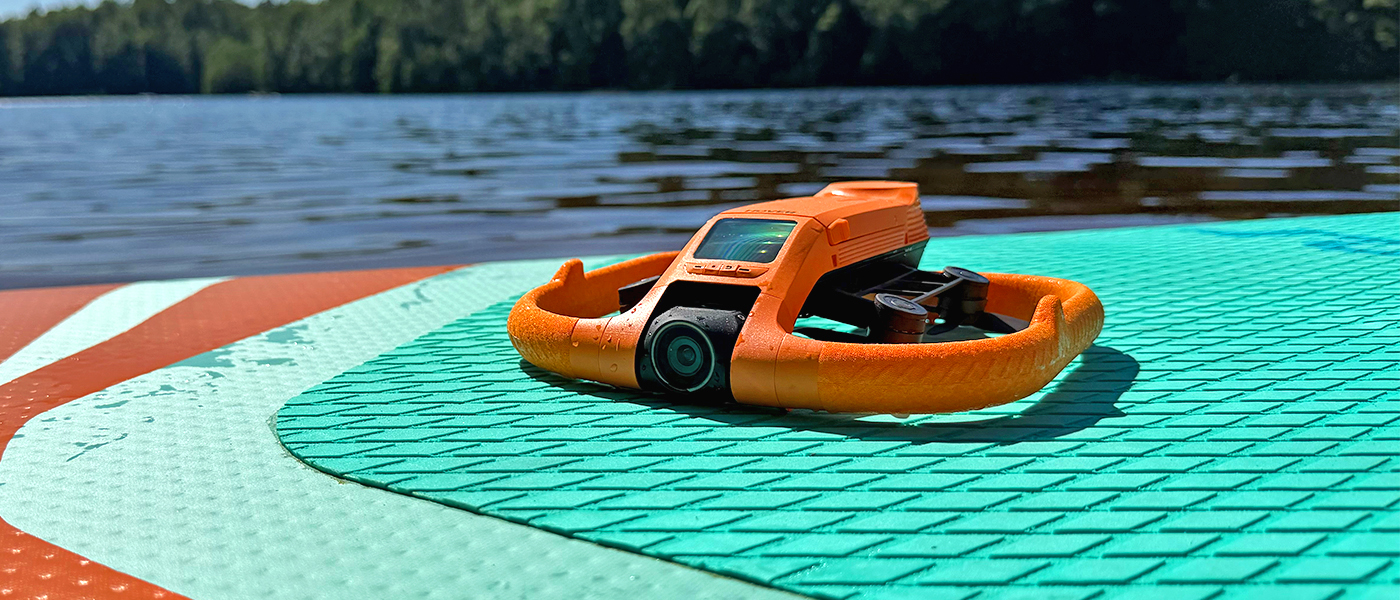
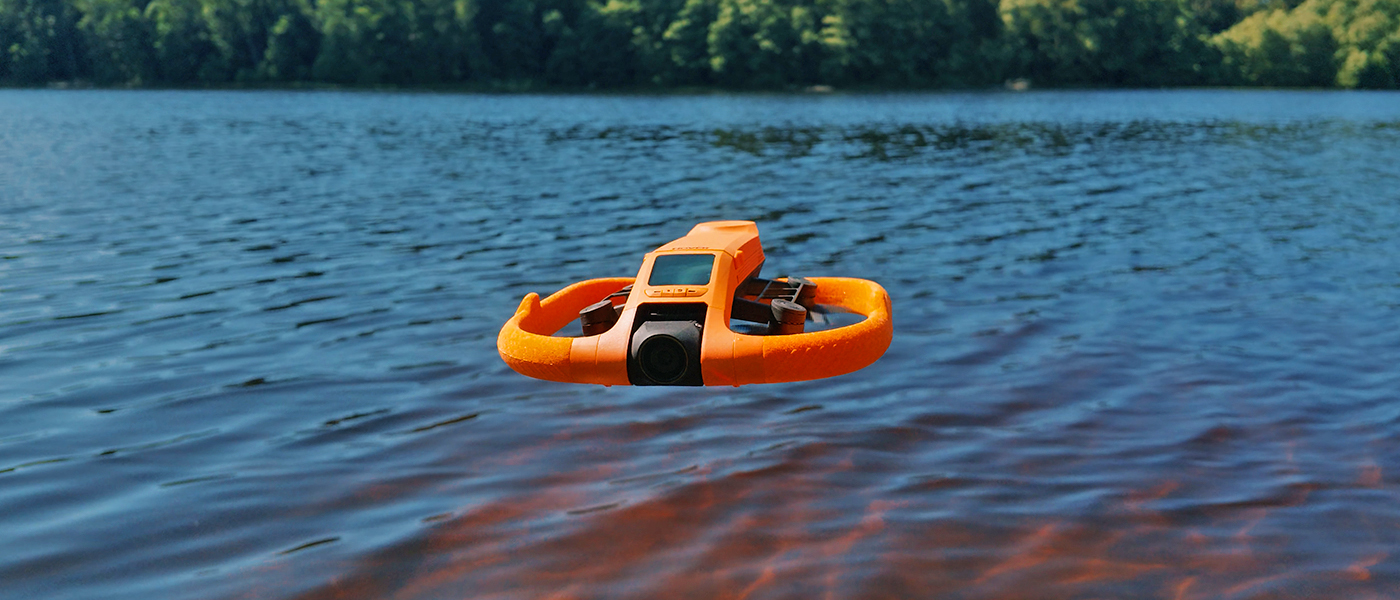
HOVERAir AQUA has an IP67 rating, positive buoyancy and a design that allows it to take off directly from the water's surface and land on it. The manufacturer also claims to offer more than 15 solutions related to water resistance and corrosion protection. This is an important difference compared to a regular drone flying over water. If you fly, for example, DJI Mini 5 Pro Whether you're by a lake or the sea, you're always aware in the back of your mind that a mistake, a loss of altitude, or a problem during landing could result in your equipment sinking.
In AQUA, you can go much deeper and create shots close to the water's surface. The manufacturer states that the system allows you to fly up to about 50 cm above the waves. A downward-facing millimeter-wave radar compatible with the VIO system.
Water-repellent lens and lens heating
HOVERAir has also thought of something that's easy to overlook.
The camera's waterproofing alone won't do you any good if a large drop of water remains on the lens after the first splash and ruins the entire recording. That is why AQUA was given a water-repellent lens coating, which reduces water buildup, and an automatic heating system that helps prevent fogging.
It's a small detail, but it's precisely these kinds of features that show that AQUA was designed for use in water from the very beginning.
The battery is not waterproof on its own
You have to be careful here.
The HOVERAir AQUA battery is waterproof only when it is properly installed in the drone. Once it is removed, the contacts are not protected from water. The manufacturer specifically recommends thoroughly drying the battery, connectors, and battery compartment before replacing the battery pack.
So if you're out on a SUP or in a kayak and need to replace the battery, don't do it with wet hands or while there's water in the compartment.
After using the equipment in saltwater, the manufacturer also recommends rinsing the AQUA with clean, fresh water to minimize prolonged contact between the components and salt.
Photo and Video Quality of the HOVERAir AQUA
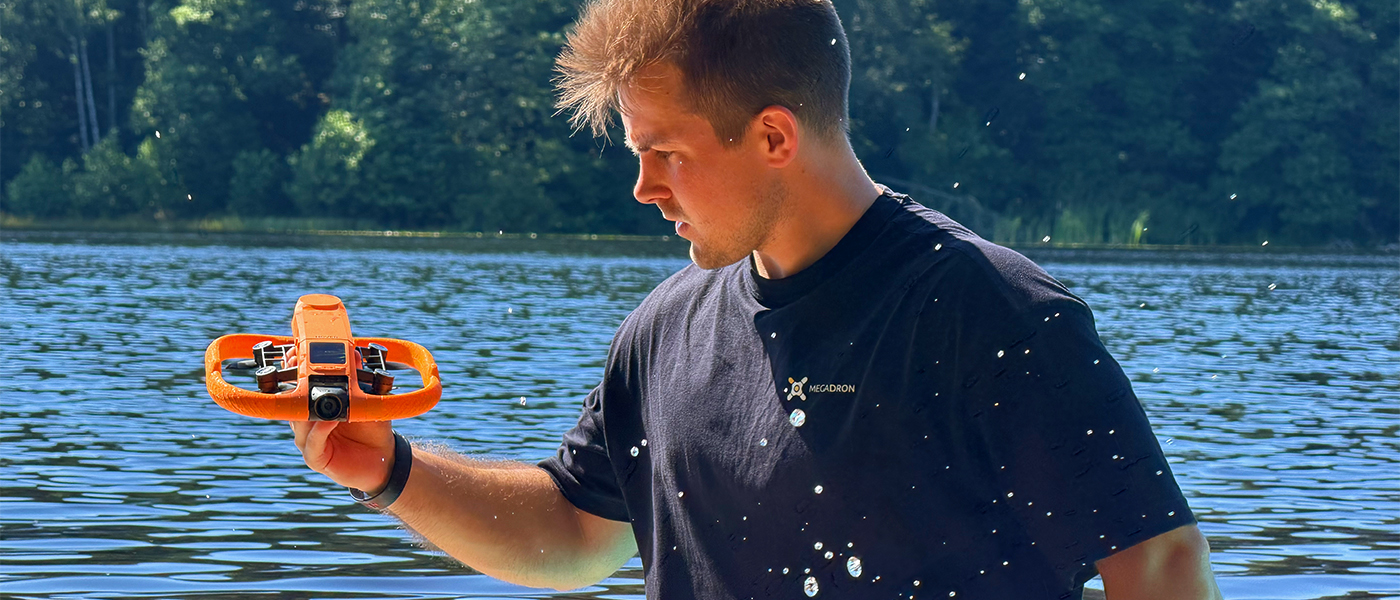
HOVERAir AQUA uses a 1/1.28-inch CMOS sensor" and a lens with a focal length equivalent to approximately 24 mm, field of view 85° and brightness f/2.55. Photos have a maximum resolution of 12 MP – 4,000 × 3,000 px.
What matters most, however, are the cinematic possibilities.
You can record the following horizontally:
- 4K 3840 × 2160 at up to 100 fps./s
- Full HD up to 100 fps./s.
The following is available vertically:
- 4K 2160 × 3840 at up to 30 fps./s
- 2.7K at 60 fps./s
- Full HD at up to 60 fps./s.
The maximum bitrate is 160 Mb/s, The material can be encoded in H.264 or H.265, and there is also 10-bit H-Log.
Is the AQUA camera just an added feature to the waterproof design??
No, tOne of the things we rated positively after the test. AQUA doesn't give the impression of being a product where all the attention was focused on water resistance, while the camera was treated as an afterthought.
The build quality is what we've come to expect from modern drones. The camera, stabilization, flight time, and tracking features combine to make this a fully-fledged piece of equipment, not just a waterproof toy with mediocre image quality.
4K at 100 fps./s is especially useful for water sports. You can record a jump, a dynamic turn, riding a wave, or a splash, and then slow down the footage smoothly without switching to Full HD.
How a single-axis gimbal works?
Stabilization is provided by a 1-axis mechanical gimbal, EIS, and horizon leveling using SmoothCapture technology 3.0. The camera's range of motion is from -90° to +30°.
Under calm conditions, the result is very good. In our test, however, when the wind picked up, it was clear that the drone itself was working hard to maintain its position. In the preview, you could see the structure struggling with the gusts, which is partly to be expected with a single-axis gimbal. Despite this, the material remained useful, and the stabilization served its purpose.
Range and Flight Time of the HOVERAir AQUA
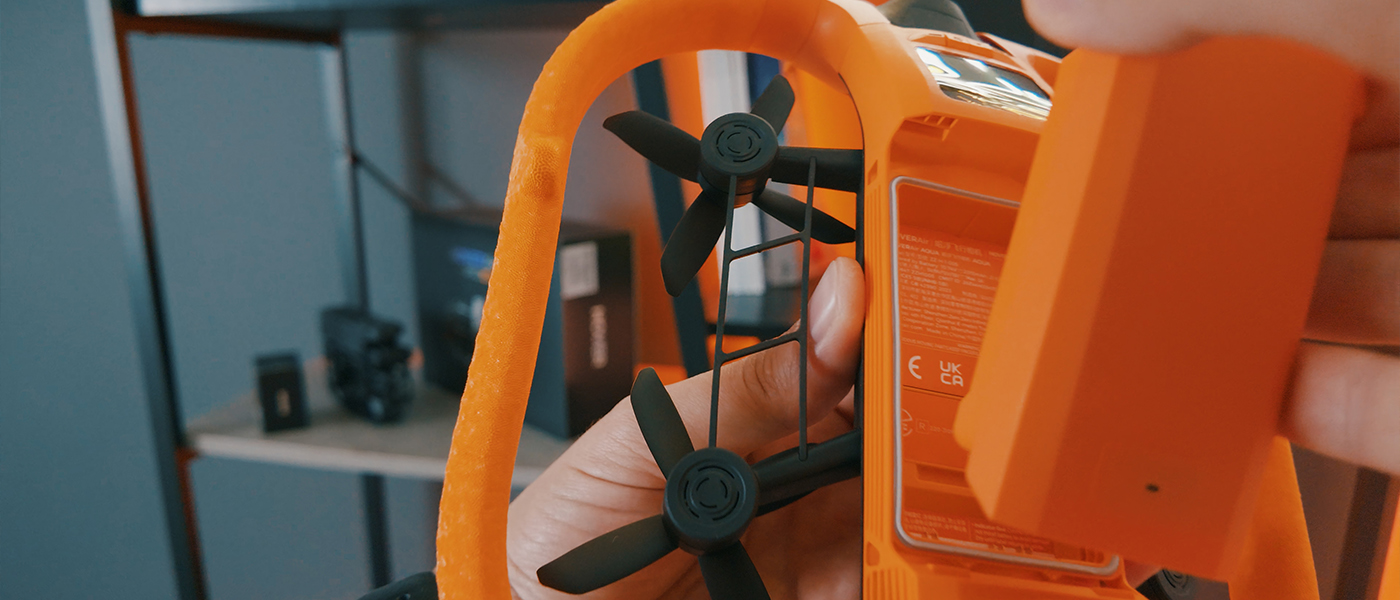
The manufacturer states a maximum flight time of 23 minutes on a single battery charge. The Li-ion battery pack has a capacity of 2013 mAh and energy 21.62 Wh.
And here's the good news: during our test, those 23 minutes didn't seem like a figure that existed only on paper.
After the flight, we noticed for ourselves that the battery lasted a long time, and there were no situations like, “The manufacturer says 23 minutes, but you have to turn back after 15.”. Of course, the results will depend on the wind, temperature, speed, and how it’s used, but we rate the AQUA's runtime very positively.
With several batteries and a Charging Hub, we were able to swap out the batteries while the others were charging. In practice, this allowed us to use the equipment for about two hours, with breaks to swap out the packages.
The manufacturer states approximately:
- 52 minutes Charging a single battery in the Charging Hub using a 65 W power adapter
- 85 minutes for two batteries charged in parallel
- about 55 minutes when charging the battery inside the AQUA
If you're planning regular trips out on the water, that's exactly why HOVERAir AQUA Basic Combo In our opinion, it makes a lot more sense than a set with just one battery.
What is the range of the HOVERAir AQUA??
One thing needs to be clarified here, because the range depends on the control method.
At Lighthouse The manufacturer specifies a maximum control range of approximately 100 m. Lighthouse is primarily used for automatic tracking, takeoff, landing, Return-to-Home, course correction, and VirtualTether.
With an additional Beacon + JoySticks The maximum declared transmission range under ideal conditions is up to 1 km.
HOVERAir AQUA Operation and Built-in Memory
The HOVERAir AQUA has 128 GB of built-in UFS storage 2.2. So you don't have to remember to buy a card before you leave.
However, there is another side to this: there is no option to expand the memory with a microSD card.
When recording in 4K at a bitrate of up to 160 Mb/s, it's a good idea to back up your footage regularly. If you're going on a longer trip without a laptop or extra storage space for your recordings, it's a good idea to plan for this in advance.
Lighthouse and RTK Tracking
One of AQUA's greatest advantages is Lighthouse - a small controller that you can carry with you while you're active.
AQUA combines visual tracking with Lighthouse Tracking and positioning RTK. The manufacturer claims that the relative positions of the drone and the Lighthouse can be determined with centimeter-level accuracy. This allows the system to continue tracking even if you are momentarily obscured from view, such as by a wave.
In practice, AQUA’s service philosophy is very simple: You swim, surf, or paddle, and the drone takes care of the recording.
During the test, the tracking worked in exactly that direction. The drone kept us in the frame, reacted to changes in our position, and we could carry out basic commands without using the traditional two-stick controls.
Manual control—it's possible, but that's not why you buy an AQUA
During our test, we actually had two different opinions.
One person described the manual controls as rather clunky, while another said that after a short while, you get used to them and flying is actually quite enjoyable. We did, however, agree on one thing: the flight characteristics are different from what we're used to with classic drones DJI.
So we wouldn't buy the AQUA as a replacement for the DJI for recreational flying. Manual control is a useful feature, but this drone's greatest strengths are Follow, tracking, automatic flight paths, and sport modes.
Turtle Mode—one of the best features of the HOVERAir AQUA

If we had to pick one feature that best demonstrates during testing that the AQUA was designed with underwater use in mind, it would be Turtle Flip.
Imagine landing on a lake or a big wave. AQUA turns itself upside down. With traditional equipment, this would mean having to fly up to it, and that would be the end of the flight.
AQUA can perform a maneuver that allows it it to return on its own to the correct position on the water's surface. The manufacturer officially lists Turtle Flip as a feature resulting from m.in. from the drone's rigid, non-folding design.
During our test, this feature really impressed us. And it's not just about the "wow" factor. When it comes to waves, it's simply a practical solution to a problem that could otherwise get on the user's nerves very quickly.
HOVERAir AQUA Drone Specifications
Below is a table showing the key specifications of the HOVERAir AQUA drone. Check out the key technical specifications.
| Drone |
|
|---|---|
| Weight | 249 g |
| EU Class | C0 |
| Water Resistance | IP67 |
| Takeoff and Landing on Water | yes |
| Matrix | 1/1.28" CMOS |
| Photos | up to 12 MP, 4000 × 3000 px |
| Landscape video | up to 4K 3840 × 2160 / 100 fps./s |
| Vertical video | up to 4K 2160 × 3840 / 30 fps./s |
| Slow Motion | 4K at 100 fps./s / Full HD 100 fps./s |
| Lens | ekw. 24 mm, 85° field of view, f/2.55 |
| Image Profile | 10-bit H-Log |
| Maks. bitrate | 160 Mb/s |
| Stabilization | 1-axis gimbal + EIS + horizon leveling |
| Camera range | -90° to +30° |
| Maks. speed | 55 km/h |
| Wind resistance | Level 7, up to 33 nodes, or about. 17 m/s |
| Maks. flight time | 23 min |
| Battery | Li-ion, 2013 mAh, 21.62 Wh |
| Memory | 128 GB UFS 2.2 |
| microSD | no support |
| Lighthouse | RTK, up to 100 m control range |
| Beacon + Joysticks | range of up to 1 km under suitable conditions |
| Lower Sensor System | VIO + millimeter-wave radar |
| Operating temperature | from -5°C to 40°C |
| Maks. flight altitude in the settings | 120 m |
*Data based on the current HOVERAir specifications. Actual performance depends on m.in. weather, temperature, interference, and usage.
Uses of the HOVERAir AQUA—Who Is This Drone For??
This brings us to the most important consideration before making a purchase.
The HOVERAir AQUA isn't a drone for everyone. And that's not a flaw at all.
If you practice:
- surfing
- kitesurfing
- windsurfing
- wakeboarding
- foil
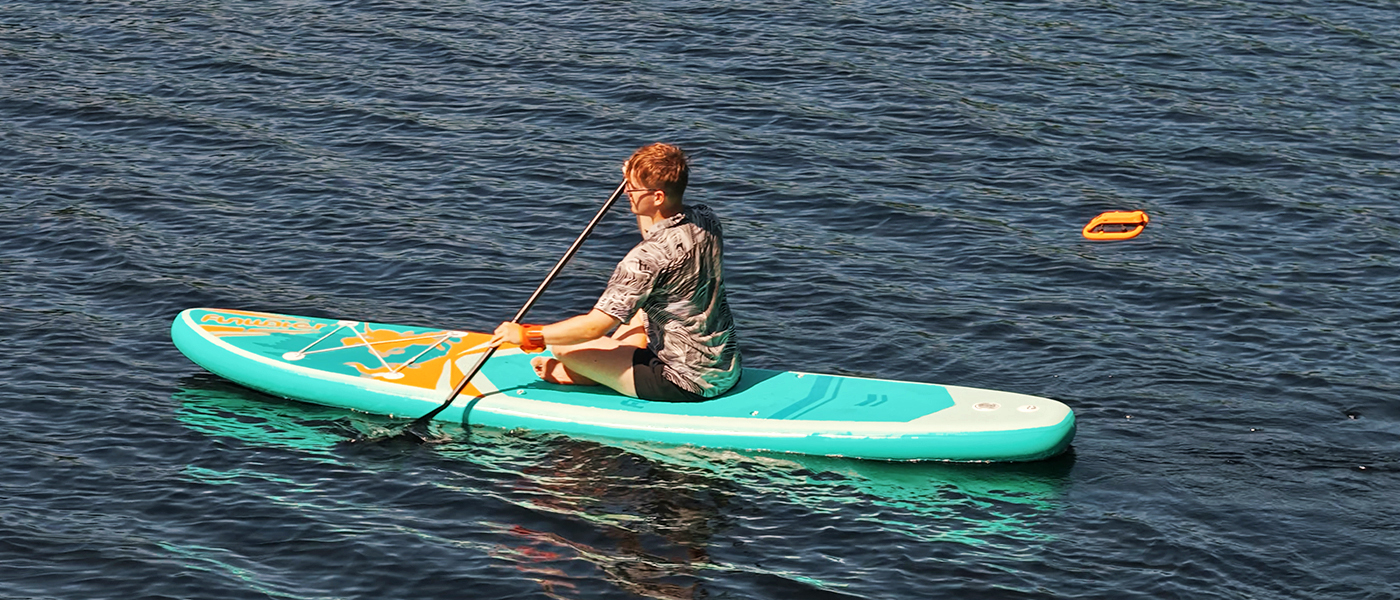
- SUP
- canoeing
- sailing
- motorboat sports
- snorkeling
That's when AQUA really starts to make sense.
The manufacturer has prepared m.in. SUP Mode, Kayak Mode, and Foil Mode, and, in addition to those, Follow, Dolly Track, Angle Track, Orbit Follow, Orbit, Hover, Zoom Out, Bird's Eye, Spiral, and 360° Spin.
And that's exactly where we would focus our attention the most—on automation.
Is the HOVERAir AQUA suitable for vacation??
Yes, if you're actually spending your vacation by the water.
Based on our test, we would have no problem taking the AQUA on a trip to the sea, the ocean, or a lake instead of a traditional drone, if the main goal were to record water activities. The ability to fly freely just above the water’s surface and the absence of a constant fear of splashing down greatly changes the way you film.
But if you go to the beach for a week once a year, and for the remaining 11 months you just want to explore the mountains, the city, and the surrounding area, you might want to reconsider buying the AQUA.
In that case, it's worth taking a look at, for example, HOVERAir X1 PROMAX Standard.
Our tip before your first trip
This is one of those practical things that are easy to forget.
Don't wait until the first day of summer vacation to start learning AQUA.
Before you leave:
- Update the firmware
- Pair all devices
- Check out Lighthouse
- Test the automatic modes
- Learn Return-to-Home
- Check out Turtle Flip
- Test battery replacement and charging
- Set the recording settings
During our test, we noticed that some of the controls aren't entirely intuitive at first. It's much better to figure them out calmly at home than out in the middle of a lake, when you're supposed to be enjoying your trip.
It may seem like a small thing, but it's precisely this kind of preparation that usually determines whether you come back from vacation with good footage.
Required Certifications and Training for HOVERAir AQUA
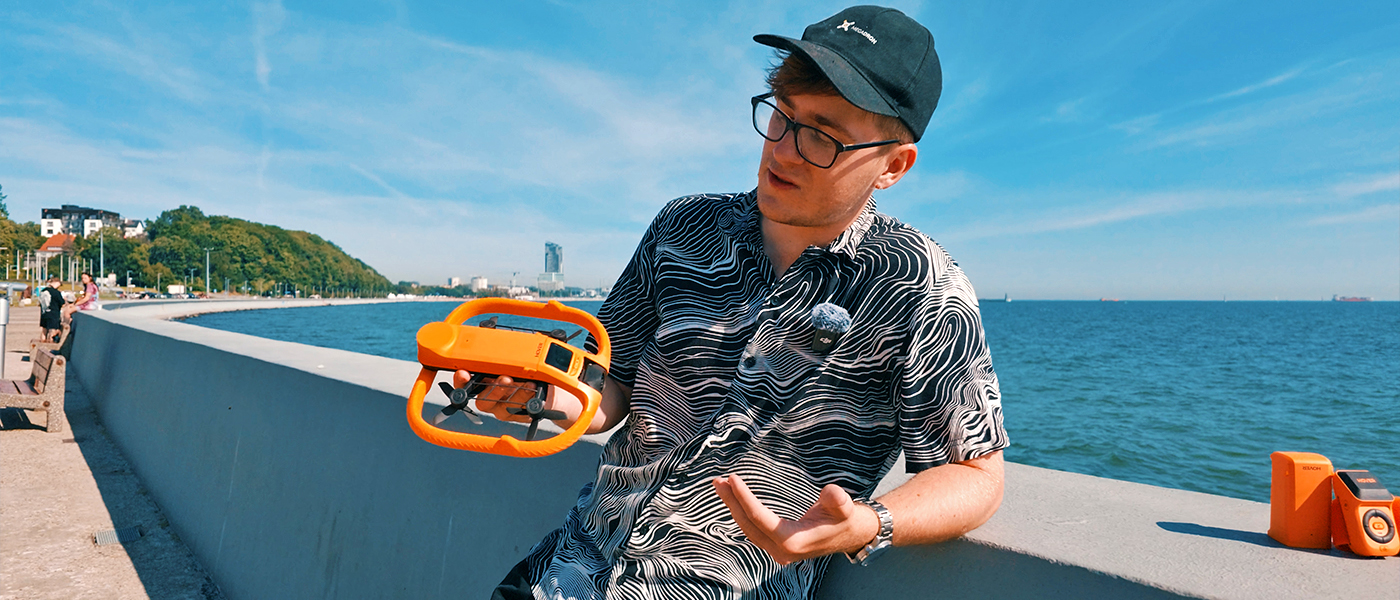
The HOVERAir AQUA weighs 249 g and is classified as Class C0.
Is it necessary to complete the A1/A3 training??
For a C0 weighing less than 250 g, you do not need a formal A1/A3 certificate. In this case, EASA specifies the requirement to review the manufacturer’s manual, while the ULC requires training and an online test in the open category for drones weighing more than 250 g.
Do you need to register as an operator??
Yes, to often confused with a mass of 249 g. Because AQUA has a camera capable of recording personal data and is not a toy as defined by the relevant directive, the operator must register.
It's worth mentioning this because some of HOVERAir's marketing materials contain simplified statements suggesting that registration is not required for items weighing less than 250 g. Under EU regulations, the 250-gram threshold alone does not exempt the operator from registration if the drone is equipped with a camera and is not a toy.
Where can you fly the HOVERAir AQUA??
In the open category, the following rules still apply: m.in.:
- Visual Line of Sight (VLOS) flight
- a limit of 120 m from the nearest point on the Earth's surface
- ban on flights over gatherings of people
- the obligation to comply with geographical zones
Check the current time zones before each flight. ULC is currently reminding passengers to check flight availability m.in. in the app DroneTower app.
We actually experienced this ourselves while filming the movie. We originally wanted to fly over the sea, but due to airspace conditions, we decided against that location and moved the test to the lake. A drone's water resistance does not make it compliant with regulations.
HOVERAir AQUA Price and Availability
As of the date this article was written (August 17, 2026) HOVERAir AQUA Standard Price at MEGADRON 5,499 PLN.
HOVERAir AQUA Basic Combo It costs, however, 5,999 PLN.
Standard or Basic Combo?
With a difference of 500 zł In our opinion, it's worth giving the Basic Combo serious consideration.
In the current bundle, you get m.in.:
- HOVERAir AQUA
- 2 batteries
- Charging Hub
- Lighthouse
- protective cover
- repair kit
- 2 waterproof battery bags
In fact, the extra battery and the hub are the items that, during a real day on the water, quickly become more important than just another gadget in the kit.
If you're not sure whether this drone is actually a good fit for your filming style, you can talk to us first or visit our store in Gdynia at 5 Chwaszczyńska Street. We'd rather tell you that you need more affordable equipment than sell an AQUA to someone who will never take advantage of its greatest feature.
Pros and Cons of the HOVERAir AQUA – What You Should Know Before Buying
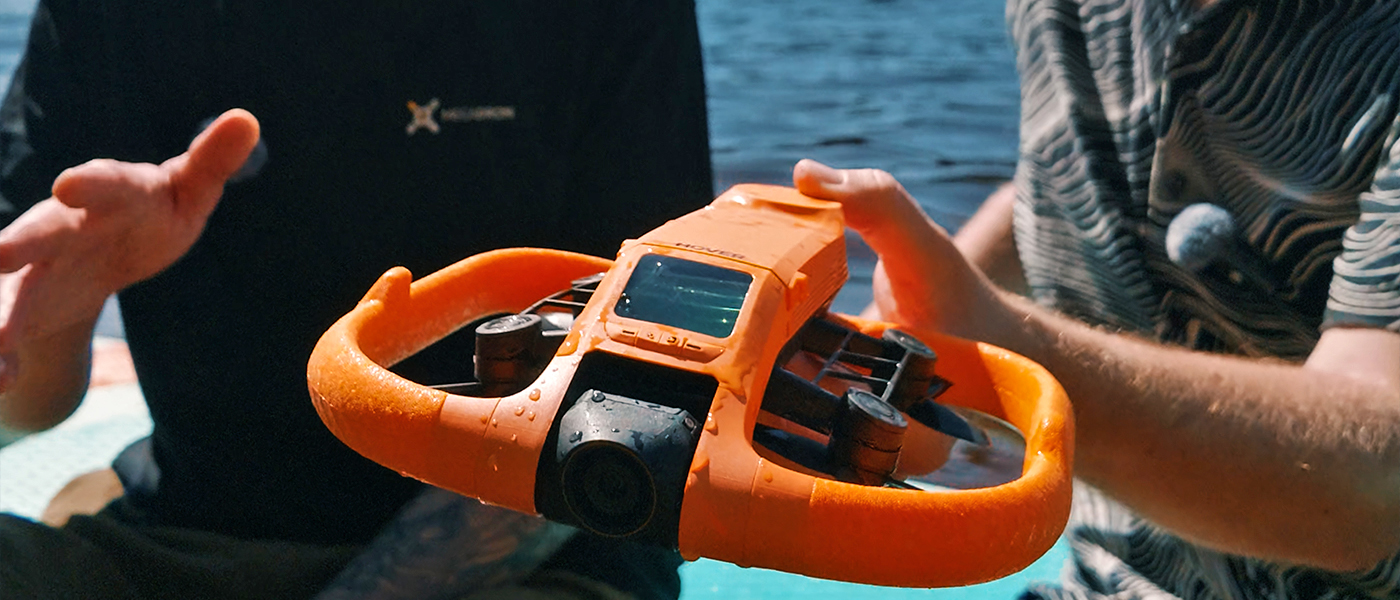
Pros of HOVERAir AQUA
- IP67 rating and the ability to actually operate on the water – it's not just protection against accidental splashes.
- Takeoff and Landing on Water – a huge advantage when it comes to SUP, kayaking, or boating.
- Turtle Flip – one of the most practical features in real-world use.
- Up to 23 minutes of flight time – a result that we also rated positively during our test.
- 4K 100 fps camera./s – It's well-suited for dynamic sports.
- 1/1.28" sensor and 10-bit H-Log.
- 128 GB of built-in storage.
- Lighthouse + RTK – a robust solution for automatic tracking.
- Dedicated SUP, Kayak, and Foil Modes.
- 55 km/h top speed.
- Wind resistance up to 33 knots, or approximately 17 m/s – During our test, the AQUA performed well in stronger gusts.
Cons of the HOVERAir AQUA
- High price, if you don't use the water features regularly.
- No microSD card – You're limited to 128 GB of internal storage.
- Manual control is not the main advantage of AQUA – If flying itself is what you enjoy most, a classic drone might be a better choice.
- No active obstacle avoidance – HOVERAir explicitly states that the system does not automatically plan a route around obstacles.
- The battery is waterproof only when installed in the drone.
- Non-folding design takes up more space than the X1 PROMAX. The manufacturer attributes this decision to the structure's greater durability and airtightness.
Key Differences Between the HOVERAir AQUA and the HOVERAir X1 PROMAX
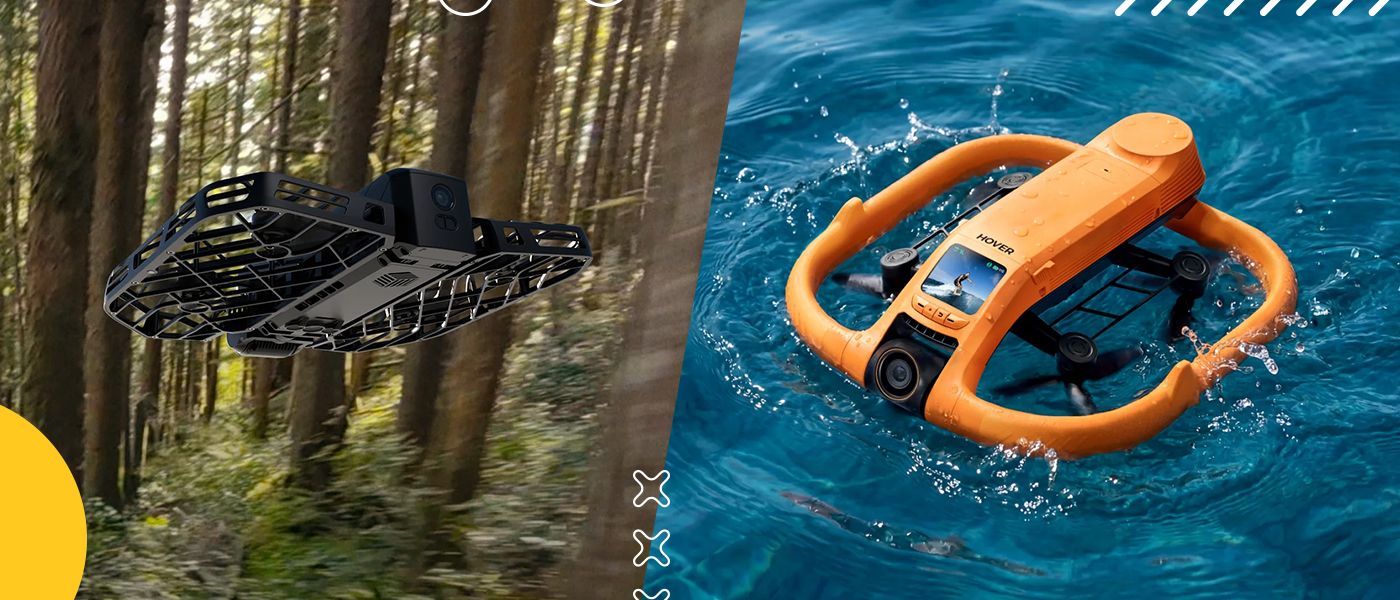
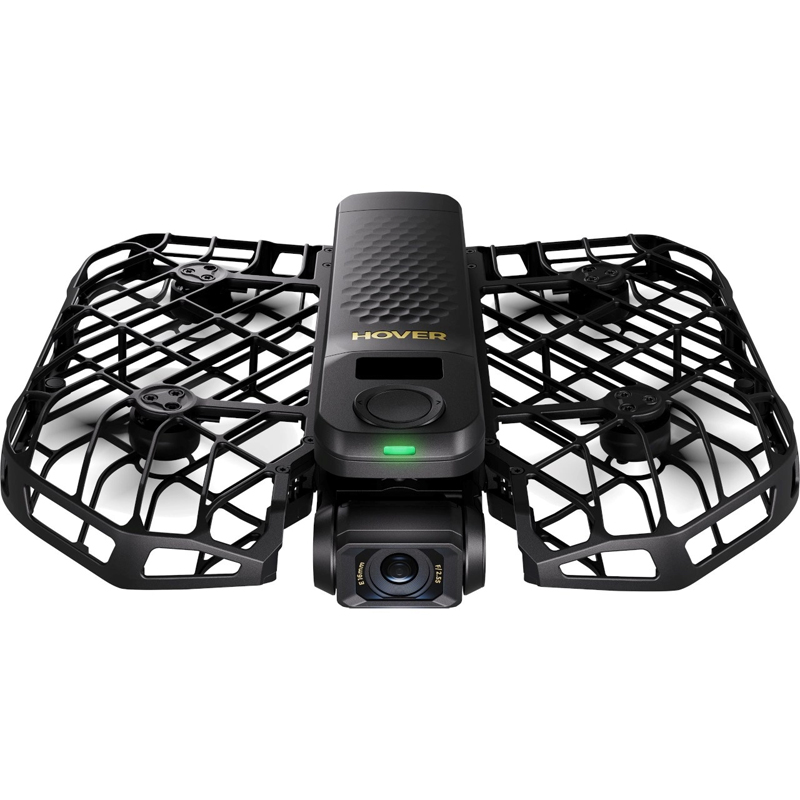
Comparison HOVERAir AQUA and HOVERAir X1 PROMAX It's interesting because, at first glance, both devices do something similar: they autonomously record the user.
In fact, they were designed for slightly different purposes.
Below is a table showing the key specifications of the HOVERAir AQUA drone. Check out the key technical specifications.
| Drone |
|
|
|---|---|---|
| Weight | 249 g | 192 g |
| EU Class | C0 | C0 |
| Design | non-folding, floating | foldable |
| Water Resistance | IP67 | no design intended for landing on water |
| Takeoff and Landing on Water | yes | no |
| Turtle Flip | yes | no |
| Matrix | 1/1.28" CMOS | 1/1.3" CMOS |
| Maks. video | 4K at 100 fps./s | 8K, 30 fps./s |
| FOV | 85° | 107° |
| Slow Motion | 4K at 100 fps./s / Full HD 100 fps./s | 120 kl./s |
| RAW Photos | no | 10-bit DNG RAW |
| Stabilization | 1-axis gimbal + EIS + horizon leveling | 2-axis + EIS |
| Maks. speed | 55 km/h | 42 km/h |
| Wind resistance | 17 m/s | 10.7 m/s |
| Maks. flight time | 23 min | 16 min |
| Memory | 128 GB | 64 GB |
| microSD | no support | yes |
| Water Modes | SUP, Kayak, Foil | No dedicated AQUA modes |
| Best Use | water and water sports | land, sports, travel, versatile use |
*Data based on current HOVERAir specifications.
Where the HOVERAir X1 PROMAX Is Better?
If the priority is image quality and flexibility, The X1 PROMAX has several very strong selling points.
Records 8K at up to 30 fps./s, offers 4K at 120 fps./s, a wider 107° lens, DNG RAW photos, and a 2-axis mechanical gimbal. It’s also much lighter and folds down to a compact size.
For running, biking, hiking, skiing, or everyday travel The X1 PROMAX is more versatile.
On top of that, it costs significantly less. HOVERAir X1 PROMAX Standard currently costs at MEGADRON 2,499 PLN, on the other hand HOVERAir X1 PROMAX Basic Combo 3,399 PLN.
Where HOVERAir AQUA Is Better?
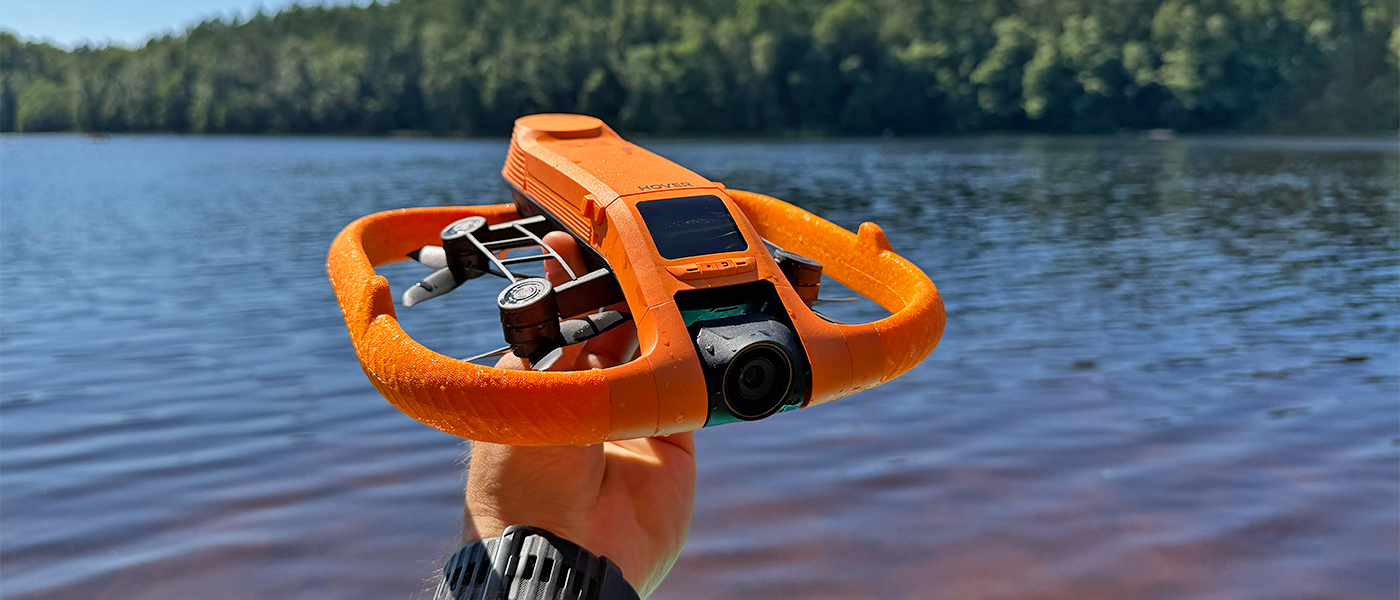
The moment you step into the water, the comparison is practically over.
AQUA:
- swims
- takes off from the water
- lands on the water
- has an IP67 rating
- can turn over on its own
- uses a downward-facing radar
- has a Lighthouse with RTK
- offers dedicated water modes
- up to 23 minutes
- It is faster and more wind-resistant
That's why we wouldn't say that the AQUA is simply a "better X1 PROMAX".
AQUA is better on the water. PROMAX is more versatile on land.
And that's exactly how we would choose between them.
HOVERAir AQUA – Is It Worth It??

Based on our test, the answer is: yes, but not for everyone.
If you're just looking for a small drone for your vacation, want to fly it a bit over the beach, take a panoramic shot of the hotel, and fly over the lake once, you don’t need the AQUA at all costs.
If, on the other hand, you regularly surf, go stand-up paddleboarding, kayaking, foil boarding, wakeboarding, sailing, or film other water activities, the situation is completely different.
In that case, water resistance isn't just a gimmick. It is a feature that changes the way you use the drone.
During our test, we were able to simply place the AQUA on the water, take off, follow a person on a SUP, fly low over the water’s surface, land back on the water, and not have to worry every time that a small mistake would mean losing a few thousand zlotys.
On top of that, it offers excellent flight time, a solid 4K camera, effective automatic tracking, and the Turtle Flip, which has proven to be much more useful in real-world use than one might think after just reading the specs.
This isn't a drone for someone who, above all, enjoys flying. This is a drone for someone who, above all, wants to record their activities, and the drone is there to do the rest.
And in our opinion, that's exactly how you should evaluate the HOVERAir AQUA before buying it.
If you're mainly interested in water sports, we would choose HOVERAir AQUA. If you need a more versatile, foldable drone for travel and land-based sports, check out the HOVERAir X1 PROMAX.
We offer the HOVERAir AQUA in two versions:
And if you're still not sure which model is the best fit for you, contact us or visit the MEGADRON showroom in Gdynia. We operate our own service center, rental shop, and professional consulting services. You can see the equipment in person and choose a setup that's right for what you actually want to record—instead of buying a more expensive model just because it has a longer list of features.