Which FPV drone should I choose to start with?

FPV racing drones are a great alternative to traditional drones. Unlike traditional drones, FPV drones can provide an incredible experience through extreme maneuvers and high-speed flights. Some people build their own FPV drones, but in this list, we’re featuring models that are either ready to fly or require only a little know-how to operate. Below is a list of drones suitable for beginners, in both analog and digital versions. If this topic is completely new to you, check out our FPV glossary.
Analog vs. Digital (HD) FPV
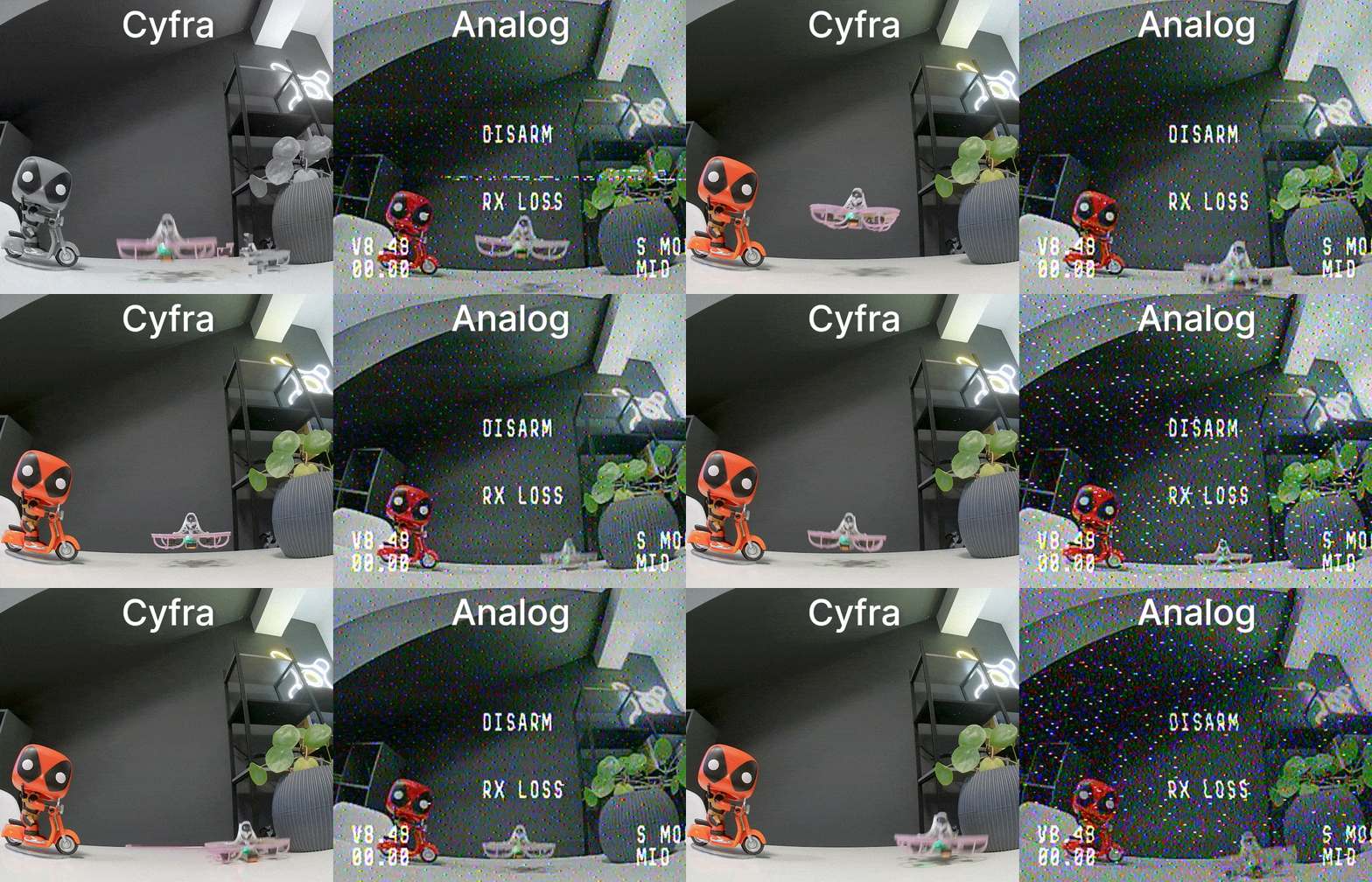
Before you choose your first FPV drone, you need to answer one question: analog or digital video transmission system? This is what most significantly affects the flying experience, the price of the kit, and the “entry level.” Below, we briefly describe how these two transmission types differ:
Analog FPV – cheaper, simpler, more “traditional” - In an analog system, the image from the drone’s camera is transmitted as an analog radio signal. What does this mean in practice?
- lower kit price
- greater availability of parts
- a lightweight drone
- the image quality is noticeably poorer (noise, interference)
- very low video transmission latency; the response is practically instantaneous
Analog is still the choice of many people who want to:
- get into FPV as inexpensively as possible
- fly in races
- train without worrying about expensive equipment; if repairs are needed, you can simply replace the damaged part
- It’s a more “raw” experience—you see interference, but you learn what real FPV is all about
Digital FPV – better image quality, greater comfort - A digital system (e.g., DJI O4, BetaFPV P1) provides high-quality video—often similar to the footage being recorded.
Advantages:
- sharp, clear image
- better signal penetration
- greater flying comfort
- less “frustration” with weaker signal range
Cons:
- higher price
- more expensive components
- heavier setup
- greater video latency than with analog
For many people, digital is a much more enjoyable way to get into FPV—especially if they want to record footage.
The cheapest option to get started—a simulator
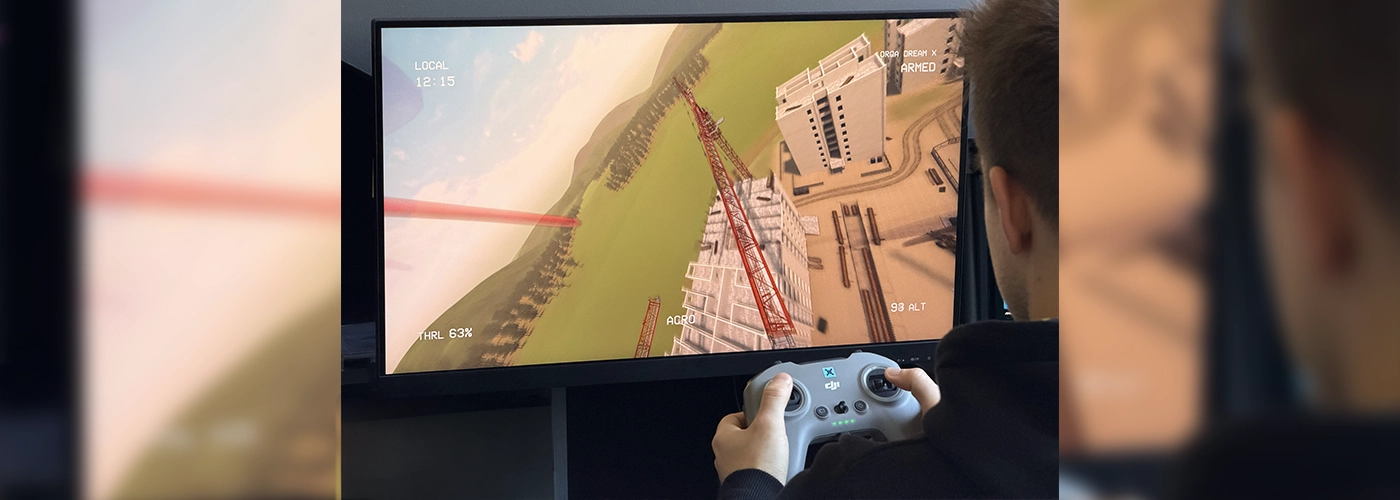
A simulator is by far the best and safest way to begin your FPV adventure. Most available programs offer built-in tutorials that teach the basics of control step by step—from maintaining altitude, through turns, all the way to your first flight in manual mode. On top of that, there are various routes and race tracks, often with timing features, so you can practice smoothness, precision, and the optimal flight path without worrying about crashing your drone.
A simulator is also the perfect place to learn maneuvers such as rolls, flips, or split-Ss. Before attempting them in real flight, you can understand how the drone behaves in the air and develop muscle memory. This saves a lot on parts and leads to much less frustration in the beginning.
To get started, all you need is a controller connected to your computer. BetaFPV has released a very simple and budget-friendly setup (a controller designed solely for the simulator) called the LiteRadio 2 SIM—it’s a good option if you just want to see if FPV is right for you. However, if you know you’ll be buying a drone later, it’s better to choose something suited to your needs right away—for example, radiomaster-pocket-elrs-charcoal-29427.html" title="RadiomasterPocket">RadiomasterPocket for an analog system, or dJI-fpv-remote-controller-3-29393.html" title="DJIFPV Remote Controller 3">DJIFPV Remote Controller 3, if you plan to enter the digital ecosystem DJI.
Popular simulators to start with include:
- Orqa SkyDive
- Liftoff
- VelociDrone
Each of these will allow you to safely enter the world of FPV and build a solid foundation before your first real flight.
BetaFPV Aquila20 - FPV Kit
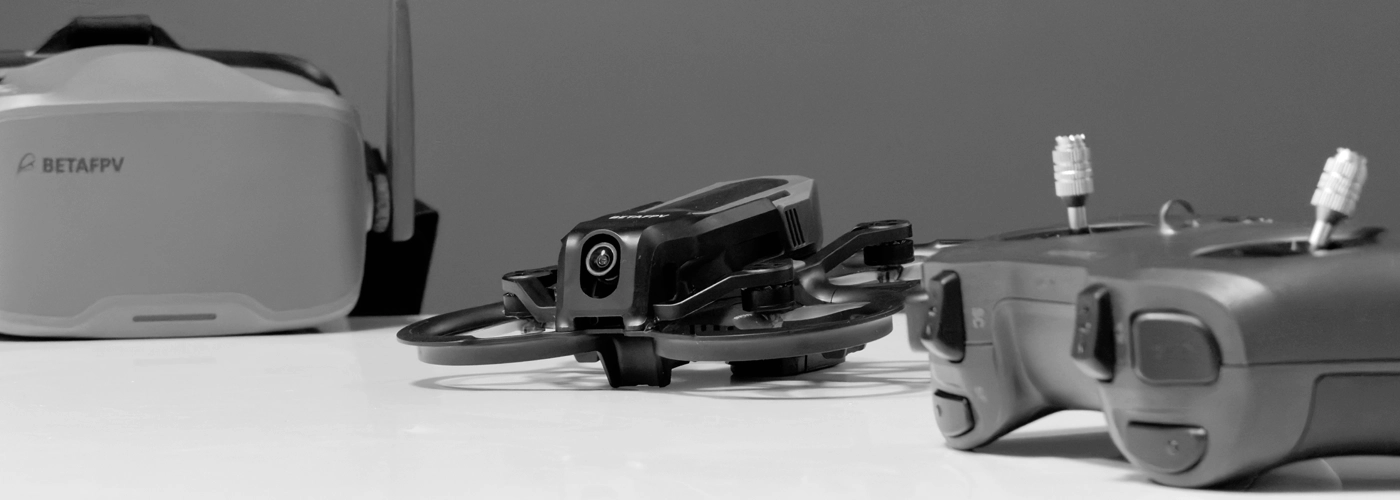
A drone perfectly suited for those looking to get into the world of FPV. This kit is complete and ready to fly. It resembles the younger sibling of the DJI Avata, betaFPV-aquila20-fpv-kit-32902.html" title="Aquila20">Aquila20 is a small drone with a durable shell that protects its most important components. It weighs only 120g with the battery. It has a fairly decent flight time of 8 minutes and a range of up to 200 meters. The kit includes 2 batteries, a LiteRadio 4 SE controller with ELRS, and VR04 FPV goggles that allow for recording.
Interestingly, the camera angle on the Aquila20 is adjustable, allowing for slower flight indoors and faster flight in open spaces. Typical FPV drones tend to drift slightly while hovering, but the Aquila features an optical sensor that enables stable hovering. It’s the perfect choice to kick off your FPV drone adventures. It requires no additional equipment or complicated setup. The ability to fly safely indoors makes this drone a practical learning tool in any conditions.
It is the newest and most refined model among the 6 different ready-to-fly kits offered by BetaFPV. The kits differ in terms of drone power, the ability to record the feed from the goggles, flight time, etc. The other kits are (from simplest to most powerful):
- betaFPV-cetus-lite-fpv-kit-27258.html" title="BetaFPV Cetus Lite Kit">BetaFPV Cetus Lite Kit—for beginners and children (low power) with an auto-hover function, flight time of about 4–5 minutes, powered by a 300 mAh 1S battery, designed for FPV beginners and recreational use, price approx. 579 PLN*
- betaFPV-cetus-fpv-kit-25597.html" title="BetaFPV Cetus FPV Kit">BetaFPV Cetus FPV Kit—for beginner FPV pilots, slightly more responsive than the Lite version, offering a flight time of approx. 5 min, a low-power 1S 300 mAh battery, price approx. 749 PLN*
- betaFPV-cetus-pro-fpv-kit-25983.html" title="BetaFPV Cetus Pro FPV Kit">BetaFPV Cetus Pro FPV Kit – a brushless drone with a flight time of about 4–5 minutes, featuring more powerful motors for dynamic flights; does not record video from the goggles; designed for beginners and intermediate users; price: approx. 949 PLN*
- betaFPV-aquila16-fpv-kit-28614.html" title="BetaFPV Aquila16 FPV Kit">BetaFPV Aquila16 FPV Kit - a brushless drone offering a flight time of up to approx. 6 min, goggle video recording (VR03 with microSD support), designed for those learning FPV, price approx. 999 PLN*
- betaFPV-cetus-x-kit-elrs-27424.html" title="BetaFPVCetus X Kit">BetaFPV Cetus X Kit - a brushless drone with a flight time of approx. 5 min, a 2S battery for dynamic flights (provides quite a lot of power), video recording from the goggles (VR03 with DVR), designed for intermediate pilots looking to develop their FPV skills, price approx. 999 PLN*
Prices current as of March 3, 2026; subject to change.
Analog transmission - BetaFPV Air65
betaFPV-air65-racing-elrs-2-4g-31573.html" title="Air65 ">The Air65 is an analog whoop drone. It weighs just 17.4 grams, and as the name suggests, its wheelbase is 65 mm. It’s a drone refined to perfection; in terms of power-to-weight ratio, what it can do in the air is almost unbelievable. It’s ideal for practice flights as well as for competitions, such as WHOOP OF POLAND. The drone can hover in place, its design dampens vibrations, and it has enough power to fly even outdoors. Nevertheless, the fun of setting up obstacle courses indoors—whether at home or in a parking lot—is indescribable. It features a 5-in-1 flight controller and ELRS connectivity. When purchasing this drone, you’ll also need to get:
- Goggles - betaFPV-vr03-27073.html" target="_blank" title="BetaFPV VR03" rel="noopener">BetaFPV The VR03 is a budget-friendly and good option for beginners. There’s also a high-end, more future-proof option (for those who are confident or already heavily involved in FPV) Skyzone SKY04X PRO, which offers better range, a wealth of customization options, and additional features
- Controller - radiomaster-pocket-elrs-charcoal-29427.html" target="_blank" title="RadiomasterPocket" rel="noopener">RadiomasterPocket or betaFPV-literadio-3-elrs-2-4ghz-26275.html" target="_blank" title="LiteRadio 3" rel="noopener">LiteRadio 3 or betaFPV-literadio-3-pro-elrs-2-4ghz-27074.html" target="_blank" title="LiteRadio 3 Pro" rel="noopener">LiteRadio 3 Pro—very similar options, though the Pocket offers slightly more configuration options. It’s worth choosing the controller that will be more comfortable to use on a daily basis
- Battery—the Lava 1S 260 mAh battery, with its lower capacity, will allow for shorter but more energetic flights, or the BetaFPV 1S 300 mAh—for longer but less energetic flights
- Charger—The VIFLY WhoopStor 3 allows you to charge and discharge up to 6 batteries simultaneously. You can also set the voltage appropriate for storage to safely store the batteries
Digital transmission—BetaFPV Aquila20 HD—FPV kit
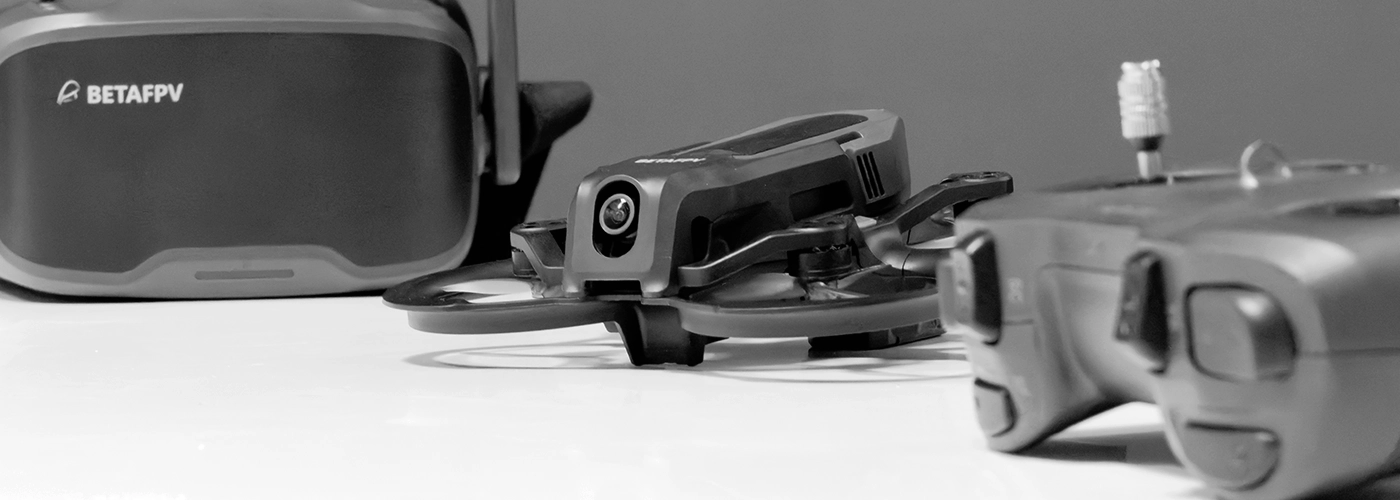
This is essentially the same version as the Aquila20, except that this time the video system is digital. betaFPV-aquila20-hd-fpv-kit-33065.html" title="Aquila20 HD">The Aquila20 HD is ideal for beginners thanks to its wide range of modes, from level-hold to full manual control. Each mode also has three speed settings: slow, normal, and fast. Check out the video on our YouTube channel—we did a full review of this drone.
If you’re wondering whether to start with the analog or digital version of the Aquila20, we definitely recommend choosing the digital version. The better image quality on the goggles allows you to spot obstacles faster and provides greater confidence while flying.
Digital transmission - BetaFPV Pavo20 Pro (O4)

This Beta FPV drone is the perfect choice for experienced pilots looking for the ideal balance between indoor and outdoor flying. To choose this drone, you should already have flying experience, whether gained through a simulator or with smaller FPV drones. betaFPV-pavo20-pro-elrs-2-4g-o4-pro-32415.html" title="BetaFPV Pavo20 Pro">BetaFPV The Pavo20 Pro is significantly heavier than the models described above. The build quality is truly top-notch, featuring carbon fiber and plastic components. It’s a great choice if you want to balance the demands of filming with dynamic freestyle flying. The drone combines the recording quality of the DJI with the exceptional agility of typical FPV drones. Whether you’re filming in tight spaces or performing fast maneuvers outdoors, the Pavo20 Pro is an excellent choice for FPV pilots looking for versatility and power in a compact drone.
Below is an example of a flight-ready kit:
- Goggles - dJI-goggles-3-29392.html" target="_blank" title="DJI Goggles 3" rel="noopener">DJI Goggles 3 are more ergonomic, have a better range, and offer more customization options. The second option is the DJI Goggles N3, which are more affordable, aren’t as versatile in terms of customization, but still offer good viewing quality
- Controller - radiomaster-pocket-elrs-charcoal-29427.html" target="_blank" title="RadiomasterPocket" rel="noopener">RadiomasterPocket, which is more difficult to set up and is better suited for advanced users, or dJI-fpv-remote-controller-3-29393.html" target="_blank" title="DJI Remote controller FPV 3" rel="noopener">DJI Remote controller FPV 3, as easy as a PlayStation
- Battery - Lava 3S 450mAh for energetic but shorter flights, or Lava 550mAh - less energetic but longer flight time
- Charger - SkyRC B6 Neo AC or toolkitrc-dc-7-25v-usb-c-rc-m4-pocket-lipo-1-4s-5a-28186.html" target="_blank" title="Toolkitrc DC 7-25V USB-C RC M4 Pocket LiPo 1-4S 5A" rel="noopener">Toolkitrc DC 7-25V USB-C RC M4 Pocket LiPo 1-4S 5A
Digital transmission - DJI Avata 2 Fly More Combo
dJI-avata-2-fly-more-combo-3-batteries-29390.html" title="DJI Avata 2">DJI Avata 2 combines the best of classic drones DJI and the world of FPV. On the one hand, you get intuitive controls, Normal and Sport modes with automatic leveling, a panic button, GPS, and a return-to-home function in case of signal loss. On the other hand, you get a full Manual mode, high speeds, and the ability to fly dynamically at low altitudes—typical of FPV.
A huge plus is the camera with a 1/1.3” sensor, recording in 4K with very good dynamic range and effective stabilization (RockSteady / HorizonSteady). Added to this is the O4 DJI transmission system, which provides a clear, stable image in the goggles and a very enjoyable flying experience. In practice, this is a piece of equipment that’s a lot of fun, but at the same time isn’t as stressful as classic, DIY FPV setups.
To be fair, though, “true” FPV on Betaflight will be even more aggressive, quicker to respond, and offer a rawer flying experience. The Avata 2 is a bit more refined, predictable, and safe.
So who is this drone for? First and foremost, it’s for people who want to get into FPV without the hassle of configuration, who value convenience, high-quality footage, and safety features. If you’re not planning on doing extreme racing flights or constant stunts in full acro mode, but you want dynamic yet controlled footage—the Avata 2 will be a very good choice. Additionally, the positioning and stabilization mode allows you to record smooth, slower-motion footage—something that typically requires considerable piloting skill in classic FPV.
It’s also worth noting that the previous version—DJI—is still a drone worth considering and, for many people, may be a very reasonable alternative in terms of price. If you’re wondering exactly how these two models differ and which one would be better for you, we invite you to read our article, which compares them in detail: dJI-avata-2-czy-dJI-avata-porownanie-1713191663.html" title="We compare DJI Avata and DJI Avata 2">We compare DJI Avata and DJI Avata 2.
Summary
Just a few years ago, the world of FPV drones seemed reserved mainly for enthusiasts who weren’t afraid of a soldering iron or system configuration. Today, the situation is completely different—FPV has become much more accessible, and ready-to-fly, well-designed kits—both digital and classic analog—have appeared on the market. This makes getting started with the hobby easier than ever before.
Of course, this doesn’t mean that knowledge isn’t necessary—it’s always worth learning the basics. If you want to dive deeper into the subject and build a solid foundation, you might want to consider taking an FPV course. It’s a great way to shorten the path from your first controller setup to flying confidently in manual mode.
If you’re still wondering which kit is best for you—get in touch with us. We’ll help you choose equipment that fits your budget, skill level, and flying style.