
DJI ROMO 2 vs. DJI. ROMO – Which robot vacuum should you choose?

The First Series DJI ROMO It showed that the manufacturer, known primarily for its drones, can apply its expertise in LiDAR, vision systems, and autonomous navigation not only in the air. We were given a choice of three models: DJI ROMO S, DJI ROMO A, and DJI ROMO P. All of them offered 25,000 Pa of suction power, automatic mopping, an advanced charging station, and precise obstacle avoidance.
Now it's time for DJI ROMO 2. The new generation includes the following models: DJI ROMO A2, DJI ROMO P2, and DJI ROMO P2 Clean More Combo. At first glance, the robot looks similar, but the most important changes have taken place on the inside: Suction power has increased to 36,000 Pa; the robot now features an additional LiDAR sensor, robotic legs, more advanced AI algorithms, and new ways of responding to dirt.
In this comparison, we’ll take a look at exactly what has changed between DJI ROMO and DJI ROMO 2, what has remained the same, and whether it’s worth paying extra for the new generation.
Key Differences Between the ROMO 2 DJI and the ROMO DJI
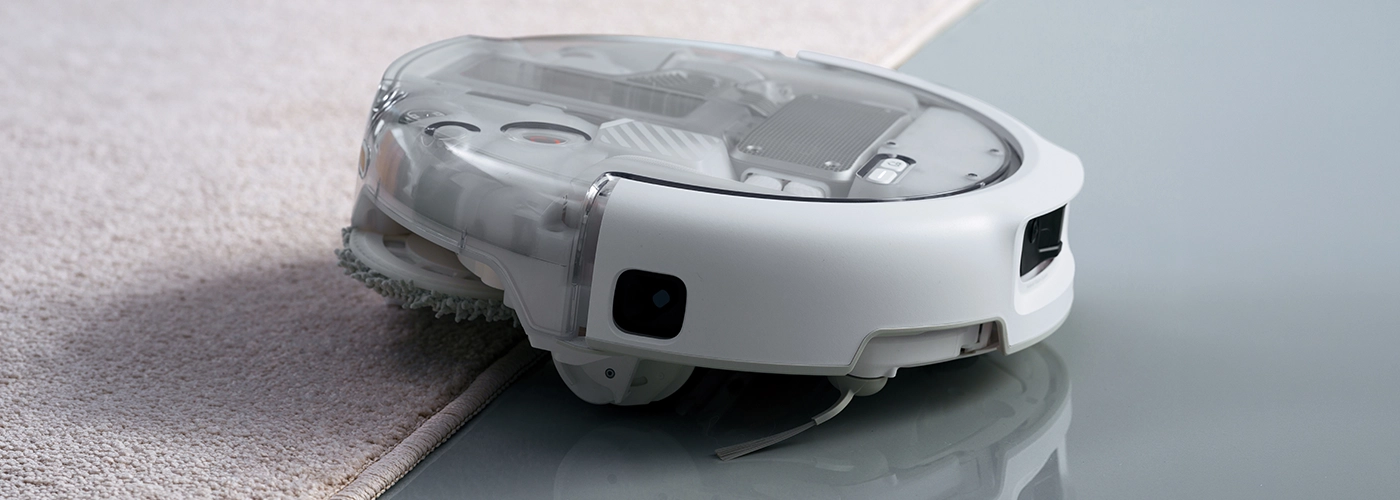
The biggest improvement in the specifications is in suction power. All first-generation models offer a maximum of 25,000 Pa, DJI, on the other hand, the ROMO A2 and ROMO P2 already reach 36,000 Pa. It didn't, because the increase was about 44%.
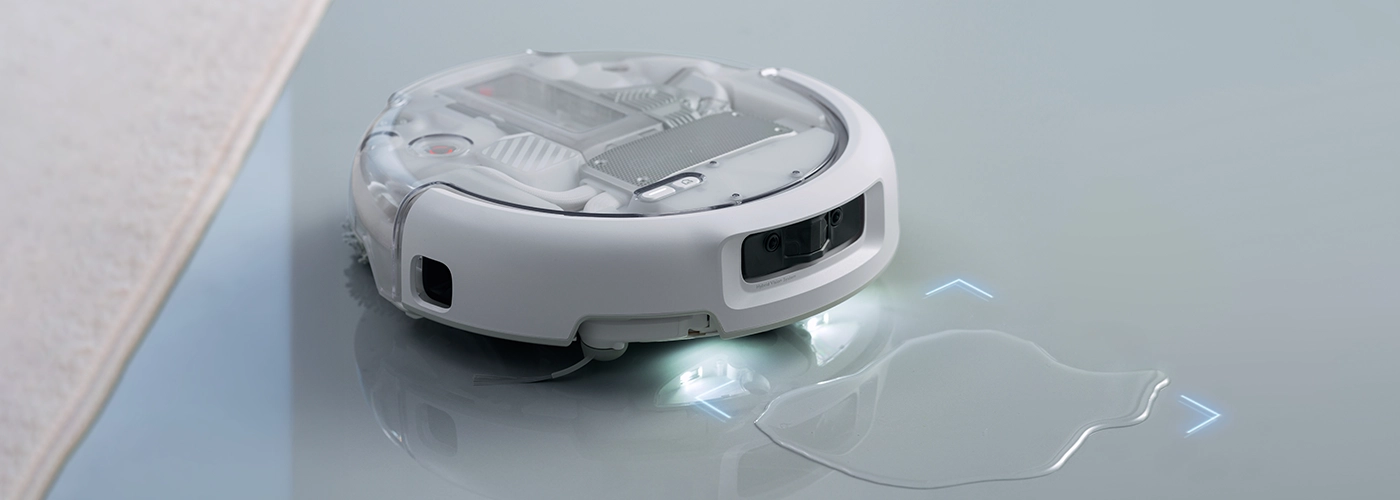
The new generation also features a more advanced dirt analysis system. DJI ROMO 2 can detect, among other things, scattered particles or spilled liquids, and based on this, adjust the cleaning sequence, travel speed, brush operation, and suction power.
Another major change involves moving between rooms. The first series could use an additional ramp to help clear curbs up to 4 cm high.DJI ROMO 2, on the other hand, was equipped with robotic legs, which allow it to it can independently navigate single obstacles up to 4 cm high and two-step thresholds with a total height of up to 8.5 cm.
Important: DJI The ROMO P2 Clean More Combo uses the same robot as the standard ROMO P2. The difference mainly concerns the additional consumables included in the set, rather than increased power or new cleaning features. You can find additional accessories here.
Design and Workmanship
In terms of dimensions, the DJI isn't breaking any new ground here. Both the first and second generations have a robot housing measuring approximately 351 × 351 × 98 mm.
The older ROMO DJI s weigh about 4.4 kg. The new generation is slightly heavier— DJI, ROMO A2, and P2 weigh about 4.9 kg. However, it's hard to consider a half-kilogram difference a significant problem, since we don't carry the robot around during our daily work.
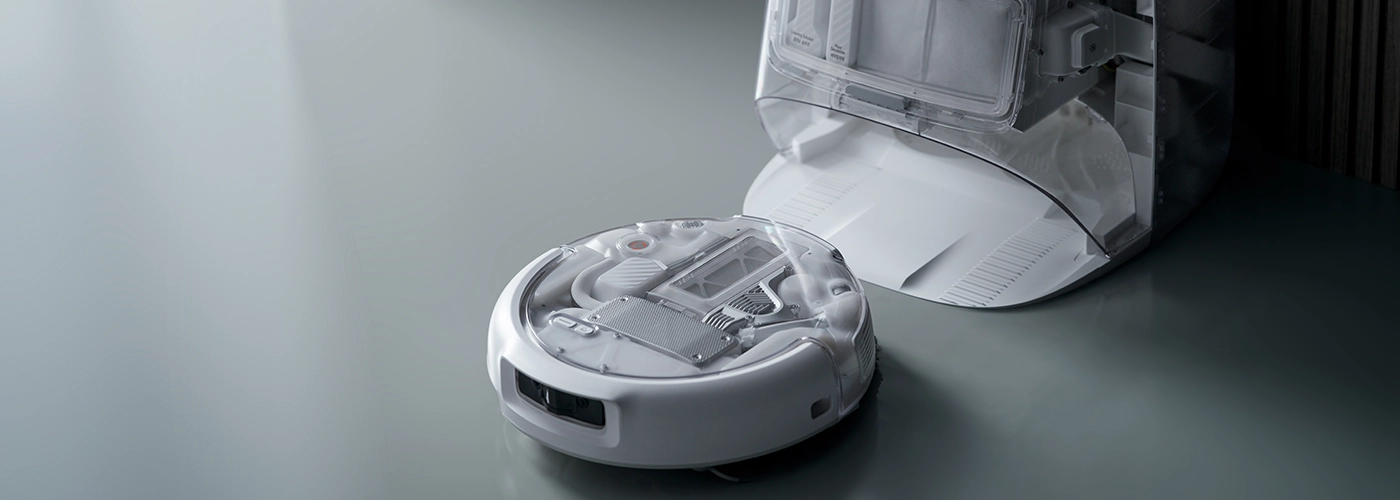
The base station itself may be more important. It's quite large and takes up a lot of space, so before you buy it, it's a good idea to think about where you'll put the whole set. Not everyone will want to display a robot in their living room, although the transparent models do indeed fit well into modern interiors.
Stylistic differences are far more important.
- DJI ROMO S - This is the most classic version of the first generation. The robot and the station have a white finish.
- DJI ROMO A - The robot itself features a distinctive transparent design, while the station remains white.
- DJI ROMO P - The most striking version of the first generation. Both the robot and the base station are transparent. The P model also features more advanced station capabilities, including support for a deodorizing agent and UV light disinfection of the dust bag.
DJI ROMO A2
In the second generation, the manufacturer retained a similar hierarchy. A2 has a transparent robot and a white station.
DJI ROMO P2
P2 remains the most "gadgety" version—both the robot and the station are transparent. The station also deodorizes the floor and disinfects the bag using UV light.
So, in terms of appearance, there isn't a huge change.DJI it provided a more detailed look at what's going on inside the casing.
Features and Capabilities
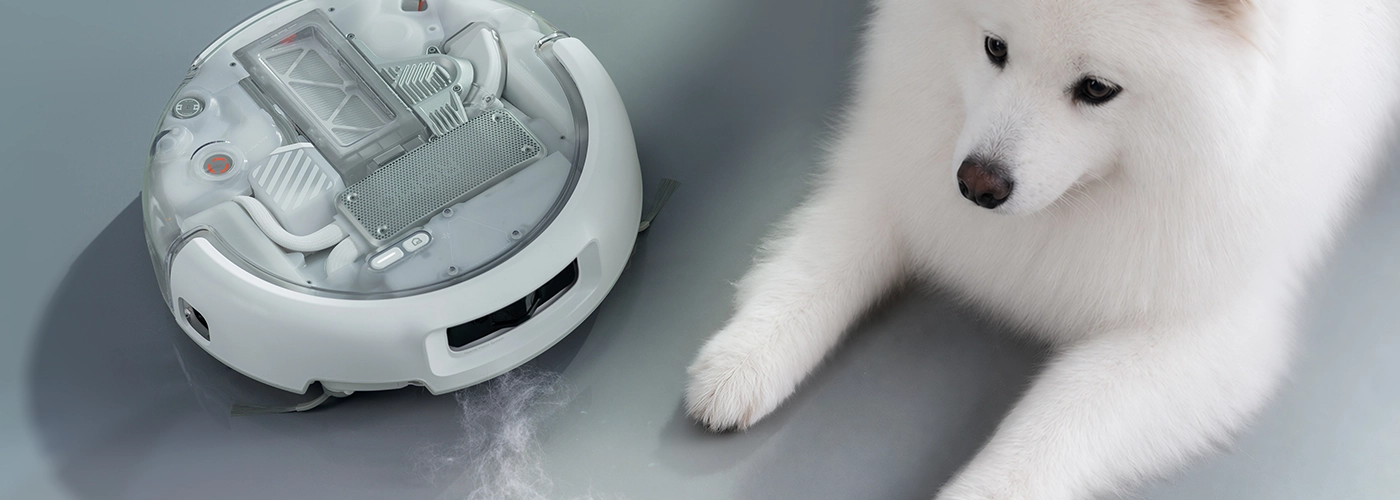
The first ROMO " DJI " series was already impressive— 25,000 Pa is a high value for an automatic cleaning robot. DJI ROMO 2 increases the maximum suction power to 36,000 Pa. This is most useful on carpets, when there is a lot of pet hair, and when dirt is embedded deeper between the fibers. The new generation also uses a retractable pressure plate, which, when used on a carpet, helps to partially seal the gap between the vacuum cleaner and the floor and increase suction power.
AI not only detects dirt, but also decides what to do about it
The first ROMO " DJI " can analyze their surroundings, detect dirt, and adjust their cleaning methods. For example, the robot can reduce the speed of the side brush when there is spilled cat litter so as not to scatter it across the floor. ROMO 2 builds on this idea—gWhen it detects fine particles that are prone to scattering, it can slow down, reduce the brush speed, and only then increase the suction power. If there's a lot of dust, you can vacuum the surface first and then wash it.
The situation with liquids is even more interesting. After detecting a liquid spill ROMO 2 You can skip the stain while vacuuming, finish the rest of the room, and then go back to the stain and remove it using the mop arm. After cleaning, they are sent to the station, where the pads are washed before further use. In our opinion, this is a much more important change—after all, a cleaning robot is supposed, first and foremost, to require as little attention from you as possible.
It's worth noting here that DJI isn't starting its journey into artificial intelligence with cleaning robots. For years, the manufacturer has been developing algorithms for autonomous navigation, vision systems, and obstacle avoidance in drones. This feature is a perfect fit for a device that has to analyze its surroundings on its own and make dozens of small decisions during every cleaning session.
Better cleaning along the edges
The first ROMO DJI now features retractable cleaning elements that allow it to reach closer to walls, corners, and furniture legs. This feature is still not standard in every robot—it is only beginning to appear more widely in premium models from various manufacturers. DJI ROMO 2 builds on this design.
The adaptive arm is also equipped with LiDAR. It operates within a range of 123°, extends about 7.8 cm farther than in the previous generation and allows you to mop about 4.5 cm deeper under wall-mounted furniture. This allows the robot to guide the mop pad closer to straight walls, under cabinets, around chair legs, and in corners.
More sensors
The first series already featured two wide-angle fisheye sensors and LiDAR. As a result, the robot was able to detect even thin wires with a diameter of about 2 mm. ROMO 2 adds, among other things,:
3D ToF LiDAR,
two fisheye cameras,
an additional LiDAR sensor in the extendable arm,
upper anti-collision sensor,
extensive lighting of the area in front of the robot.
The new generation is also designed to better handle transparent obstacles taller than 6 cm and dark wires in low-light conditions. Interestingly, the system can also use information about objects it has encountered previously. The robot does not, therefore, analyze every path entirely from scratch— DJI 's solutions allow it to better recognize obstacles and respond appropriately to its changing environment.
Light helps in situations where a robot would normally see less
DJI The ROMO 2 also features front lighting that illuminates an area of up to 2,000 cm². Light helps the vision system analyze the space under cabinets, beds, or other pieces of furniture, where it can be very dark even during the day. It also makes it easier to detect more difficult obstacles, including transparent objects and dark wires. This is a useful feature, especially if the robot is supposed to clean at night or regularly work in dimly lit areas.
Robotic legs—the biggest physical change
Here, the ROMO 2's advantage over the DJI is very clear. The robot can lift the structure and navigate:
single hurdles up to 4 cm,
two-step hurdles up to 8.5 cm total amount.
A two-step obstacle should be understood to mean two consecutive levels, not a single vertical obstacle 8.5 cm high. In the first generation, the solution for higher curbs was an optional ramp. It's great that you don't have to adapt the room for the robot—it can handle most obstacles on its own..
Base Station – DJI ROMO vs ROMO 2
Both generations significantly reduce the number of tasks that must be performed manually. Among other things, the stations can:
empty the dust container,
wash the pads,
dry the pads,
dispense the cleaning solution,
prepare the robot for the next cycle.
The first generation uses four high-pressure water jets and a large, 16-millimeter dirt discharge channel.
In the ROMO 2, the manufacturer redesigned the wash plate and incorporated a nanocrystalline surface that reduces dirt buildup. Four high-pressure water jets flush out dirt from the interior and edges, and then the dirty water, hair, and larger particles are drained through the suction channel.
DJI claims it can operate for up to 365 days without requiring maintenance of the wash plate itself. Of course, this doesn't mean a year without changing the bag, refilling the water, or replacing consumables, but it eliminates one more task that has to be done manually.
The new station can also clean pads using a heating system that reaches temperatures of up to 80°C and dry them at a temperature of 60°C. This is important not only for the effectiveness of cleaning, but also for reducing moisture and the formation of unpleasant odors.
The ROMO P and ROMO P2 have more to offer:
an additional floor deodorizer,
disinfecting the dust bag with UV light ("which helps people with allergies feel even safer because UV light kills dust mites")
All models, however, use dust bags with a capacity of 2.4 L. It has enough capacity that, under normal use, you won't have to check the bag after every time you clean—or even after several cleanings. The actual frequency of replacement will, of course, depend primarily on the size of the house, the number of household members, and whether there are any pets.
Performance in Everyday Use
Interestingly, despite the increase in power and the expansion of the mechanics, the basic power supply specifications have remained virtually unchanged. DJI did not try to extend working hours at any cost. Instead, it enhanced the robot's capabilities while maintaining a very similar operating time.
A full charge time of about 2.5 hours is also a key specification, something worth noting in larger homes. If a single battery charge is not enough to clean the entire area, the robot can return to the charging station, recharge, and resume the task relatively quickly.
The new series also features improved sound insulation. The manufacturer states 38 dBA during quiet mopping and a reduction in noise levels by up to 85% compared to the previous generation. It may seem like a minor issue until the robot starts running regularly during your online meetings or in the evening. It's very convenient to be able to start cleaning without hearing the vacuum cleaner from the other room.
Remote Video Call – the robot can also keep an eye on the house
Both generations are compatible with the " DJI Home" app and allow users to remotely view the robot's camera feed.
Feature Remote Video Call lets you check what's going on at home, talk to your family members, or find and check on your pet while you're away. This can be much more useful, especially for dog and cat owners than the function's name suggests.
Access to the camera during the first launch requires two-factor authentication; data transmission is secured, and you can disable the feature entirely if you do not intend to use it. DJI It also announced further development of the app. A future update will include the ability to edit the map, including marking and moving furniture. This will allow the robot to account for changes in the layout without having to recreate the entire map from scratch.
Comparison of the specifications for all ROMO models at DJI and ROMO 2 models at DJI
| Model | ROMO S | ROMO A | ROMO P | ROMO A2 | ROMO P2 | ROMO P2 Clean More |
| Generation | 1 | 2 | ||||
| Suction power | 25,000 Pa | 36,000 Pa | ||||
| Working Hours | up to 3 hours | |||||
| Loading | ok. 2.5 hours | |||||
| Battery | 5,000 mAh | |||||
| Dust bag | 2.4 L | |||||
| Mopping | Yes | |||||
| Robotic legs | No | Yes | ||||
| Two-step thresholds up to 8.5 cm | No | Yes | ||||
| Additional LiDAR on the arm | No | Yes | ||||
| Floor Deodorization | No | No | Yes | No | Yes | Yes |
| UV dust bag | No | No | Yes | No | Yes | Yes |
| Transparent Robot | No | Yes | Yes | Yes | Yes | Yes |
| Transparent Station | No | No | Yes | No | Yes | Yes |
| Extended Maintenance Package | No | No | No | No | No | Yes |
The price of the ROMO DJI and the ROMO 2 DJI – is it worth paying extra??
As of the time this article was written, the prices of the first-generation models are already significantly lower than the list prices:
DJI ROMO S – approximately 3,299 PLN*
DJI ROMO A – approximately 3,649 PLN*
DJI ROMO P – approximately 4,299 PLN*
The new series starts at a higher level:
DJI ROMO A2 – 5,299 PLN*
DJI ROMO P2 – 5,699 PLN*
DJI ROMO P2 Clean More Combo – 5,899 PLN*
*Prices are subject to change after the release date of September 3, 2026.
DJI ROMO 2 is a technically superior robot, but the first generation has become much more attractive following the price cuts. When you choose DJI ROMO P2 instead of DJI ROMO P, you’re primarily paying extra for:
36,000 instead of 25,000 Pa,
robotic legs,
additional LiDAR,
newer algorithms,
liquid detection,
better performance along the edges,
front auxiliary lighting,
improved soundproofing.
Which ROMO DJI to Choose?
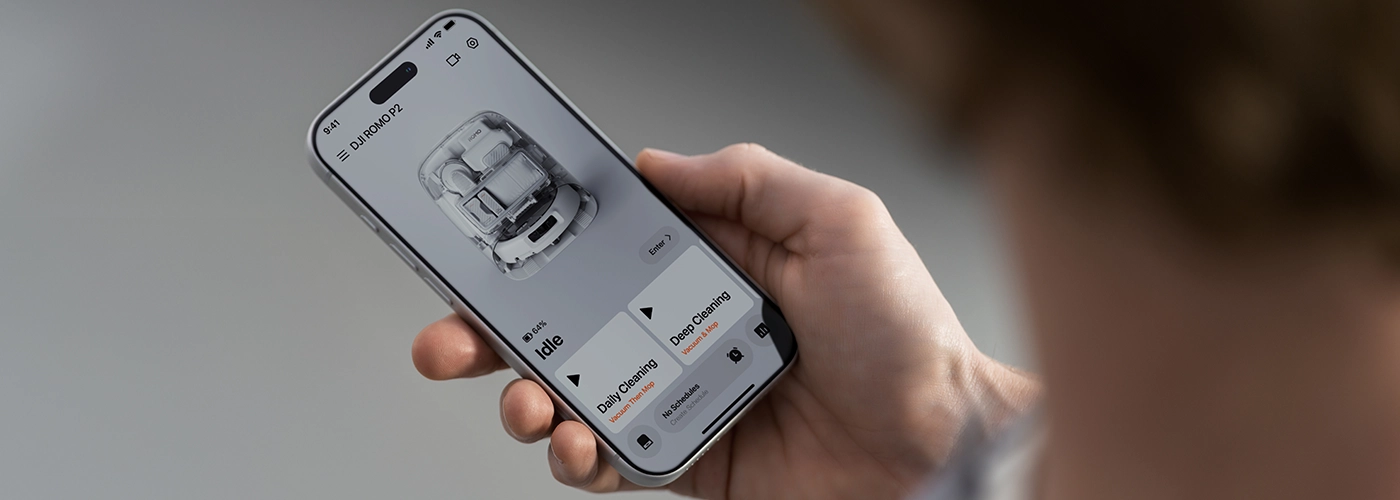
DJI ROMO S – when price is the top priority
This is the most affordable way to get started with the ROMO series today. You get 25,000 Pa, a very good obstacle detection system, mopping, an automatic docking station, and about 3 hours of runtime.If you don't care about a transparent case or the additional features of the flagship P.
DJI ROMO A – if you want the first generation but prefer the transparent design
Technically, it's very similar to S. The main differences are in appearance and features. Given current prices, it's worth checking the difference between A and S before making a purchase. If it's large, it doesn't always make sense to pay extra just for the design.
DJI ROMO P – the best choice from the first generation
If you want to get the most out of the previous ROMO, the P version is the most interesting option. You get a transparent docking station, odor removal, and UV bag disinfection, and at its current price, this model has become a strong competitor even to the new A2..
DJI ROMO A2 – in our opinion, the most sensible ROMO 2
This is a very important model in this generation. The robot itself has practically everything that matters most:
36,000 Pa,
new AI,
robotic legs,
additional LiDAR,
liquid detection,
new edge-cleaning systems,
front lighting.
Compared to the P2, you’re primarily giving up a more sophisticated station, UV treatment, deodorization, and a fully transparent design. If you're asking us about the best value for money in the ROMO 2, We'd start with A2.
DJI ROMO P2 – if you want the full package
The P2 is the model for someone who doesn't want to wonder what's missing from the cheaper version. You get the latest robot and the most feature-rich charging station. The extra cost compared to the A2 is about 400 zł, so if you want UV, odor control, and a transparent design, the difference isn't that big.
DJI ROMO P2 Clean More Combo – if you're going to buy consumables anyway
It's still the same P2. However, the set also includes a supply of replacement parts, including brushes, mop pads, filters, and bags. With a price difference of about 200 zł compared to the standard P2 Clean More Combo, it can be a very cost-effective choice if you plan to use the robot regularly over a long period of time.
DJI ROMO or DJI ROMO 2 – which one would we choose??
If we look solely at the hardware's capabilities, the winner is DJI ROMO 2. The most important change isn't even the increased power, but the fact that the robot has become more autonomous. It assesses situations better, reaches edges more efficiently, and, above all, is able to overcome obstacles that might have meant the end of cleaning a given room for the first generation.
However, this does not mean that it's always worth buying the latest version.If you have an apartment with level floors and few thresholds, and your main priority is effective automatic vacuuming and mopping, DJI the first-generation ROMO, now that prices have dropped, is a very attractive option.
On the other hand, if you’re buying a robot to last for several years, have pets, lots of obstacles, carpets, high thresholds, or simply want to minimize the number of times you have to assist the device—then the extra cost for DJI ROMO 2 makes sense.
If we were to pick one model from each generation, we'd start with DJI the ROMO P in the older series and DJI ROMO A2 in the new. The first one offers a lot today at a much lower price, while the second one provides most of the key ROMO 2 features without having to pay extra for the flagship model’s add-ons.
If you're still not sure which robot vacuum is right for your home, please contact us. We can compare the layout of the rooms, the type of flooring, the number of rugs, thresholds, or the presence of pets, and based on that, select a specific model.