Drone service
 Rental
 Reliability
 Trust
 Own warehouse
 Warranty
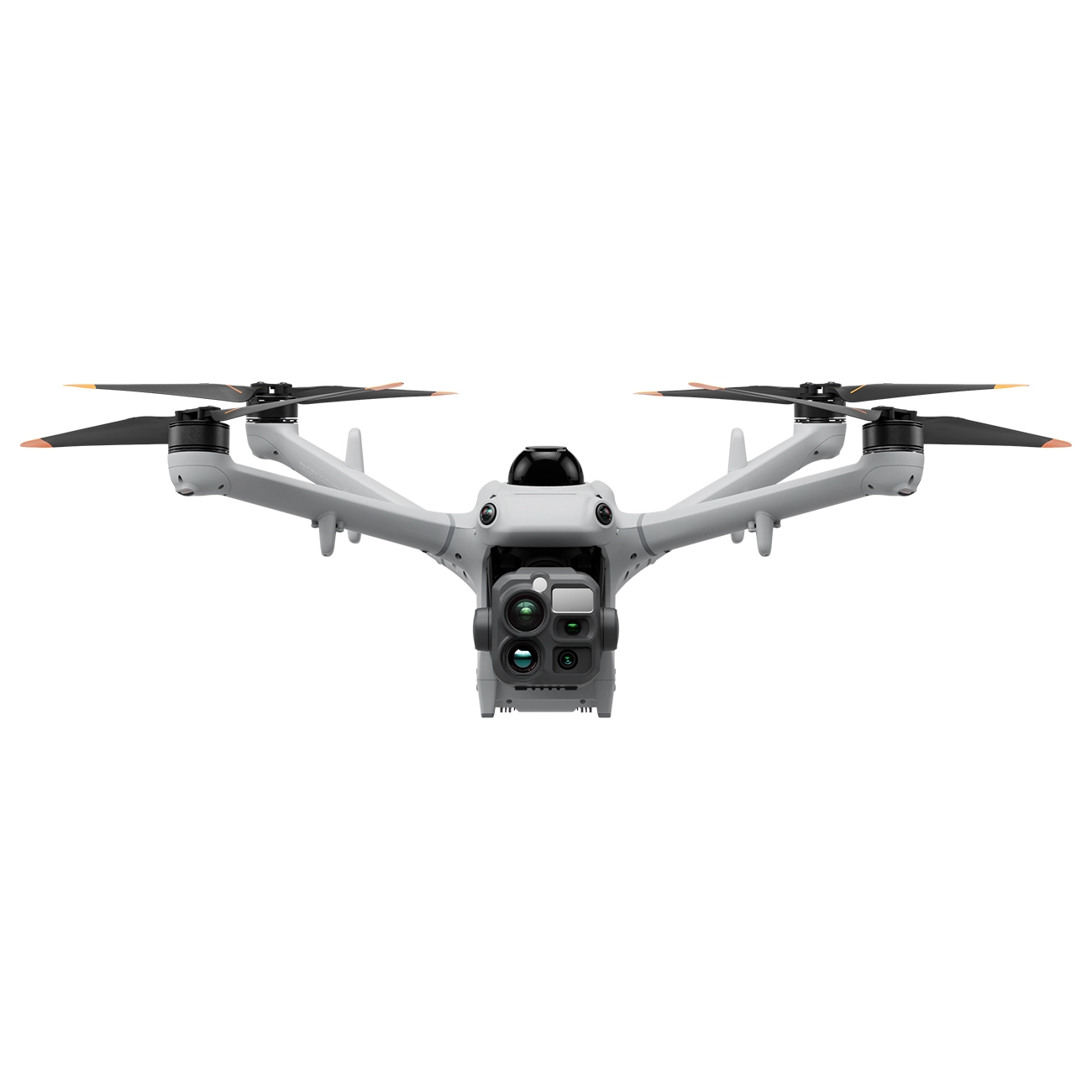
DJI Dock 4 Docking Station


13 181,80 €
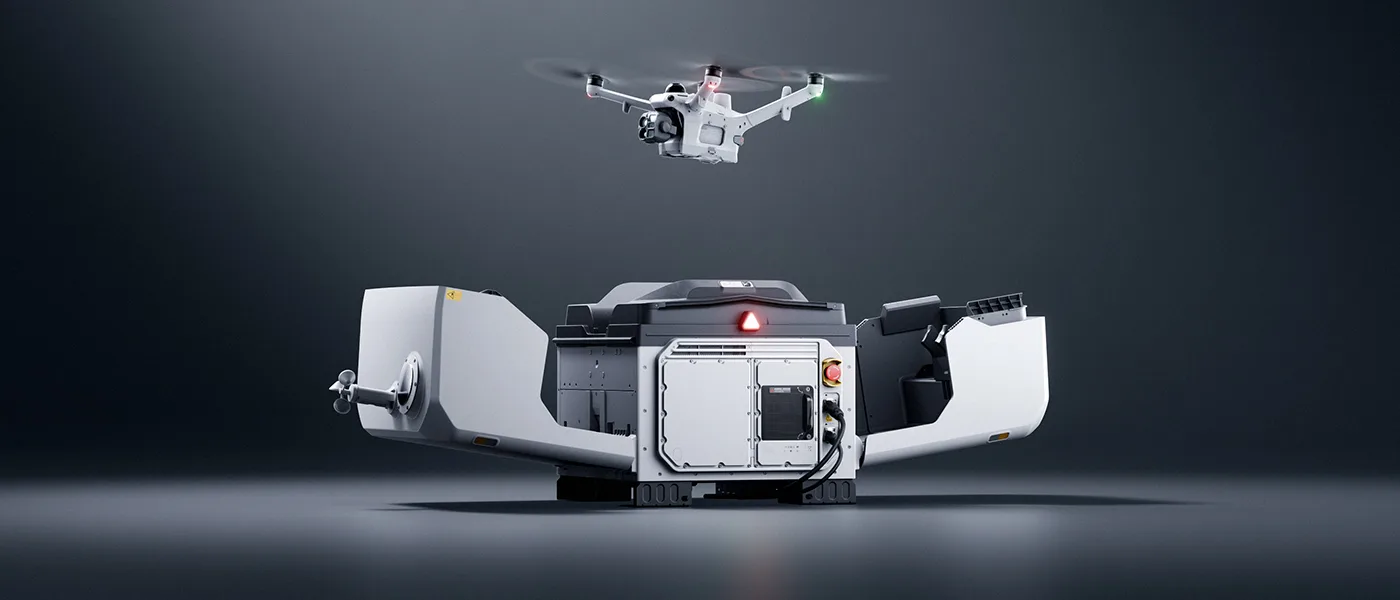
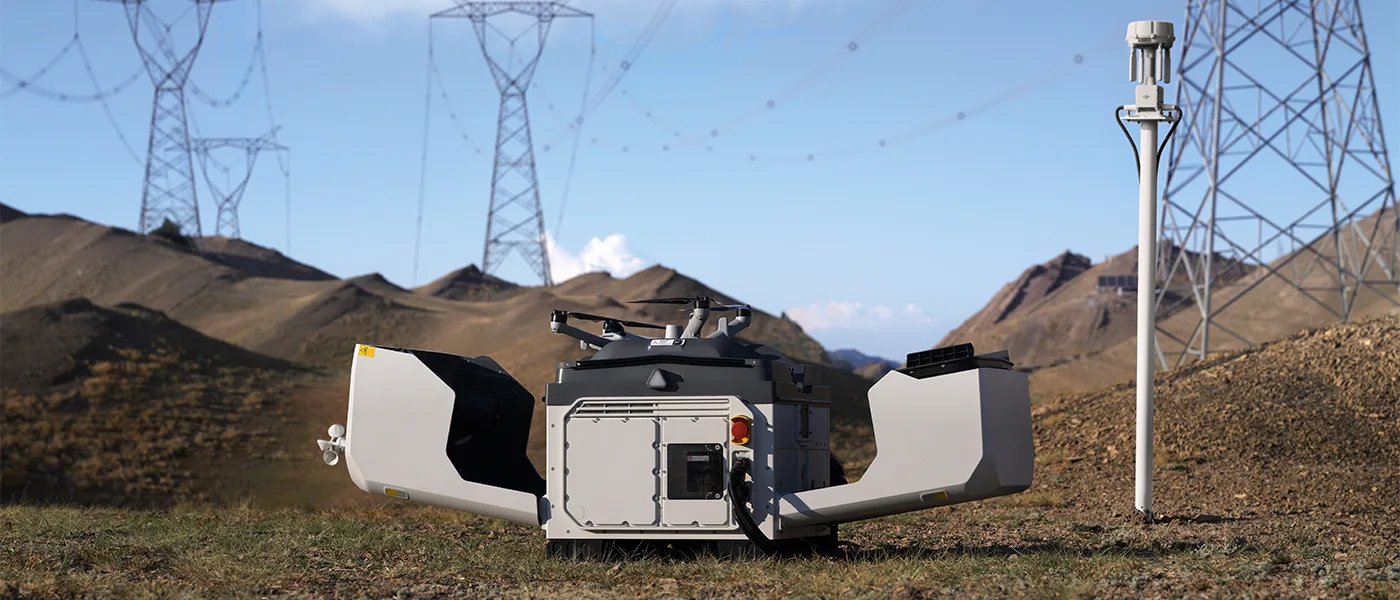
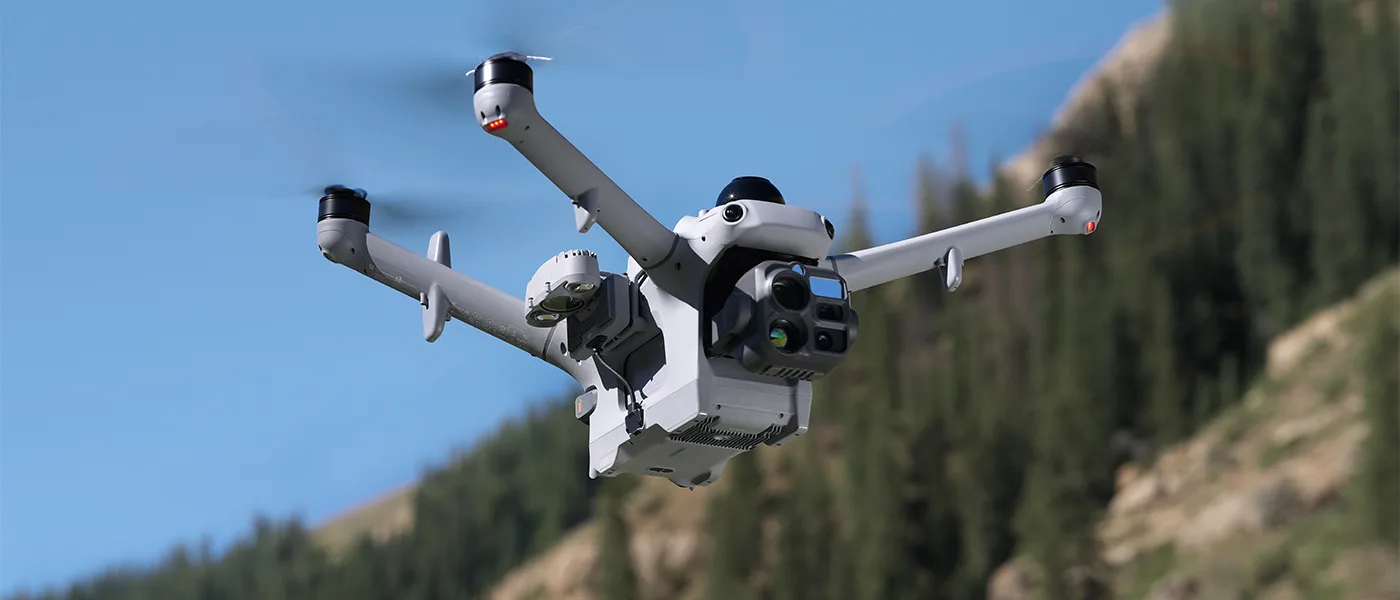
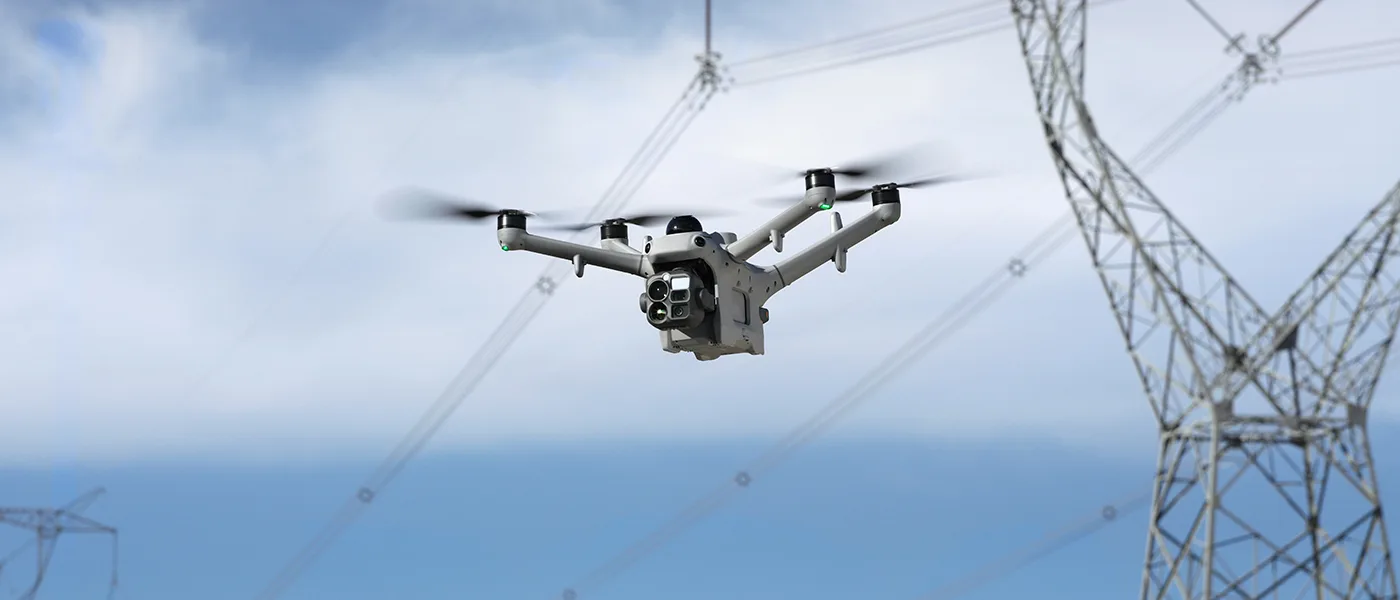
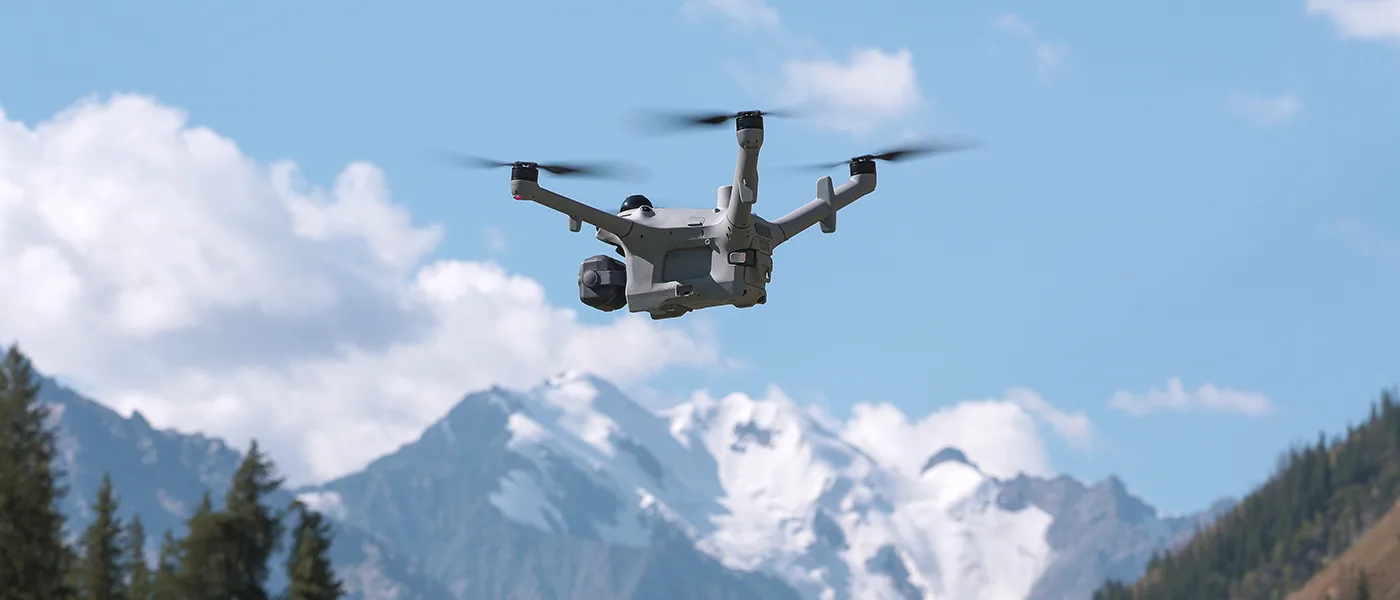
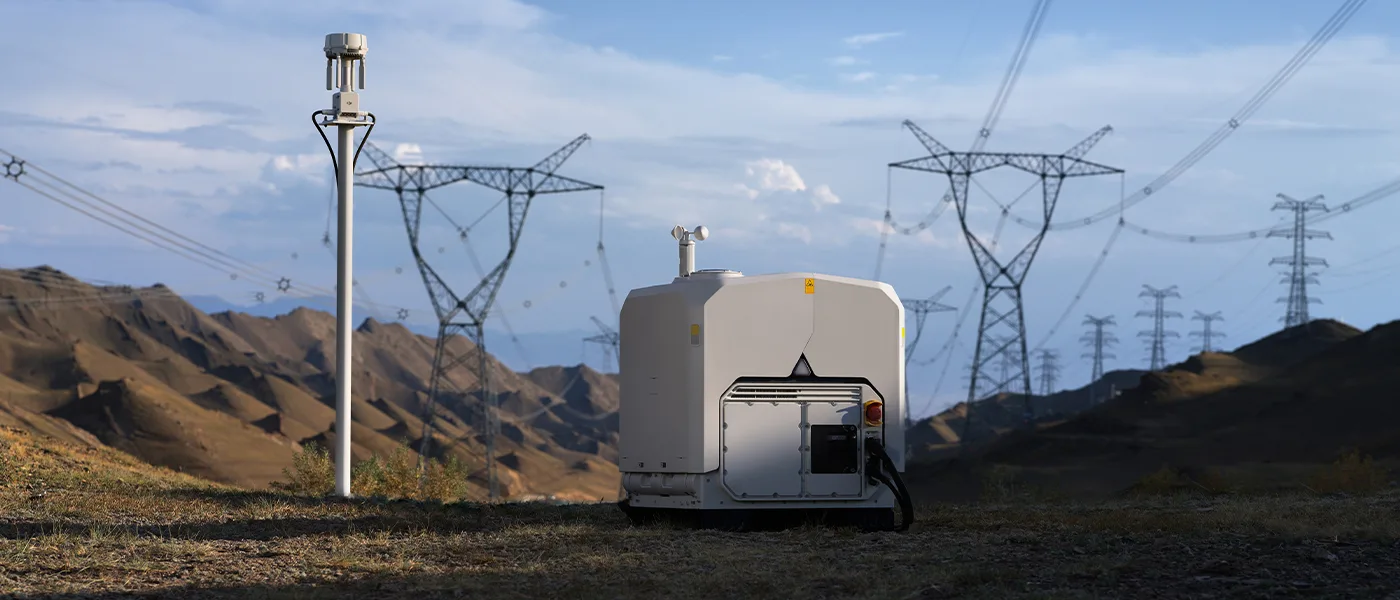
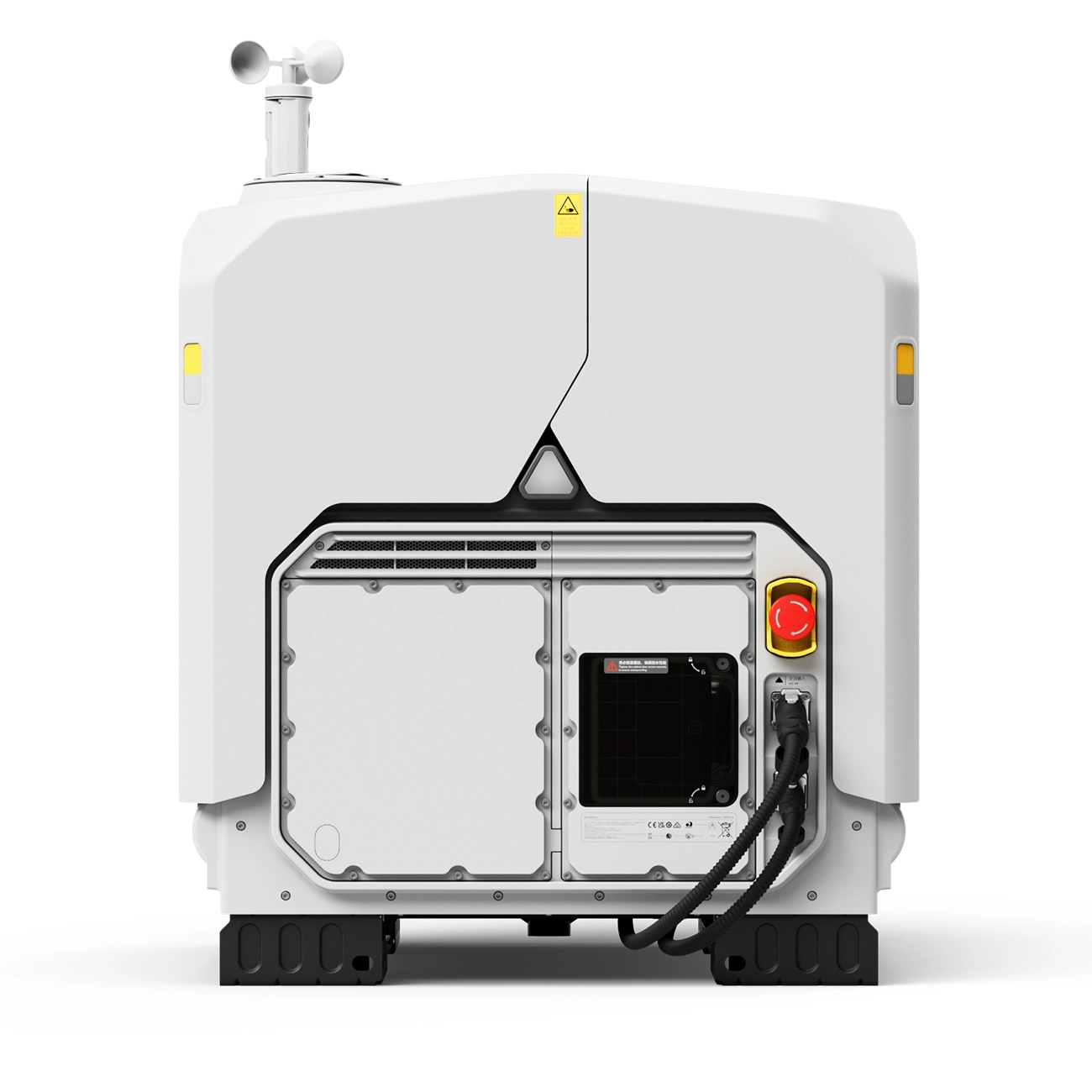
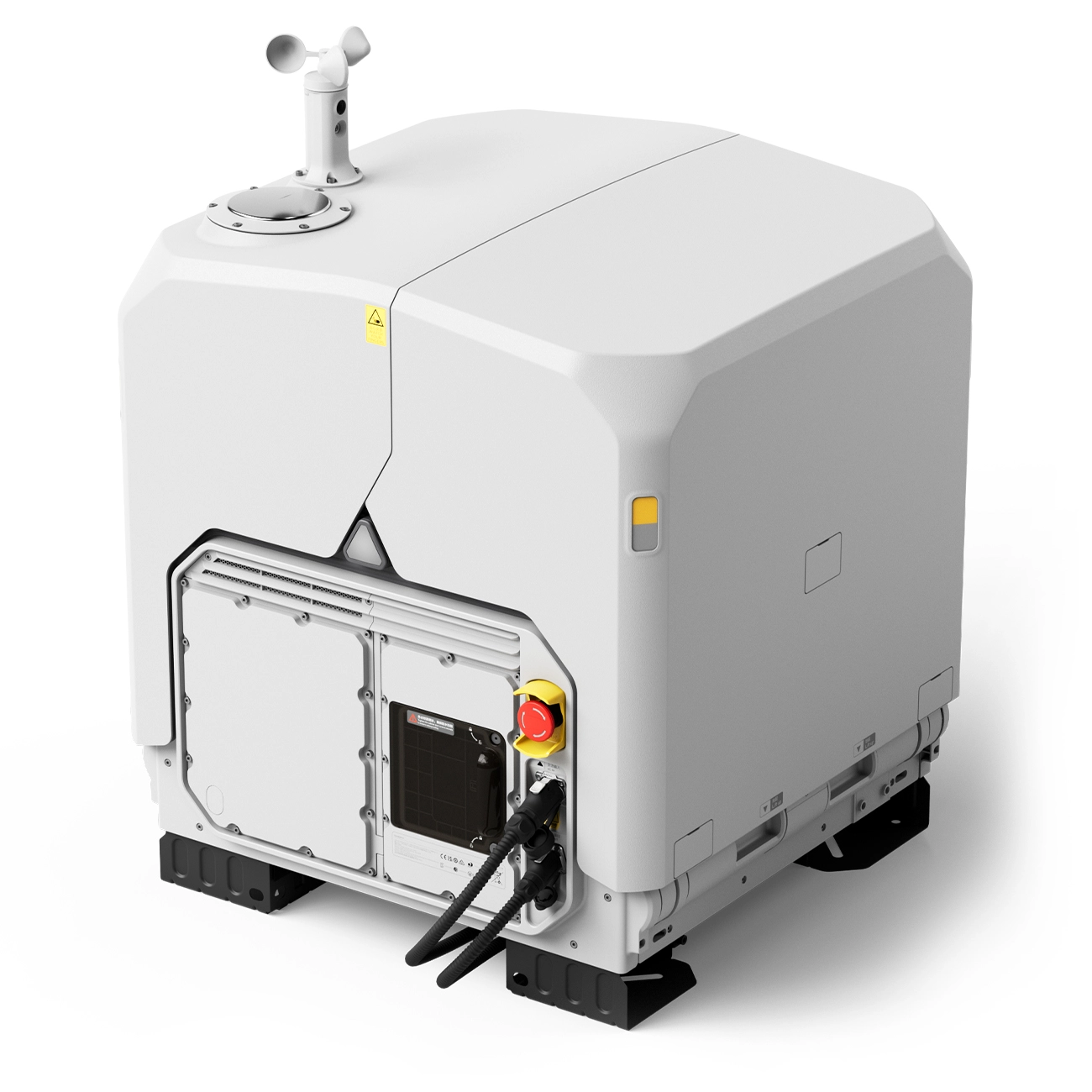
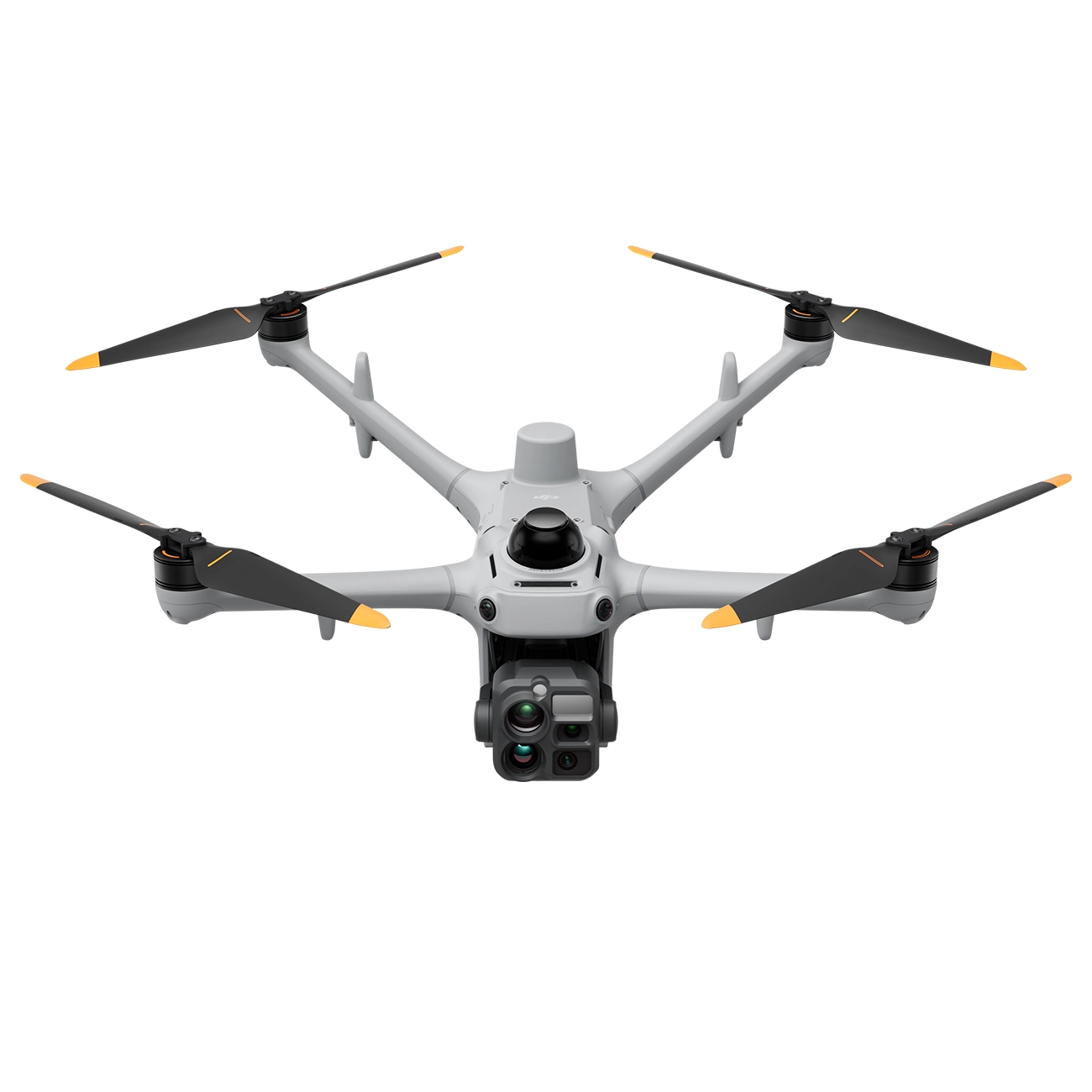
DJI Dock 4 – automated docking station with Matrice 5TD drone
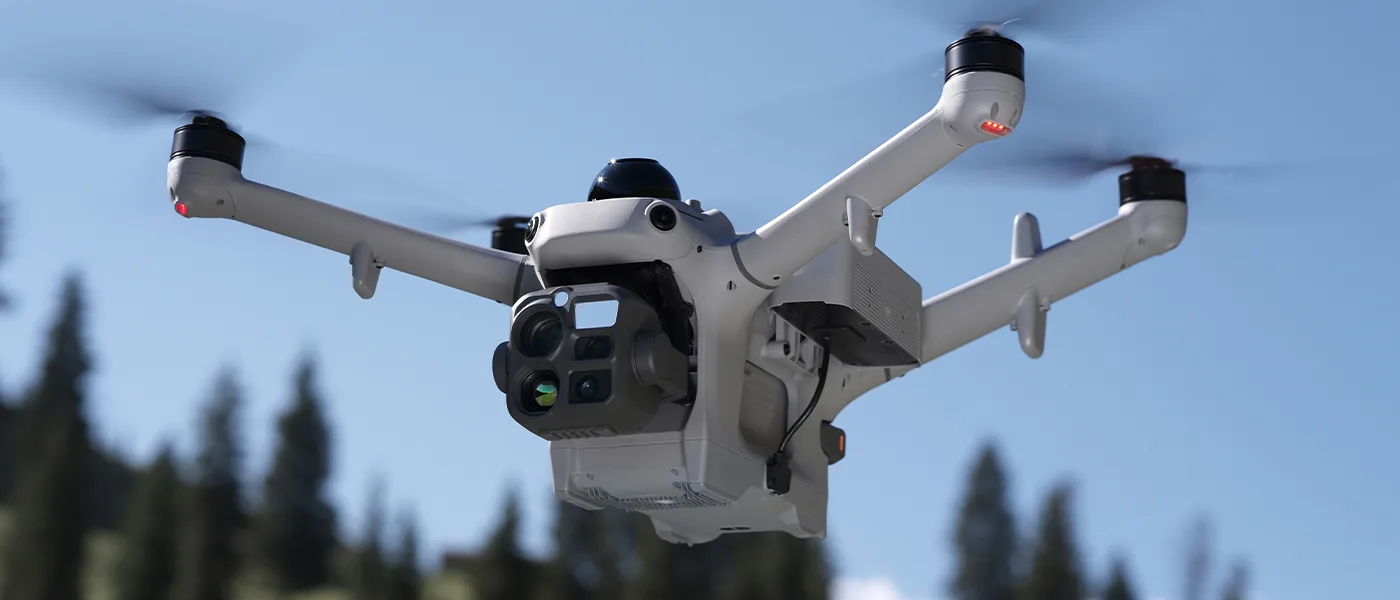
DJI Dock 4 is a solution for automated drone operations. The dock swaps the battery in under a minute, while the DJI Matrice 5TD captures daylight, night-time and thermal imagery. The system is designed for remote monitoring, recurring inspections and rapid incident response.
Up to 59 minutes of flight time, O4 transmission with a stated range of up to 40 km, a 1280 × 1024 thermal camera and integration with DJI FlightHub 2 support mission planning, execution and analysis. Specifications and features are subject to the conditions specified by the manufacturer and applicable regulations.
DJI Dock 4 automated docking station – ready for the next flight sooner
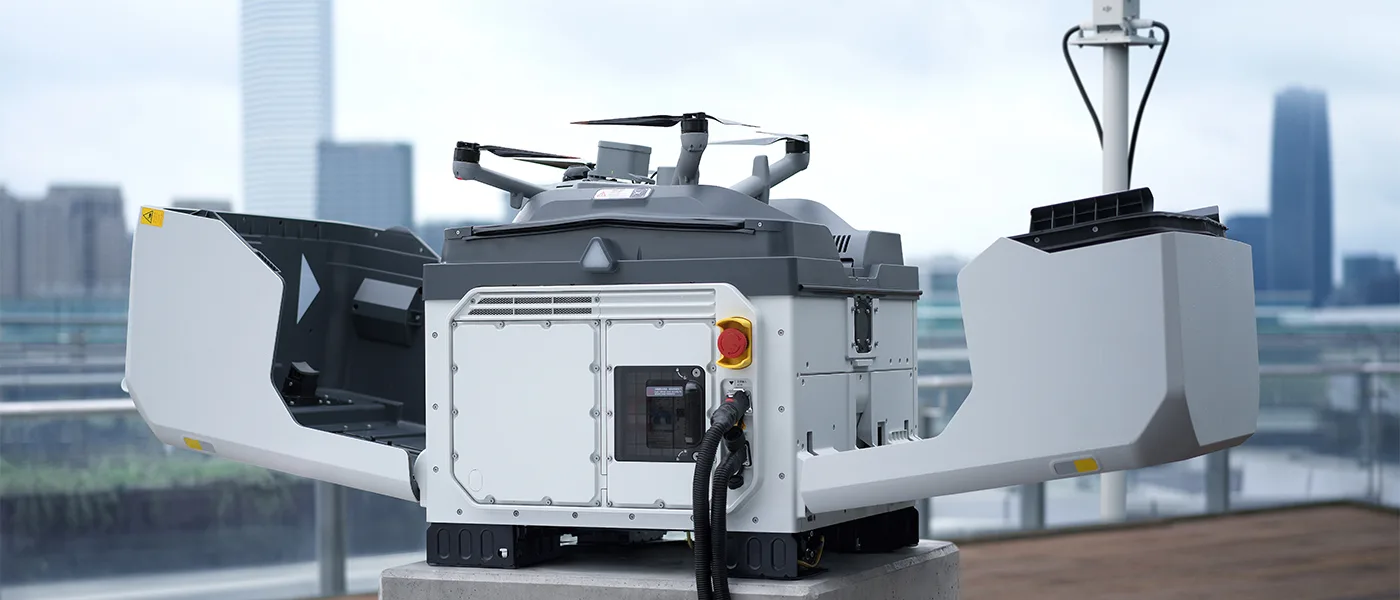
DJI Dock 4 is a docking station for automated aerial operations with the DJI Matrice 5TD. Its automatic battery swapping system reduces downtime between missions. Once the battery has been replaced, the drone can prepare for take-off without waiting for the battery to recharge in the aircraft.
The dock and drone are designed for tasks that call for rapid response, regular inspections and remote monitoring. The system combines dock automation, the Matrice 5TD’s advanced cameras and the tools in DJI FlightHub 2.
Battery swap in under a minute
DJI Dock 4 swaps the battery automatically in under 1 minute. DJI specifies a 45-second aircraft turnaround time and 25 seconds from dock cover closure to battery insertion. This reduces the time the drone spends on the ground between missions.
The drone lands and is positioned, the depleted battery is removed, the swapping arm rotates, and a replacement battery is installed. Data can also be transferred during the swap. The maximum Wi-Fi media transfer speed is 80 MB/s, and DJI states that 2 GB of data can be transferred during a single swap.
DJI Dock 4 in challenging weather conditions
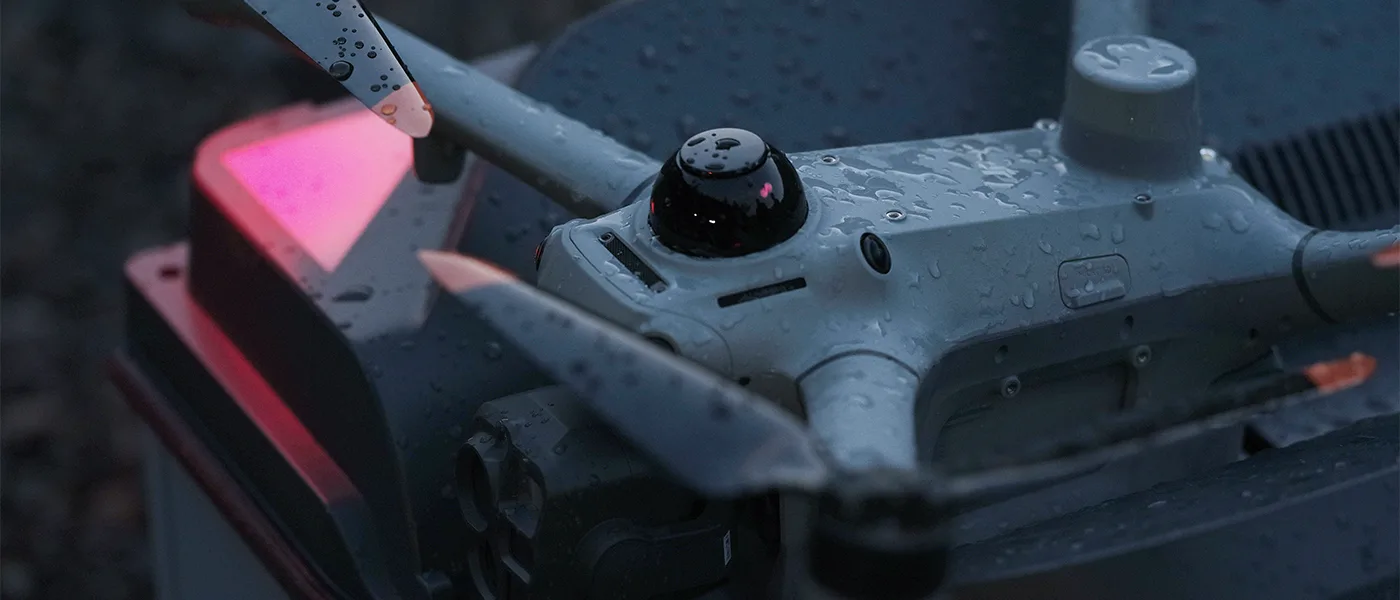
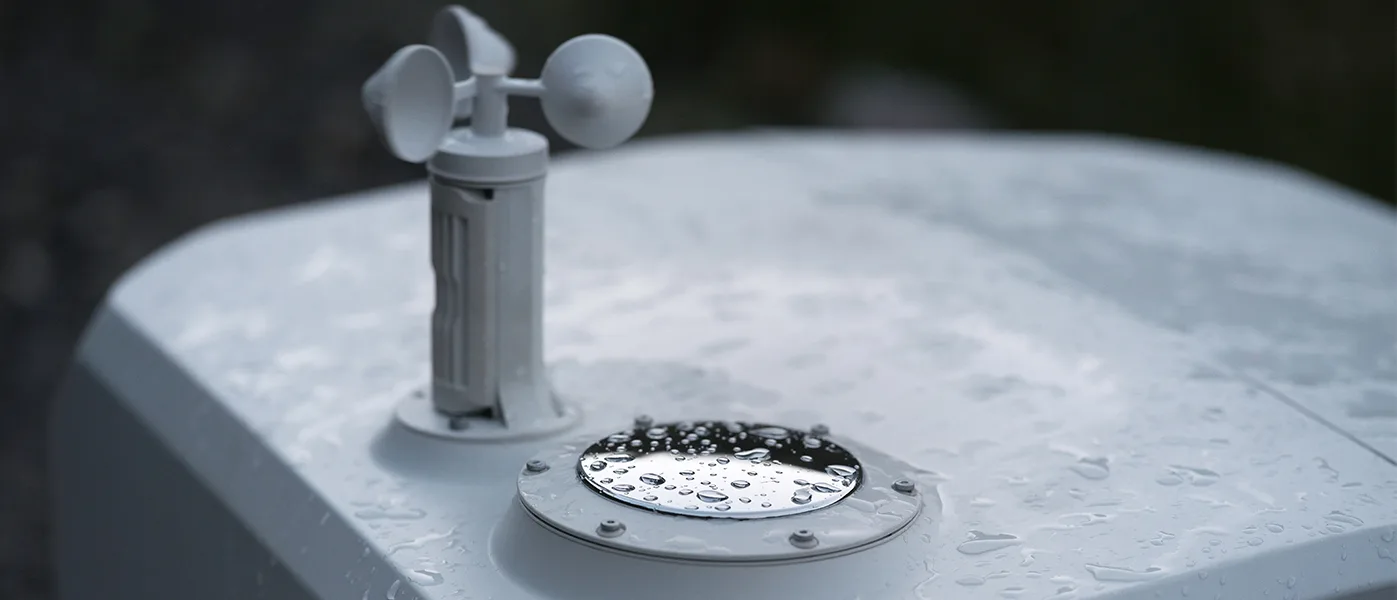
The dock is designed to operate at temperatures from −40°C to 50°C. DJI Dock 4 is rated IP56, and the drone is rated IP55. The propellers use materials that reduce ice build-up.
The design gives operators more options when planning installations at sites exposed to changing weather. Each mission must stay within the equipment’s operating limits and comply with applicable rules.
Battery swapping system tested for reliability
DJI reports 1,000,000 battery swap cycles in product beta testing, 20,000 swaps in reliability testing and 300,000 laboratory cycles across five validation stages. Field tests in China involved 300 docks.
Testing covered high temperatures, freezing conditions, salt spray, strong coastal winds, humidity, sand and dust. These figures describe DJI’s test programme. The manufacturer gives no guarantee that any individual dock will complete that number of swaps in service.
O4 connectivity and ground station with up to 40 km transmission range
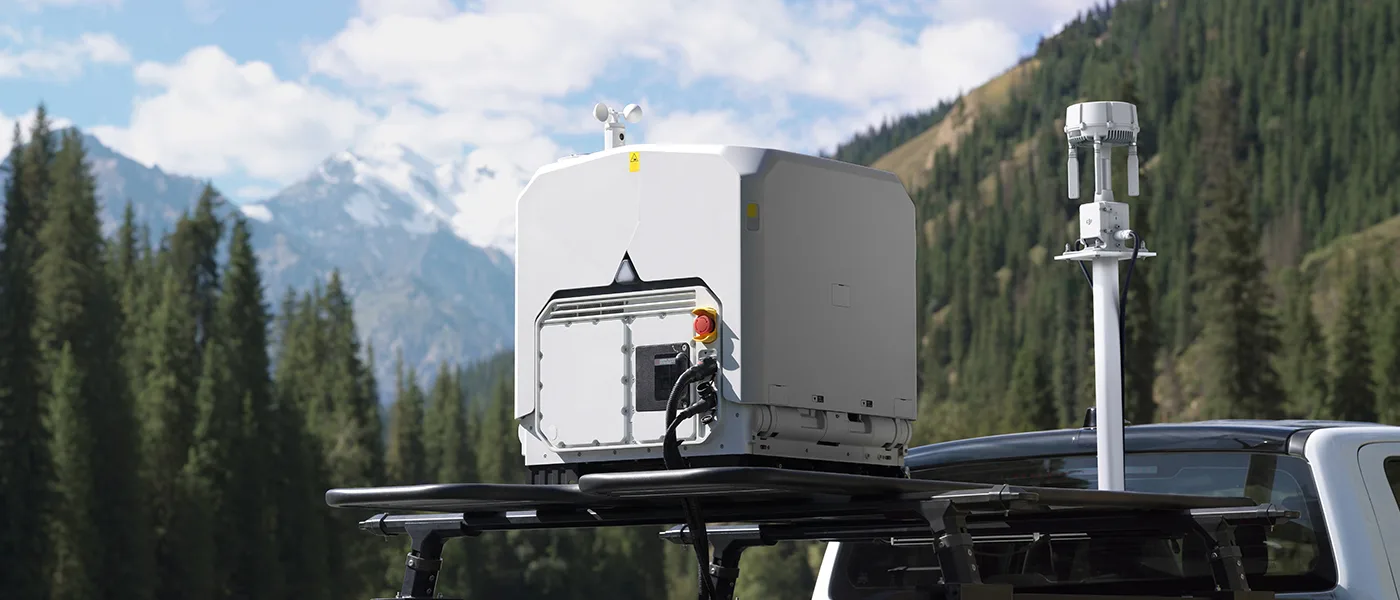
The external O4 ground station positions the RTK, transmission and storage modules above near-ground obstacles. DJI specifies a maximum O4 transmission range of 40 km. The system supports connection to the nearest O4 ground station.
DJI also specifies five systems to improve satellite visibility and interference-resistant positioning across 19 frequencies. Support for connectivity below 2 GHz varies by region. Actual operating range depends on transmission conditions and regulatory limits.
DJI Matrice 5TD – up to 59 minutes of flight time
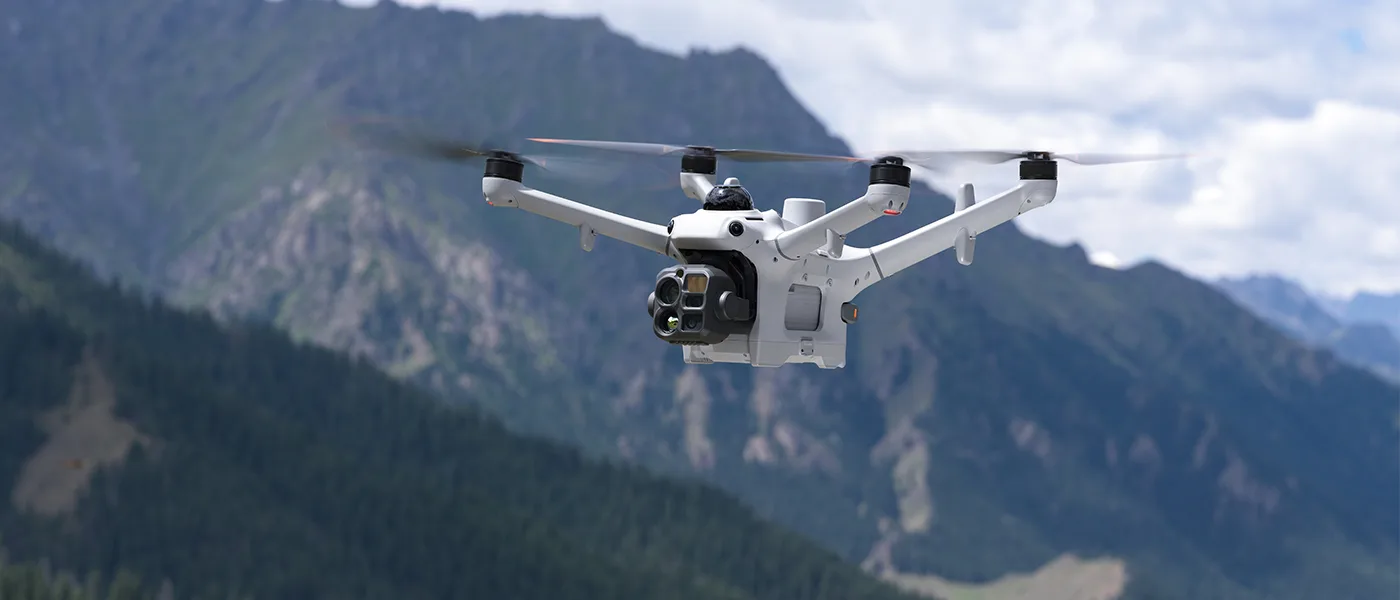
The DJI Matrice 5TD reaches speeds of up to 21 m/s when using FlyTo. DJI states that it can reach a point 3 km away in under 3 minutes. Maximum flight time is 59 minutes, and DJI lists a practical operating time of 48 minutes.
The system can reach a designated point quickly and carry out tasks that require monitoring an area for longer. The drone supports additional equipment with a combined weight of up to 450 g, including a DJI speaker, spotlight and parachute.
DJI Matrice 5TD cameras – detail from a distance
The Matrice 5TD combines several imaging modules. The 50 MP wide-angle camera uses a 1/0.98-inch CMOS sensor and a 23.5 mm equivalent lens. The 50 MP medium tele camera features a 1/1.28-inch CMOS sensor, 3× optical zoom and a 70 mm equivalent focal length.
The 50 MP super tele camera has a 1/1.5-inch CMOS sensor and offers 11× telephoto magnification and up to 176× hybrid zoom. DJI demonstrated that the camera could show a licence plate at 400 m and a screw at 100 m. Clarity can vary with conditions.
1280 × 1024 thermal imaging and night vision
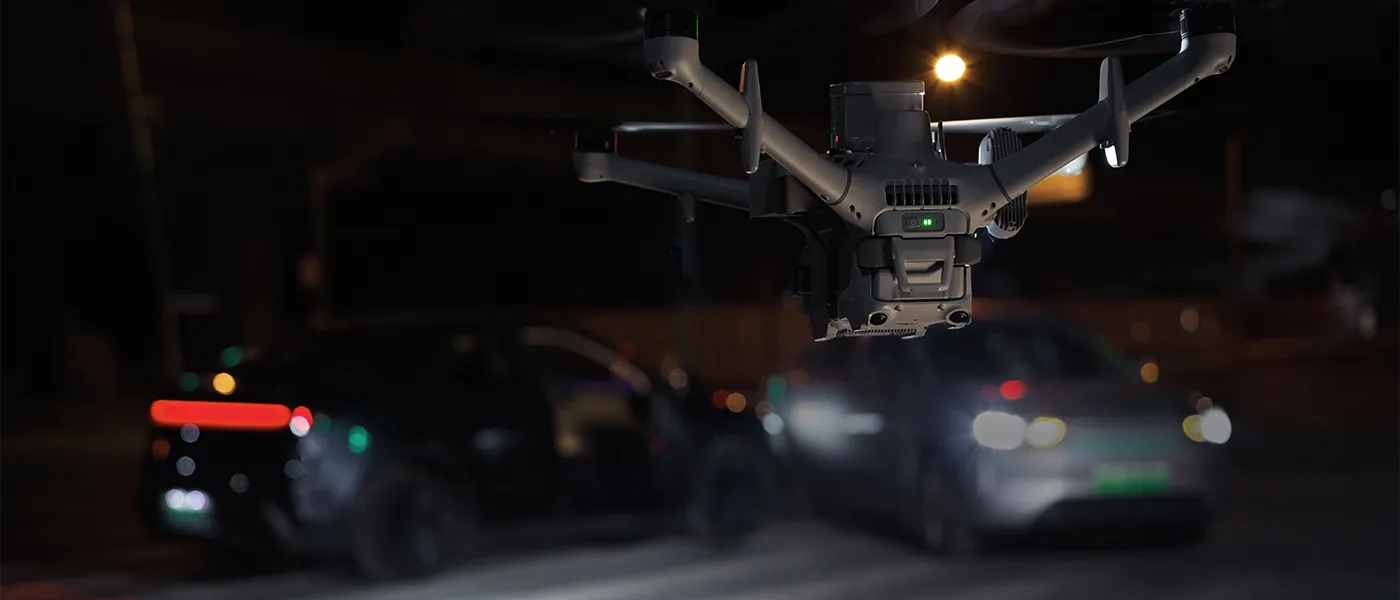
The Matrice 5TD thermal camera captures images at a native resolution of 1280 × 1024, with 2560 × 2048 available in super-resolution mode. PIP and MSX combine thermal and visible-light images to help interpret what the cameras capture.
The super tele camera uses an enhanced RYYB sensor for colour imaging at night. The drone also has a near-infrared laser illuminator for night observation and a laser rangefinder with a range of up to 3 km.
Flight safety and obstacle detection
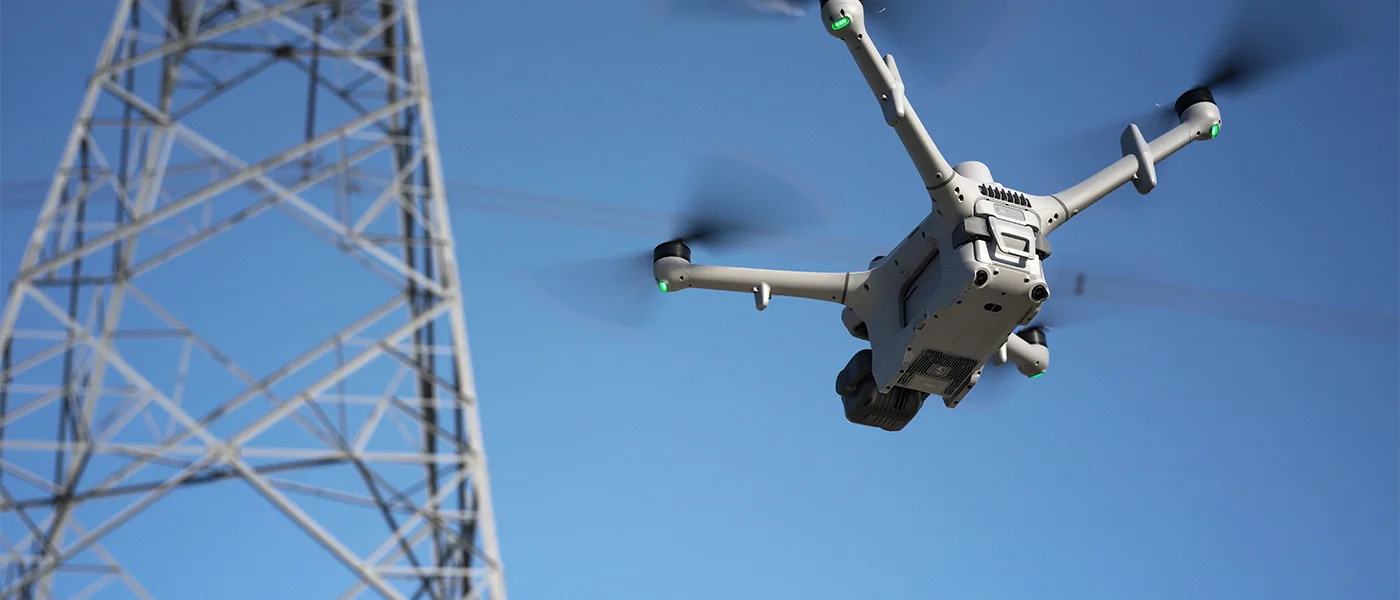
The Matrice 5TD uses a multi-layered safety system that includes an obstacle detection module and six colour obstacle detection cameras. DJI’s presentation showed the drone stopping automatically in front of a power line.
Real-time altitude alerts notify the operator when the drone exceeds a set limit. These features support mission planning and operations alongside risk assessment and operational oversight.
Spotlight, speaker and warning lights
The DJI Matrice 5TD supports three types of accessories: a spotlight, speaker and parachute. According to DJI, the spotlight delivers 11 lux at 100 m, and its beam width can adjust automatically to the camera’s framing.
The speaker delivers 120 dB at 1 m and supports push-to-talk communication. DJI also shows configurable warning lights, including red and blue options. Use of specific lighting modes depends on applicable rules and the nature of the operation.
DJI FlightHub 2 – mission automation and data analysis
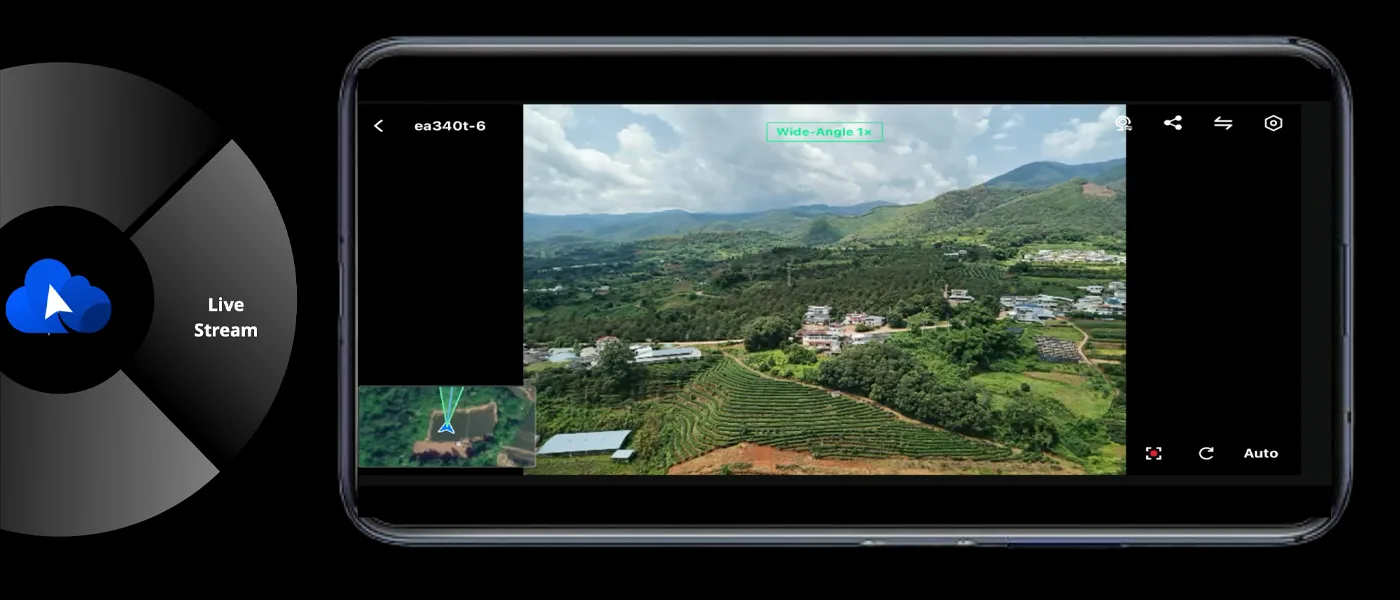
DJI FlightHub 2 brings together route planning, remote control, live video streaming and mission data management. DJI demonstrated Wayline Copilot for planning routes and Workflow Copilot for building automated workflows and checking their configuration.
DJI also describes DFR for automatically dispatching a drone in response to incidents and Analyzer Pro for detecting changes on the ground and determining target coordinates. These features support the workflow from incident reporting and flight through to analysis.
Onboard AI object detection
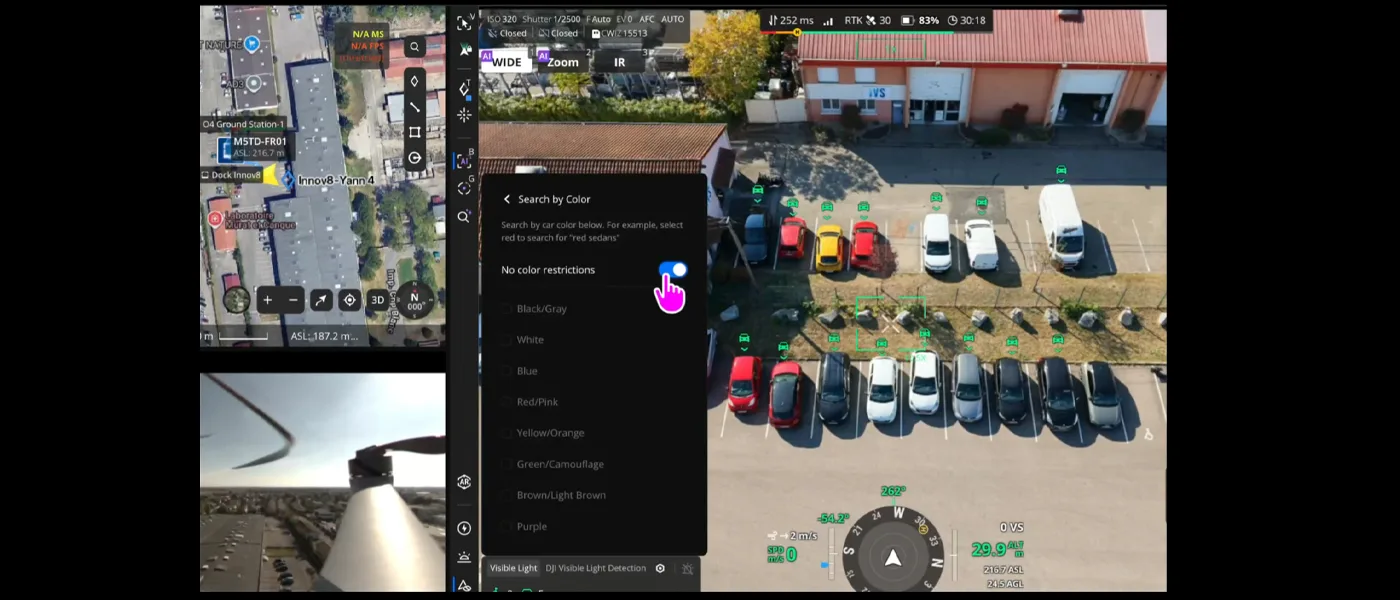
The Matrice 5TD’s onboard AI can detect people, vehicles, smoke, fire and selected animals. DJI lists cattle, horses and sheep, as well as cars, buses, trucks, motorcycles, bicycles and construction machinery.
People and vehicles can also be filtered by colour. Automated detection can help operators scan footage and spot relevant objects faster. Operators should verify the results in the context of each mission.
Integration with external systems and the DJI Enterprise App
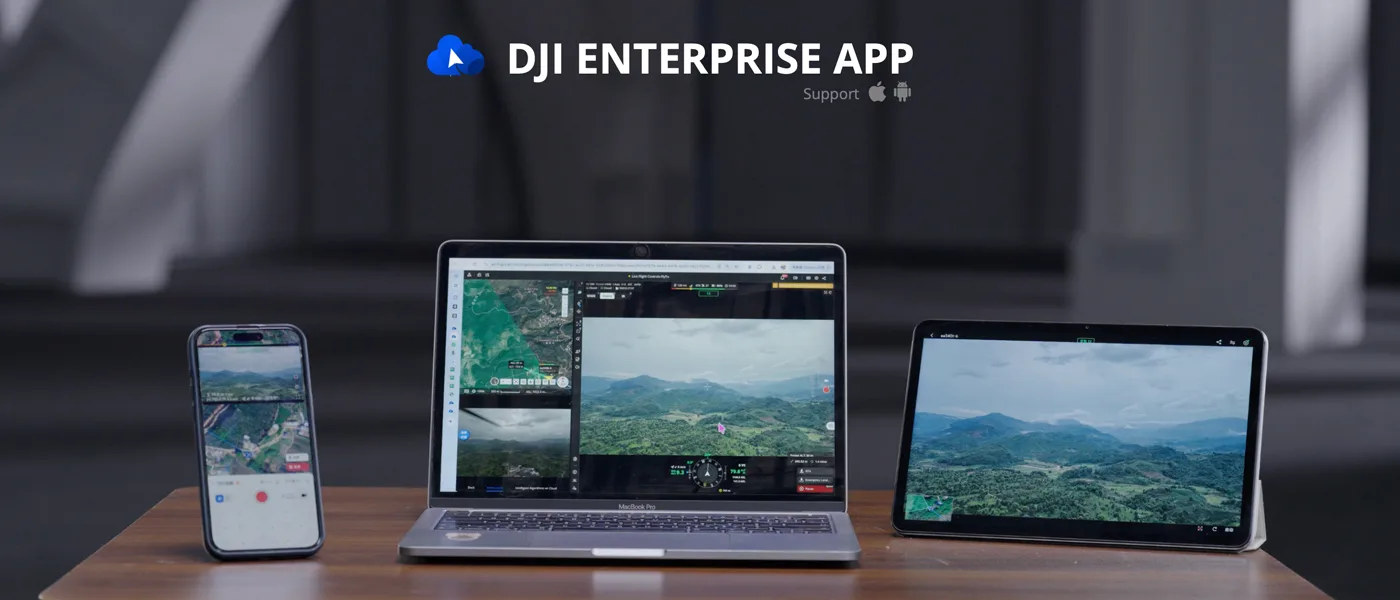
The DJI ecosystem supports OpenAPI 2.0, EventAPI, MQTT Bridge and SSO, enabling integration of device management, missions, streaming and data with external systems. DJI’s presentation lists integrations with CAD, SCADA and VMS systems as well as data processing platforms.
The DJI Enterprise App supports live streaming, DFR flight reporting and annotation synchronisation. This allows teams to incorporate drone data into their wider operating workflows.
DJI Dock 4 and Matrice 5TD in BVLOS operations
DJI presents features that support planning for BVLOS operations, including EU C5 and EU C6 provisions, an independent flight termination system (FTS) and a parachute. According to DJI’s presentation, the FTS comes built into the Matrice 5TD and requires at least one 4G SIM card to operate.
DJI describes a SAIL II compliance support package that includes declarations of compliance with the relevant means of compliance (MoC), SORA safety documentation templates, operations manual templates and checklists. These materials can help operators prepare for BVLOS operations. BVLOS flights require the relevant authorisation.
DJI parachute and independent FTS
DJI describes a parachute validated against ASTM F3322 and MoC 2512 requirements. The system can respond to manual activation, a drone malfunction or a geocage breach. The sequence stops the motors and deploys the parachute.
The parachute weighs 107 g, has a minimum deployment altitude of 35 m AGL, and has a stated terminal descent speed of no more than 6 m/s. The parachute must be replaced after deployment. DJI states that no factory inspection is needed for three years if the self-tests pass.
Data security and on-premises deployment of FlightHub 2
DJI presents FlightHub security measures such as encrypted connections, audit logs and access controls in the context of NIS2 and ISO 27001. The presentation also covers data sovereignty and external audits.
For local deployments, DJI presents a clustered FlightHub 2 On-Prem architecture with high availability, load balancing, data replication and backups. These features can be relevant when deploying multiple docks and coordinating several teams.
DJI Dock 4 – automation, monitoring and rapid response
DJI Dock 4 combines automatic battery swapping, O4 connectivity and FlightHub 2 integration. The Matrice 5TD provides daylight, night-time and thermal imagery, AI tools and features that support safe mission operations.
The system is designed for recurring monitoring, remote inspections and tasks that require quickly dispatching a drone to a specific location. When choosing a configuration, consider operational requirements, regional feature availability and installation conditions.
Planning a DJI Dock 4 deployment? Explore MEGADRON drone training and partnership opportunities with MEGADRON.
Frequently asked questions about DJI Dock 4
How quickly does DJI Dock 4 swap the battery?
- The automatic swap takes under a minute. DJI specifies 45 seconds to prepare the drone for its next flight and 25 seconds from dock cover closure to battery insertion.
Which drone works with DJI Dock 4?
- DJI’s product presentation shows DJI Dock 4 operating with the DJI Matrice 5TD.
What is the maximum flight time of the DJI Matrice 5TD?
- DJI states a maximum flight time of 59 minutes and a practical operating time of 48 minutes.
What is the resolution of the Matrice 5TD thermal camera?
- The thermal camera has a native resolution of 1280 × 1024 and reaches 2560 × 2048 in super-resolution mode.
Can DJI Dock 4 operate in freezing temperatures?
- DJI specifies an operating temperature range of −40°C to 50°C and an IP56 rating for the dock. Whether a flight can go ahead also depends on the drone’s operating conditions.
What is the O4 transmission range?
- DJI’s presentation specifies a maximum O4 transmission range of 40 km. The actual range depends on factors including transmission conditions and local regulations.
Does the Matrice 5TD use AI to detect objects?
- Yes. DJI describes onboard detection of people, vehicles, smoke, fire and selected animals.
Does DJI Dock 4 support BVLOS operations?
- DJI presents FTS features, provisions related to EU C5/C6, and a documentation package to help prepare SAIL II operations. Conducting BVLOS flights depends on meeting the applicable requirements and obtaining the necessary authorisations.
Specification DJI Dock 4 Docking Station
Brand
DJI
Symbol
CP.EN.00000801.01
Producer code
6937224168633
Warranty
24 months
Model
DJI Dock 4
Weight
66 kg (bez akumulatorów w komorze i bez drona)
Dimensions
Pokrywa zamknięta: 639 × 640 × 836 mm
Pokrywa otwarta: 1750 × 640 × 550 mm
Napięcie wejściowe
100–240 V AC, 50/60 Hz
Maximum power
2000 W
Operating temperature
od -40°C do 50°C
IP degree of protection
IP56
Maks. wind resistance
12 m/s (podczas lądowania)
Maksymalna wysokość pracy
5000 m
Method of charging
automatyczna wymiana akumulatora + ładowanie bezprzewodowe
Czas wymiany akumulatora
< 25 s
Czas przygotowania do kolejnego lotu
< 45 s
Charging time
27 min (15–95%, przy 25°C)
Number of batteries
do 3 akumulatorów (4 miejsca w komorze)
Video transmission system
DJI O4 Enterprise Enhanced (przez stację naziemną DJI O4)
Stacja bazowa RTK
przez stację naziemną DJI O4
Communications
2 × 4G
System chłodzenia
klimatyzacja kompresorowa
Model compatibility
DJI Matrice 5TD
Entity responsible for this product in the EU
AR ExpertsMore
ProducerChasing-Innovation Technology Co., Ltd.Address:
International Innovation Valley, Xili Street 6/Room 3105Postal code: 518000City: Nanshan District, ShenzhenCountry: ChinyE-mail: hi@chasing.com
Responsible entityAR ExpertsAddress:
P.O. Box 5047Postal code: 3620City: AA BreukelenCountry: HolandiaE-mail: info@certification-experts.com
 Get expert advice
Ask a question
Add an opinion