
Which DJI Power station to choose? 500 vs 1000 Mini vs 1000 V2 vs 2000

20.04.2026 premieres DJI Power 1000 Mini - already the third power station in the DJI Power 1000 series.Earlier, the basic model DJI Power 1000 was launched on the market, followed by its development in the form of DJI Power 1000 V2.The new version of the Mini at first glance looks like a more compact alternative, but the differences don't just stop at size.In the following article, we look at the most important changes from the DJI Power 1000 V2 and see how they compare to other models DJI.
Construction and functions of power stations
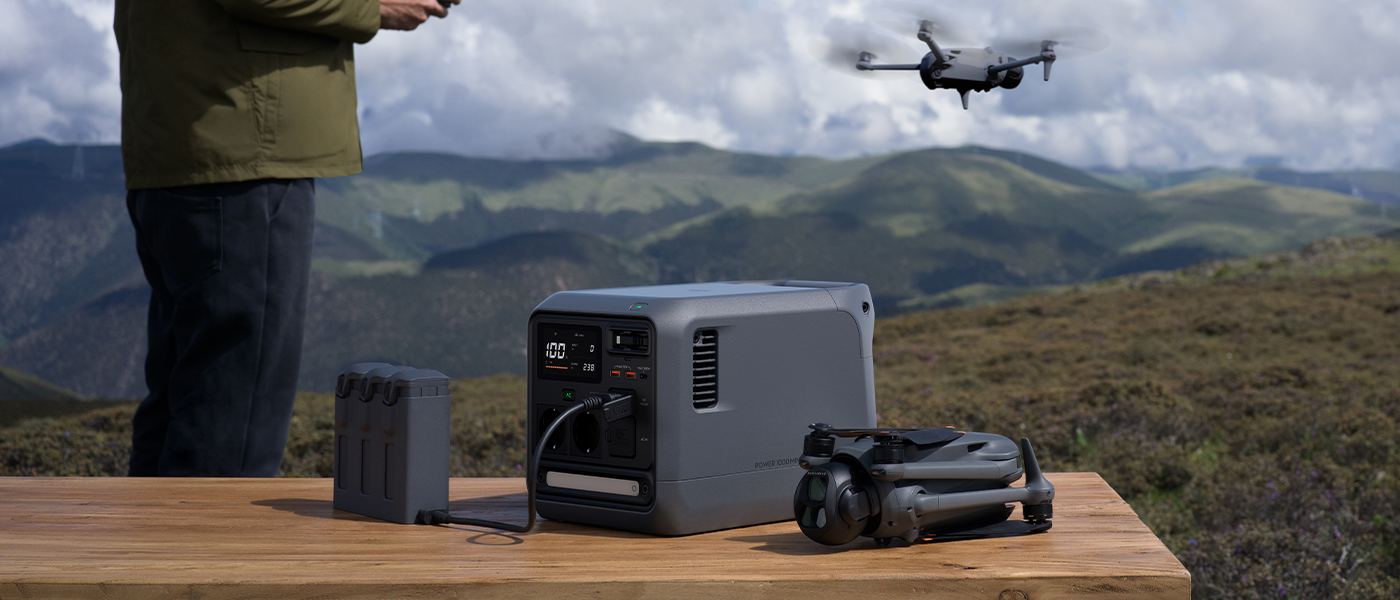
The DJI Power series is designed very consistently - all models use LFP cells, offer UPS mode and the ability to charge from different sources (AC, car, solar panels).The differences begin when we look at the size, power and purpose of the devices:
- DJI Power 500 is the most compact model in the lineup - lightweight (approx.7.3 kg), simple and mainly focused on mobility.It will work well for charging small devices, drones or field work, but its capabilities are limited by its 512 Wh capacity and up to 1,000 watts of power.
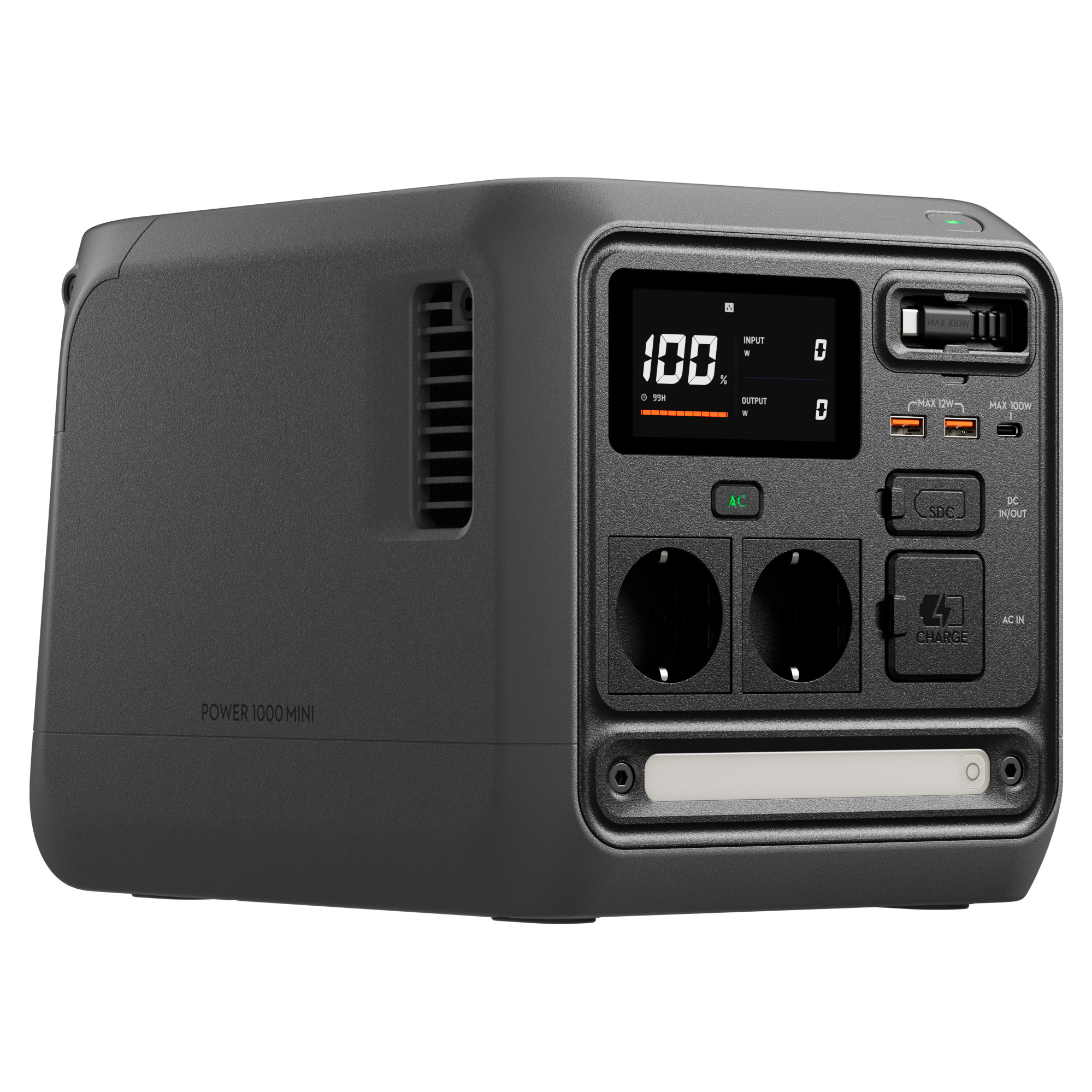
- Power 1000 Mini is a step above - still mobile (ok.11.5 kg), but already much more versatile.It offers a capacity of 1008 Wh, up to 1,200 watts of power, and practical features like a built-in USB-C cable and additional lighting.This is a model designed typically for travel and field work, where the balance between weight and capability matters.
- DJI Power 1000 V2 is already a full-fledged station "for everything" - bigger, heavier (approx.14.2 kg), but offering more ports, higher instantaneous power and system expandability.It's a piece of equipment that will work equally well at home and in more demanding applications.
- DJI Power 2000 - By far the most powerful model in the set.With a capacity of 2048 Wh, a power output of up to 3000 W and the ability to expand to over 22 kWh, it is no longer just a mobile station, but a power source for the home, workshop or large field projects.
Which power station to choose?Mini or standard?

The choice of a particular model depends primarily on what you will use it for - because the differences between them are greater than you may think.
If you're looking for something lightweight and typically mobile, such as for traveling, shooting in the field or charging a drone - DJI Power 500 will be the simplest and cheapest solution.It's a "starter" model that gets the job done, but has its limitations.
Power 1000 Mini is the most versatile option for most users.It is still relatively compact, but it already offers a reasonable capacity and power to power not only electronics, but also more demanding devices.It's a good choice for travel, RV or mobile work.
If you need something more stationary or just more power and number of ports - Power 1000 V2 will be a more reasonable choice.This is a more "home" model, but still mobile.
The DJI Power 2000, on the other hand, is for people who really need a lot of power - for example, for working in the field, powering household appliances, power tools or as a backup at home.It is no longer a gadget, but a viable source of energy.
Power 500 vs 1000 Mini vs Power 1000 V2 vs DJI Power 2000 specification
| Name |
|
|
| |
| Weight | about.7.3 kg | about.11.5 kg | about.14.2 kg | about.23 kg |
| Maximum Output Power | up to 1000 watts | up to 1200 watts | up to 2,600 watts | up to 3000 watts |
| Input ports | AC input x 1, SDC x 1, USB-C x1 | AC input × 1, USB-C × 1, SDC × 1 | AC input × 1, SDC × 1, SDC Lite × 1 | AC input x 1, SDC x 1 |
| Output ports | AC output × 2 USB-C × 2 USB-A × 2 SDC Lite × 1 | AC Output × 2, USB-C × 1, uSB-C slide-out cable × 1, USB-A × 2, SDC × 1 | AC Output × 2, USB-C × 2, USB-A × 2, SDC × 1, SDC Lite × 1 | AC output × 4 USB-C × 4 USB-A × 4 SDC × 2
|
| Dimensions | 29.7 × 18.1 × 20.3 cm | 31.4 × 21.2 × 21.6 cm | 44.8 × 22.5 × 23 cm | 47.6 × 35.0 × 36.0 cm |



Price comparison of power stations DJI Power
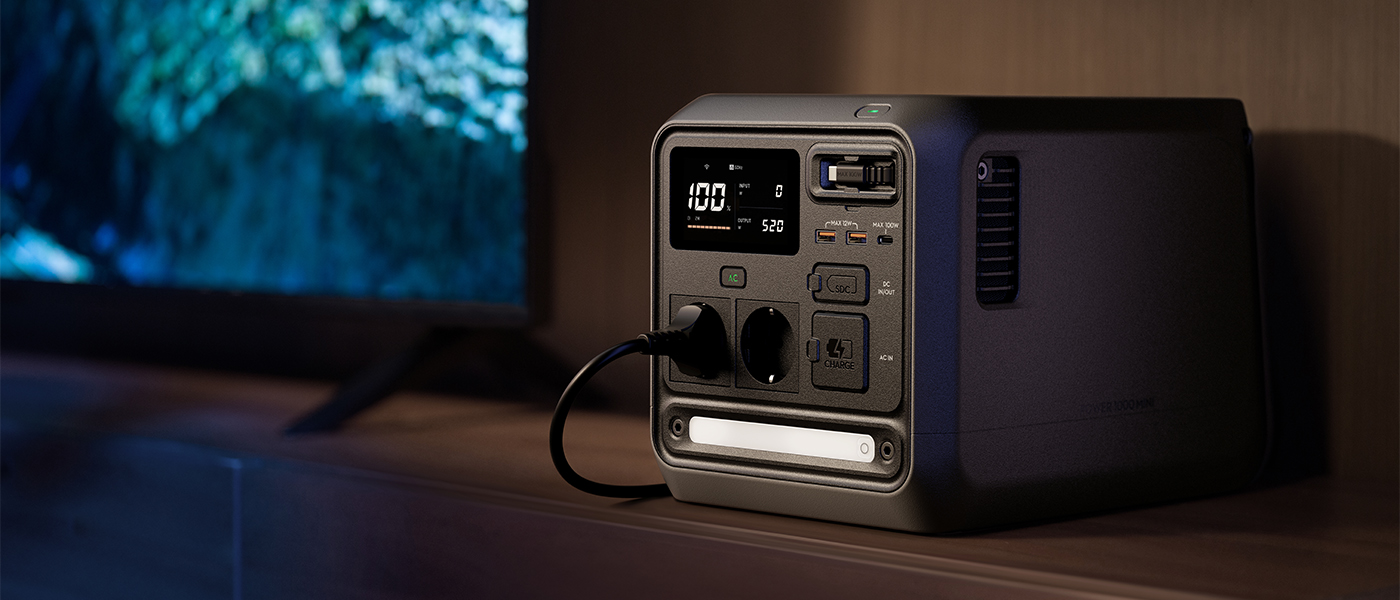
To start with, it may seem that it is the Mini that performs the weakest in terms of price-to-power ratio.On the other hand, after all, this model was not made to be the most efficient.The Power 1000 Mini is noticeably more compact, lighter, and heavily geared toward convenience of use.It has a built-in, retractable USB-C cable, practical LED lighting, and a design that is expected to last a very long time.It is a very technologically "packed" station, where you really get a lot in a small box.
In practice, a lot also depends on how you use.If one is looking mainly at the price-to-power ratio and expandability, then DJI Power 1000 V2 may indeed come off as the most reasonable.However, if what matters is mobility, convenience and having everything at hand in the field - the Power 1000 Mini starts to make more sense than the price alone suggests:
- Power Station DJI Power 500 - £1649 gross*
- Power Station DJI POWER 1000 Mini - £2,649 gross*
- Power Station DJI Power 1000 V2 - £2299 gross*
- Power Station DJI Power 2000 - £4199 gross *
*Amounts as of 20.04.2026, subject to change.
Summary
DJI recently clearly expanded its series of power stations, and today you can see that it is no longer a single universal model, but a whole range of devices for different needs.From the light and simple DJI Power 500, to the more versatile Power 1000 Mini, to larger and more powerful models such as the Power 1000 V2 or Power 2000, everyone should find something here to suit their way of working.These are rugged stations that combine good performance, long LFP cell life and extensive use both in the field and at home.
If you're using a drone DJI, it's definitely worth checking if your model supports fast charging via a power station.This is one of those features that at first glance may look like an add-on, but in practice make a very big difference.With compatible accessories, it allows batteries to replenish much faster than with standard USB-C charging, which simply saves time and facilitates work in the field.