
How do I choose a battery for an FPV drone?
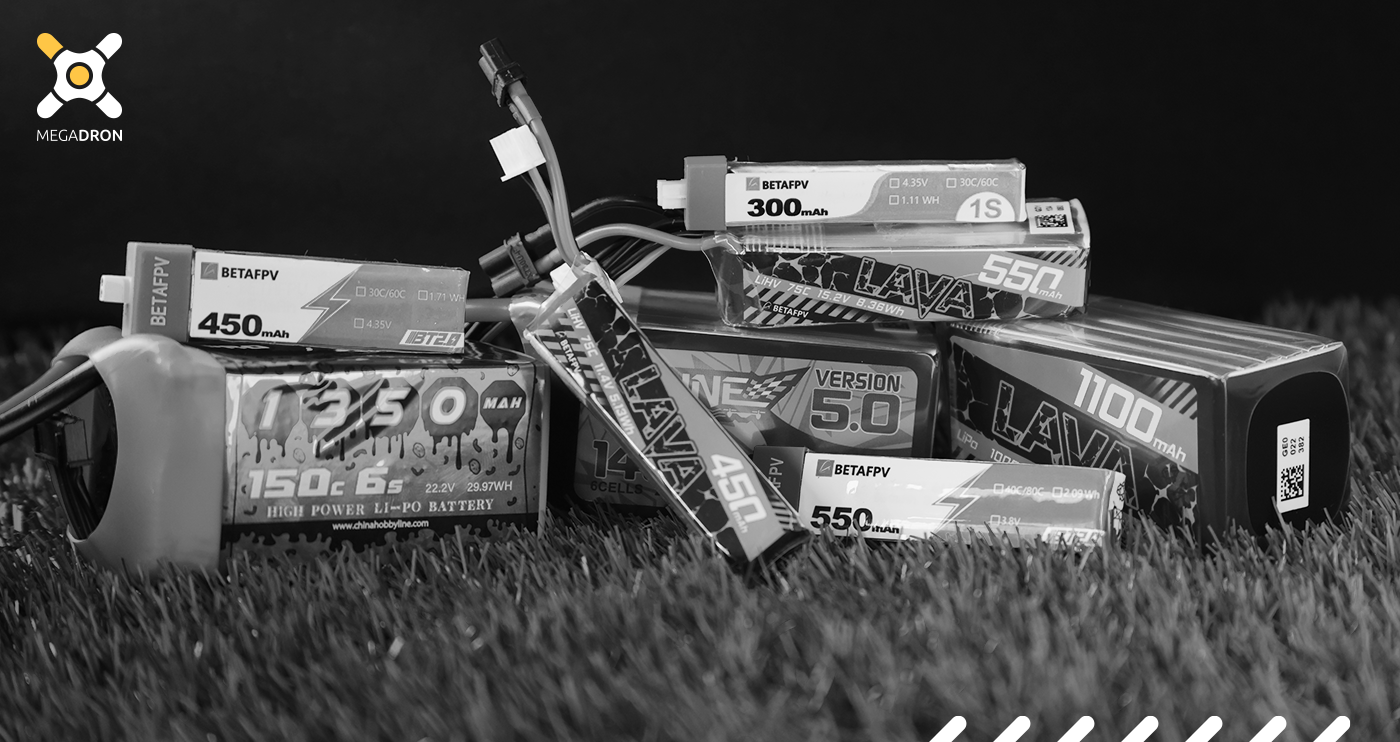
Choosing the right battery for an FPV drone can be a real headache.It is the battery that largely determines the drone's performance, flight time, and safe operation.A well-matched power supply will allow you to get the most out of your equipment, while the wrong choice can lead to voltage sags, overheating of the electronics, and, in extreme cases, permanent damage to the equipment.
Therefore, before making a purchase, it’s a good idea to carefully analyze the key technical specifications: voltage, capacity, the discharge coefficient C, and the cell manufacturing technology.
Basic Battery Specifications.Voltage and Number of Cells (S)
To choose the right power supply, start by understanding the labels that manufacturers include on the packaging.The most important of these relate to cell configuration and rated voltage.
What does the "S" designation mean? The letter S indicates the number of cells connected in series within the pack.A single, standard cell has a rated voltage of 3.7 V (and 4.2 V when fully charged).The voltage of the entire battery pack increases in proportion to the number of cells:
1S (3.7 V – 4.2 V): The smallest batteries, used in Tiny Whoop-type microdrones for flying indoors.
4S (14.8 V – 16.8 V): A popular standard for Cinewhoops, but also for heavier 3- or 4-inch drones..
6S (22.2 V – 25.2 V): The current standard for 5-inch drones used for freestyle and racing.A higher voltage allows for lower current draw at the same power output, which reduces component heating.
8S (29.6 V – 33.6 V): A standard designed for large, high-performance drones (e.g., 7–10 inches) and heavy-lift drones carrying heavy film cameras.It provides a powerful power reserve and even higher current efficiency under heavy load.
Tip: Always check the specifications of your drone or its components before connecting the battery.Applying too high a voltage (e.g., connecting a 6S battery pack to electronics designed for a maximum of 4S) will immediately burn out the equipment.
Battery Capacity (mAh) vs. Kit Weight
Another key parameter is capacity, expressed in milliampere-hours (mAh).It specifies how much energy a battery can store.In practice, the choice comes down to a trade-off between flight time and the drone's empty weight.
Greater capacity theoretically means longer runtime, but it also means greater weight.A drone that is too heavy loses agility, is slower to respond to maneuvers, and requires the motors to run at higher RPMs, which ultimately negates the benefit of increased battery capacity.
Drone Type | Recommended capacity | Intended Use |
Tiny Whoop / Toothpick | 300 mAh – 500 mAh (1S/2S) | Agile and Light Indoor Flights |
3-inch CineWhoop | 650 mAh – 1,100 mAh (4S/6S) | Smooth video footage, stable flight |
5-inch Freestyle / Racing | 1,100 mAh – 1,550 mAh (6S) | Maximum performance and sharp acceleration |
Long Range (long range) | 3000 mAh+ (6S/8S) | Long flight time, a peaceful journey |
Discharge Coefficient C (C-Rating)
The C-rating specifies the rate at which a battery can safely deliver current under load.To calculate the maximum discharge current (in amperes), multiply the battery pack's capacity by the C-factor:
Maximum current (A) = Capacity (mAh) / 1,000 × C factor
Example: A battery with a capacity of 1,500 mAh and a 100C rating can, in theory, deliver a continuous current of 1.5 × 100 = 150 A
In competitive and freestyle applications, where sudden acceleration requires an immediate burst of power, the optimal C-ratio ranges from 80C to as high as 200C.Using a battery with a low C-rate can result in a significant drop in voltage under load and faster cell degradation.
Battery Chemistry – LiPo or Li-Ion?
Most users are faced with a choice between two types of power sources: lithium-polymer (LiPo) and lithium-ion (Li-Ion) batteries.The two technologies differ in their design and operating characteristics.
LiPo (Lithium Polymer) Batteries
This is the industry standard in the FPV sector.They are characterized by a very high C-factor and nearly instantaneous power delivery.
Advantages: Very high discharge current, low voltage sag, instantaneous response to stick movements.
Disadvantages: Lower energy density (greater weight relative to capacity), susceptibility to mechanical damage and overcharging.
Intended Use: Freestyle, racing, commercial and film flights requiring dynamic maneuvers.
Li-Ion (Lithium-Ion) Batteries
Made from cylindrical cells (most commonly 18650 or 21700).
Advantages: Significantly higher energy density (longer flight time for the same battery pack weight), greater stability and durability.
Disadvantages: Low C-coefficient, significant voltage drop when the throttle is opened wider, need to operate the throttle more gently.
Intended Use: Long-range drones designed for long, smooth flights over considerable distances.
Matching the battery to the motors and flight style
To choose the right battery, you need to consider the drone's entire configuration.The following should be taken into account:
Motor KV: High-KV motors designed for lower voltages (e.g., 4S) will become overloaded or burn out when powered by a 6S battery, unless appropriate limits are set in the software.
Motor current draw: Check the drive manufacturer’s specifications and ensure that the continuous and peak currents the battery can handle are higher than the combined current draw of the four motors at full throttle.
Frame size and profile: A battery that is too large may make it difficult to balance the drone's center of gravity or interfere with the installation of an action camera.
How to Choose a Battery for an FPV Drone?Step by step
Here is a short checklist to help you make the right purchasing decision:
Determine your flying style and goal: If you're planning to do dynamic freestyle or racing, choose LiPo packs.If your priority is range and flight time, consider Li-Ion.
Check the permissible voltage (S): Verify the specifications of the electronics (ESC, FC) to ensure you do not exceed the maximum voltage.
Match the capacity to the drone's weight: Stick to the recommended ranges (e.g., 1,100–1,550 mAh for a standard 5-inch drone).
Pay attention to the C-ratio: For competitive flying, choose gliders with a high C-ratio (e.g., 100C+).
Remember to use the correct connector: Make sure the connector on the battery (e.g., XT60, XT30) matches the power connector on your drone.
Summary
Choosing a battery for an FPV drone isn't just about finding the one with the highest capacity.Voltage, capacity, the C-ratio, and battery technology (LiPo vs. Li-Ion) form a system of interconnected factors that affect flight time, performance, and component safety.
Before making a purchase, always review the specifications of the motors, controller, and ESCs.If you have any questions or are looking for reliable battery packs and dedicated chargers, check out MegaDron's selection.pl or contact our team—we'll be happy to help you choose the best power supply for your equipment!