
DJI: Osmo 360 II Launch—Key Features and Changes

DJI presents its latest 360-degree camera— DJI 's Osmo 360 II. This flagship model builds on the capabilities of the original Osmo 360 and focuses primarily on better image quality, faster recording, and easier editing of 360° footage. We take a look at exactly what the newly released Osmo 360 II DJI has to offer and who it’s a good choice for.
Compact design optimized for recording on the go
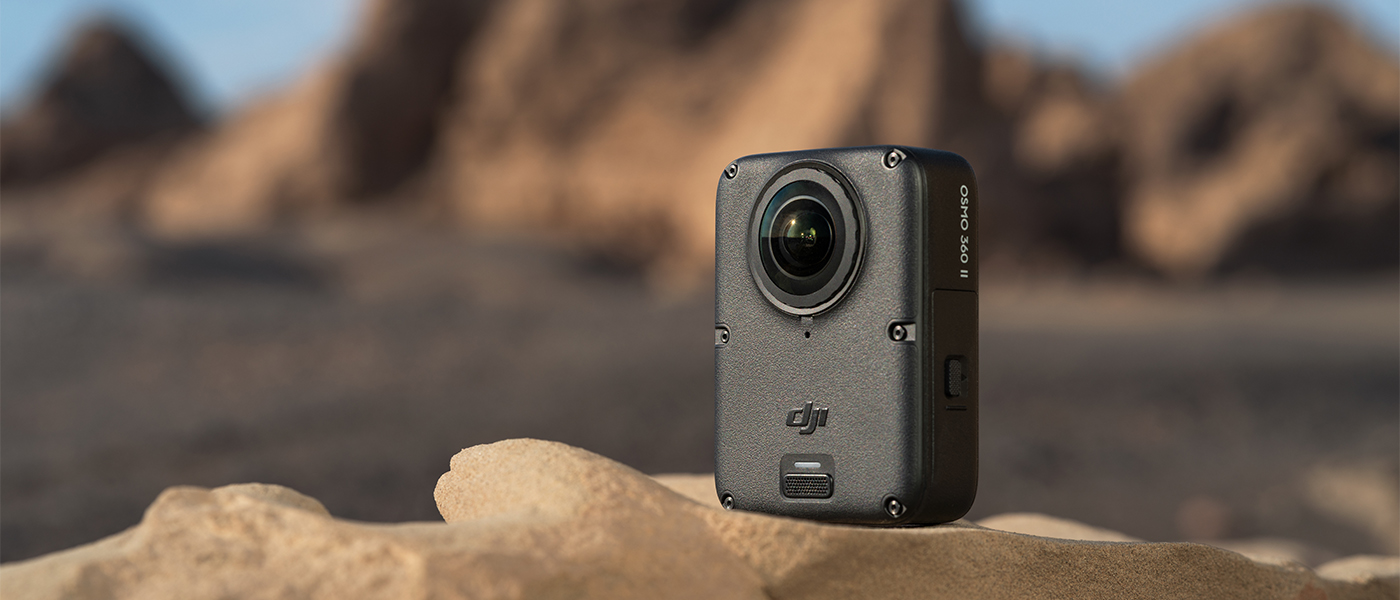
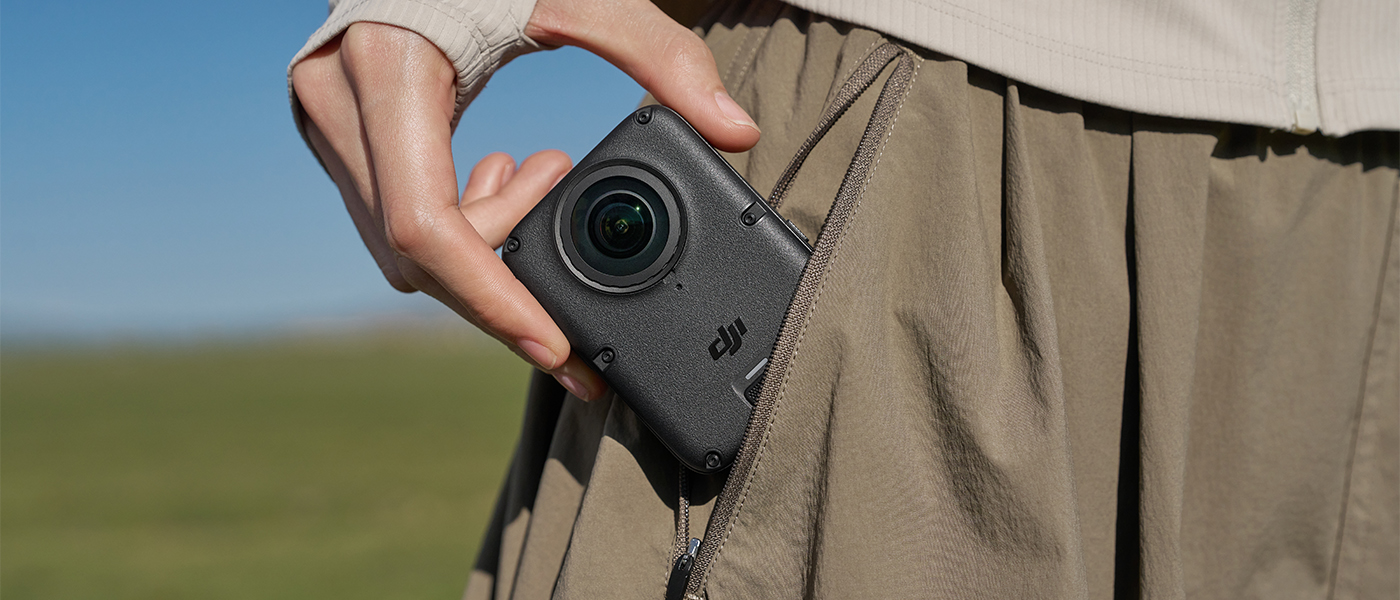
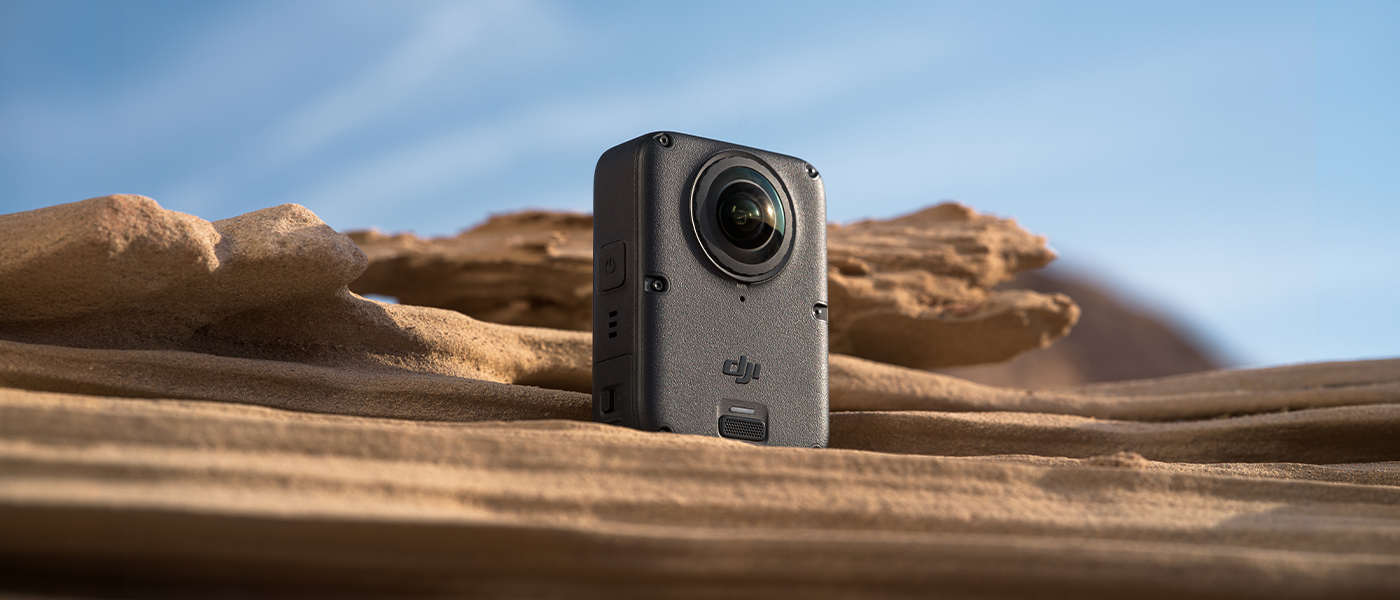
DJI The Osmo 360 II measures 61 × 36.3 × 81 mm and weighs 183 g. The camera therefore remains compact despite its extensive recording capabilities.
The housing is waterproof to a depth of 10 meters without an additional cover, and using the Osmo 360 Invisible Waterproof Case extends this range to 50 meters. The camera can also operate at temperatures as low as -20°C.
Check it out at DJI Osmo 360 II
A major change is interchangeable lenses. Both are protected by a hard optical coating that enhances resistance to scratches and wear. In a 360° camera, this is a particularly practical solution—protruding lenses are more susceptible to accidental damage.
Used for installation Osmo Dual-Direction Quick-Release, that is, a two-way quick-release magnetic system. The camera also features a standard 1/4" thread, allowing you to use a variety of photography accessories and the Osmo system.
Two sensors and native 8K/60 FPS HDR
DJI The Osmo 360 II uses two 1/1.1-inch square CMOS sensors. Each one uses an imaging area equivalent to a traditional 1-inch sensor, and its surface area is utilized 25% more efficiently. On top of that, there are large pixels 2.4 μm and aperture f/1.9. Effect? The camera allows you to record panoramic HDR footage at its native resolution:
8K/60 FPS - This is especially important when filming sports, for example, where a higher frame rate helps produce a smoother and more detailed image.
The new model also offers a 14.5-degree dynamic range. This allows the camera to capture more detail in both the bright and dark areas of the scene at the same time. Example? You're driving through a shady forest, and a brightly lit sky appears between the trees. A wider dynamic range helps preserve details on both sides of such a scene.
AI SuperNight 2.0 — More Possibilities After Dark
DJI Osmo 360 II receives AI SuperNight 2.0, that is, an advanced mode designed for shooting in low light. The noise reduction algorithm helps produce a brighter and more detailed image, and the f/1.9 aperture helps let in more light. Importantly, SuperNight on the new camera can also work during panoramic recording, even at 8K/60 FPS. This offers more possibilities when filming the city at night, events, fireworks, or dynamic footage after sunset.
120 MP photos and time-lapse videos up to 16K
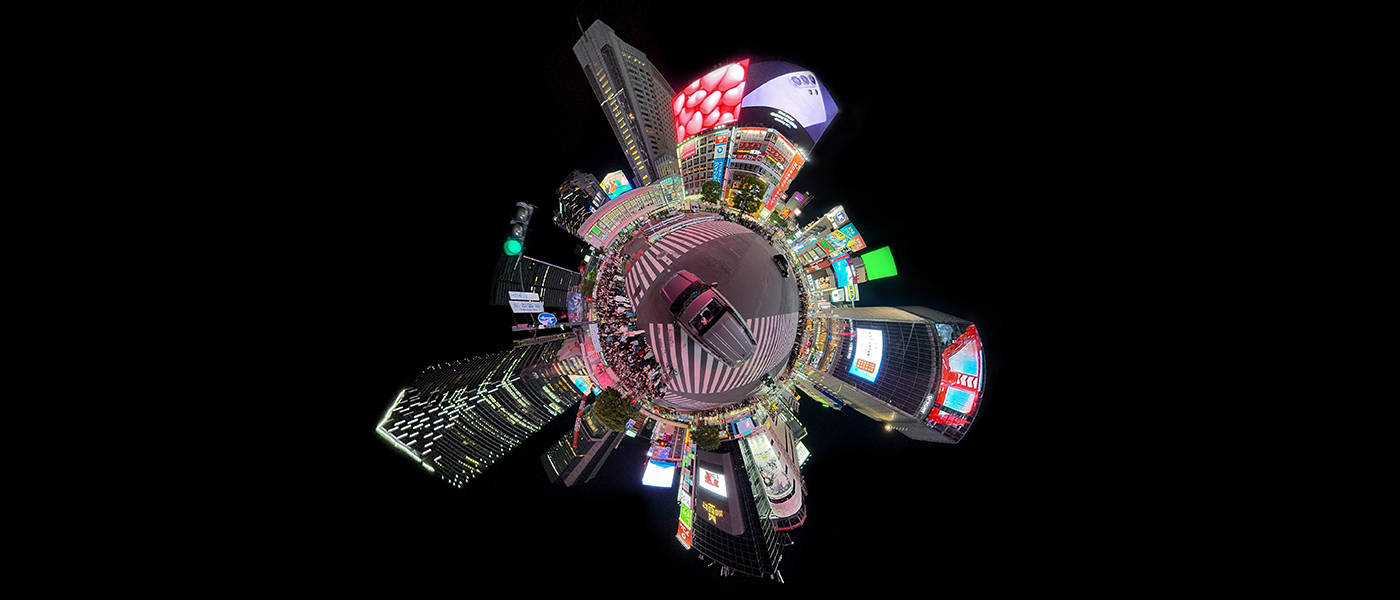
The camera lets you take HDR panoramic photos with a resolution of up to 120 MP. Such a large amount of data provides plenty of leeway when cropping the photo later and selecting a specific section of the panorama.
Another new feature is 360° timelapse in resolutions up to 16K. Clouds mode, for example, lets you record several hours of cloud movement and turn it into a short, dynamic sequence. If you work with landscape imagery or want plenty of resolution to work with during post-processing, 16K offers significantly more possibilities.
4K/240 FPS Slow Motion and Vortex 8K/120 FPS
Fast performance is one of the standout features of the new model.
DJI The Osmo 360 II lets you record panoramic slow-motion footage in:
4K/240 FPS.
You can then slow the footage down significantly to show fast movements, jumps, or runs in more detail.
DJI The studio also offers AI frame interpolation, which allows for up to 8x slow motion, equivalent to the smoothness of cropped 8K/480 FPS footage.
It's worth noting: the camera does not natively record in 8K/480 FPS. This effect is created during processing through AI interpolation.
The following is also useful for creative shots Vortex, which, on the Osmo 360 II, allows you to record at up to 8K/120 FPS.
Spotlight Follow - Less Manual Framing
360° video offers tremendous flexibility, because you can choose the viewing angle after you've already recorded the footage.
However, this comes at a cost: more work during editing.
DJI addresses this issue with the Spotlight Follow.
The camera uses AI algorithms to automatically track a selected object and keep it centered in the frame, no matter how the camera rotates.
360° footage can later be quickly converted into a classic, flat video with a resolution of up to 4K/30 FPS.
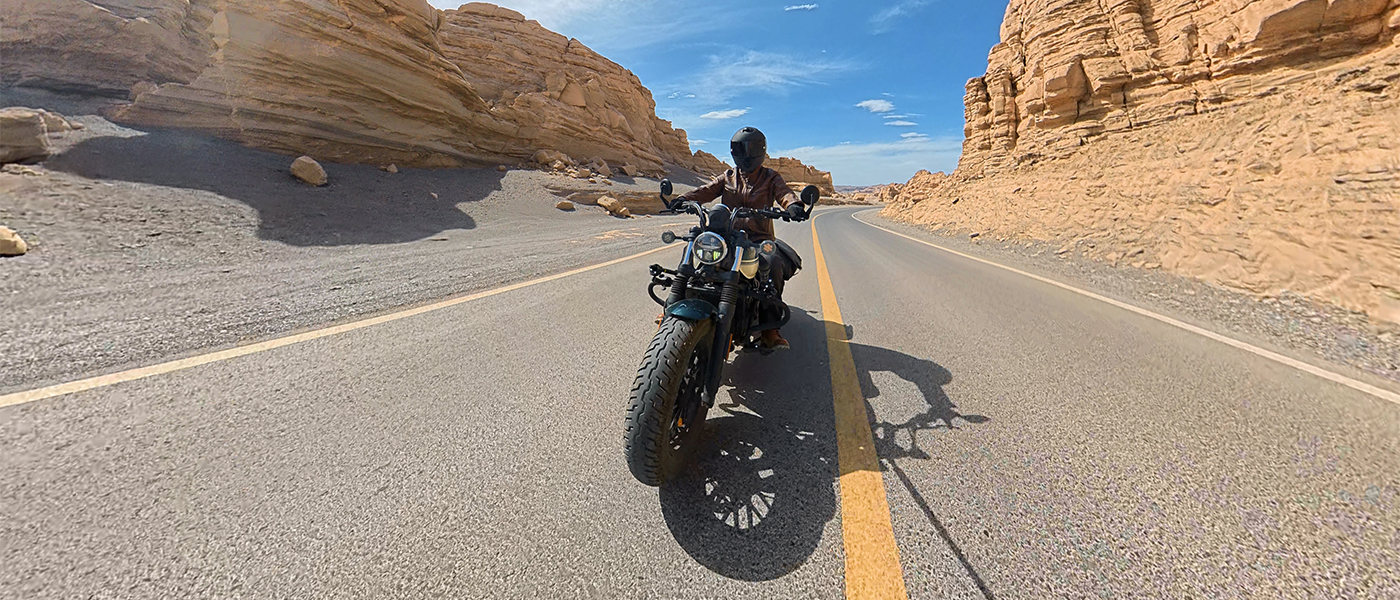
This is especially useful for sports, motorcycles, or vlogging, where the subject often changes position relative to the camera.
Faster editing in DJI Even though
DJI It not only develops the camera itself, but also the process of working with the finished footage.
In the " DJI " app, you'll find, among other things:
- Highlights - finds the most interesting parts of the recording,
- One-Tap Edit - analyzes the material and selects the appropriate template,
- Camera Movement - uses camera movements to create transitions,
- Dual Recording - allows you to show both the event and the person recording it,
- Intelligent Tracking and Speed-Up Tracking - support automatic object tracking.
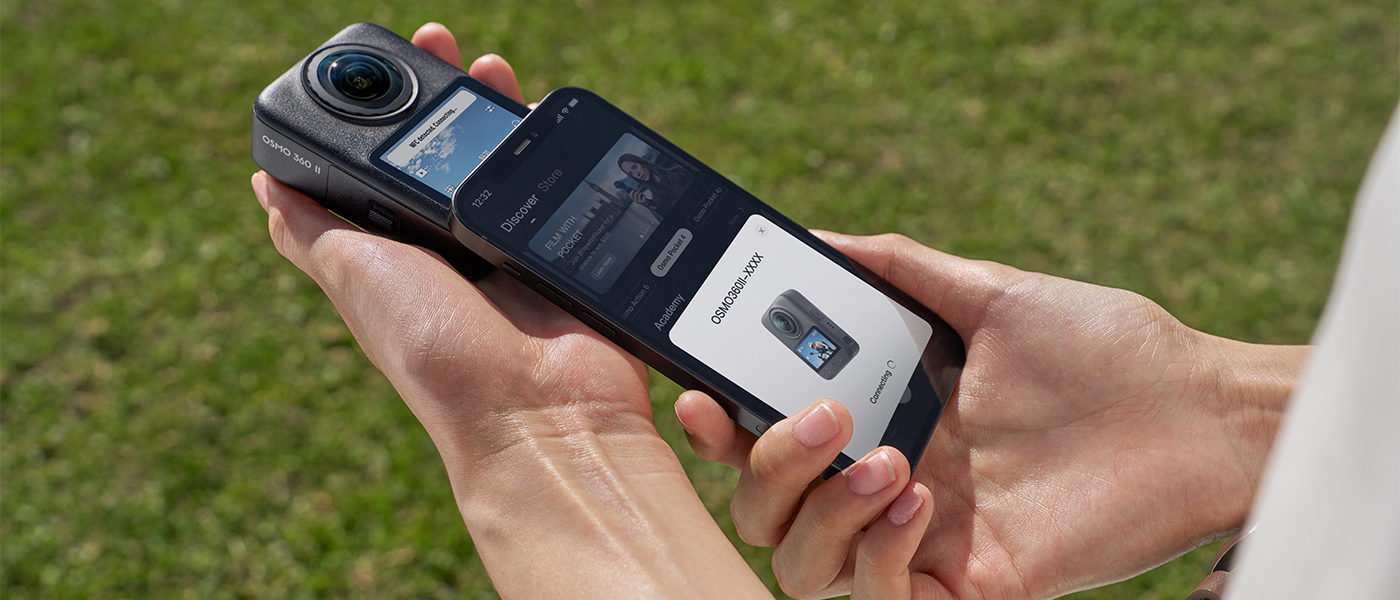
On top of that, there's Adaptive Tone, HDR, Pro Filters, and the ability to import your own LUTs. DJI The Osmo 360 II also features NFC Quick Connect. Simply hold a compatible smartphone near the camera to quickly connect the device to DJI and start transferring or editing files.
Battery life and 105 GB of storage
DJI The Osmo 360 II uses an Extreme Battery Plus with a capacity of 2150 mAh. It allows you to record panoramic footage in 8K/30 FPS for about 100 minutes. Fast charging allows you to recover up to 80% of its charge in about 22 minutes.
The camera also has 128 GB of built-in storage, of which 105 GB is available, So you can start recording even without a memory card. If you need more storage space, the Osmo 360 II supports microSD cards with a capacity of up to 1 TB.
Pure Sound and OsmoAudio
DJI The Osmo 360 II has four built-in microphones compatible with the wind noise reduction system.
OsmoAudio technology enables a direct connection to microphones DJI Mic 3 and DJI Mic Mini 2 without an additional receiver.
The Built-in Mic Audio Backup feature can simultaneously record ambient sound captured by the camera's microphones.
This allows you to record audio from a wireless microphone while preserving the natural ambient sounds of the location.
Who is the Osmo 360 II DJI intended for??
The premiere of the Osmo 360 II " DJI " will be of particular interest to people who:
- They film motorcycles, bicycles, and sports, where 8K/60 FPS and 4K/240 FPS will come in handy,
- They create materials after dark and want to use AI SuperNight 2.0,
- record their travels and vlogs, where Spotlight Follow can speed up framing,
- They work a lot with 360° content and they want to limit the editing time,
- record under more challenging conditions, where interchangeable lenses and a durable design really make a difference,
- want to use the latest generation of 360° cameras DJI and the extensive Osmo ecosystem.
Option DJI Osmo 360 II Limitless Riding Combo It is also designed for recording while driving. The set includes the Osmo Heavy-Duty Clamp Mount Kit, which allows you to securely mount the camera on a motorcycle, among other places.
Pros and Cons of the Osmo 360 II DJI
Advantages:
- native 8K/60 FPS HDR,
- 14.5-degree dynamic range,
- AI SuperNight 2.0,
- 4K/240 FPS panoramic slow motion,
- Time-lapse up to 16K,
- 120 MP HDR photos,
- Spotlight Follow,
- interchangeable lenses,
- 105 GB of available built-in storage,
- NFC Quick Connect,
- RockSteady 3.0 and HorizonSteady,
- water resistance up to 10 m,
- the ability to connect directly to microphones DJI.
Disadvantages:
- Recording in 8K and at a high bitrate generates large files,
- The advanced 360° features require post-processing if you want to unlock their full potential,
- A larger battery does not extend the advertised 8K/30 FPS recording time beyond approximately 100 minutes.
Summary
DJI The Osmo 360 II is the latest and most advanced 360° camera DJI, as shown in the submitted materials. The manufacturer is improving both the recording quality and the entire workflow. 8K/60 FPS provides smoother playback. 14.5 EV helps in difficult lighting conditions. AI SuperNight 2.0 expands your capabilities after dark, and 4K/240 FPS allows you to make better use of slow motion.
At the same time, DJI focuses on convenience. Spotlight Follow reduces the need for manual framing, NFC speeds up the connection to a smartphone, and interchangeable lenses solve one of the most practical problems with 360° cameras.
If you’re looking for a camera primarily for action shots, travel, sports, motorcycle riding, or creating 360° content, and you want to go with the first-generation model DJI, Osmo 360 II offers a very wide range of tools for recording and post-production.