
Comparison | DJI Osmo 360 II vs DJI Osmo 360 – Is the new version worth it?

DJI The Osmo 360 II is the latest, brand-new spherical camera DJI and a detailed look at the well-equipped Osmo 360 DJI . The previous model still offers 8K/50 FPS, 120 MP photos, 10-bit color, SuperNight, and RockSteady 3.0 and HorizonSteady stabilization.
The new generation, however, improves on several key specs: we get 8K/60 FPS, a 14.5 EV dynamic range, AI SuperNight 2.0, 4K/240 FPS slow motion, 16K time-lapse, Spotlight Follow, and interchangeable lenses. We're checking to see if these are changes that are actually worth considering when choosing a camera.
Key Improvements in the Osmo 360 II DJI
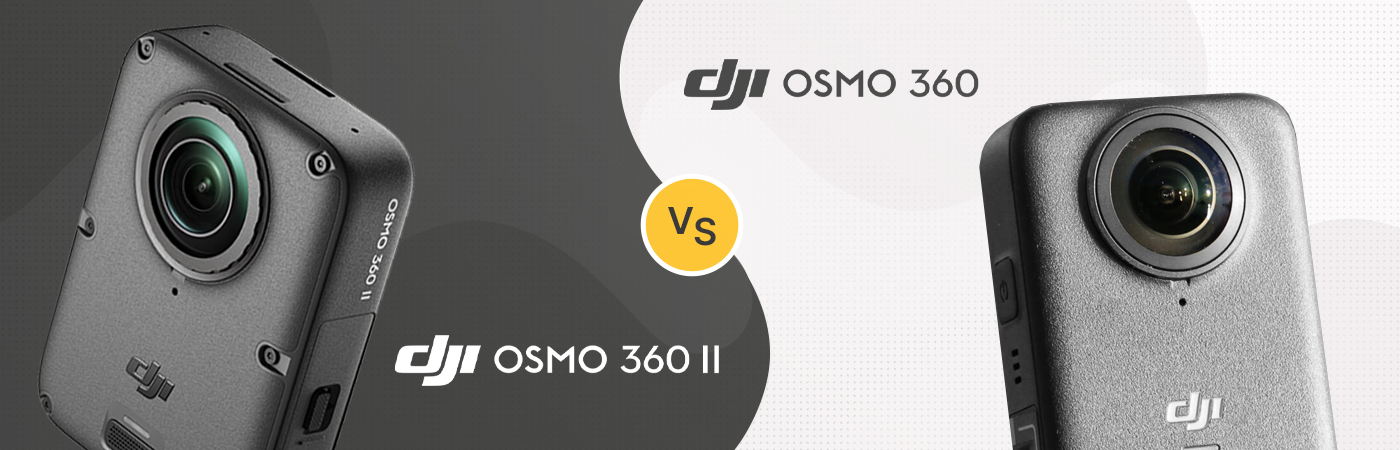
The biggest difference is in the recording capabilities.DJI The Osmo 360 captures panoramas at a maximum resolution of 8K/50 FPS, In contrast, the newly released Osmo 360 II DJI increases the smoothness to 8K/60 FPS.
Check it out at DJI Osmo 360 II
The new model also offers a wider dynamic range— 14.5 EV instead of 13.5 EV. In practice, this means greater detail in scenes that contain both very bright and very dark areas at the same time.
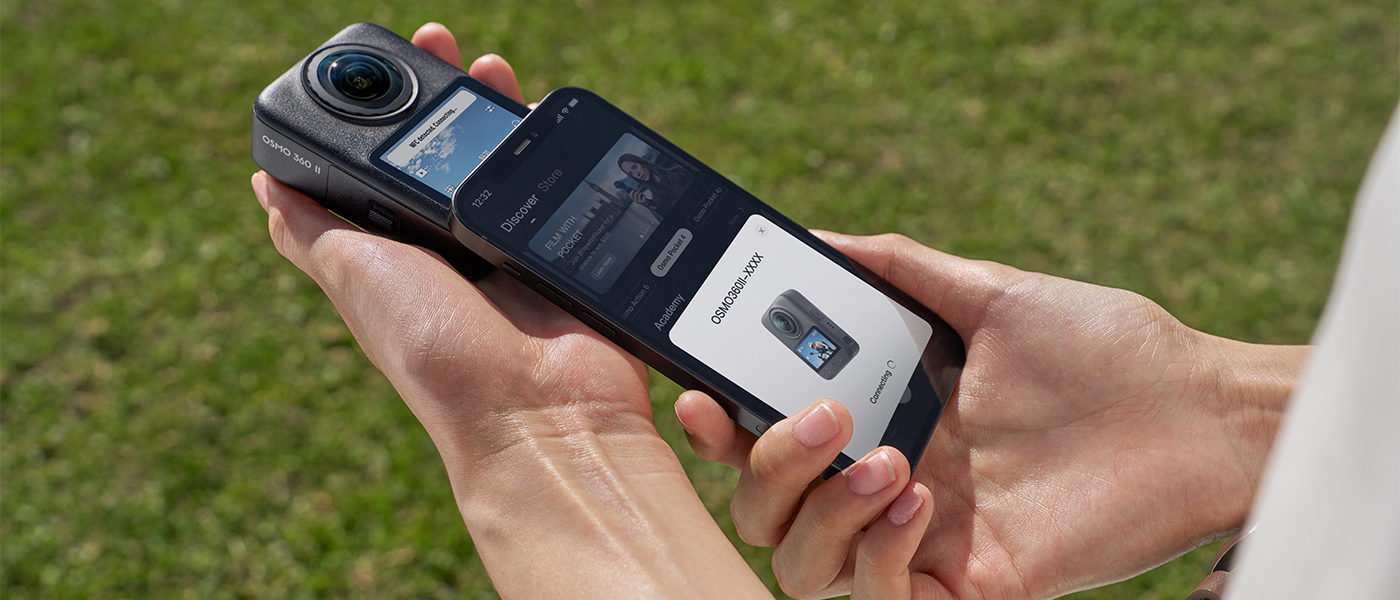
Another major change is AI SuperNight 2.0, which supports recording in low-light conditions.DJI It also expands on work with existing material. Spotlight Follow automatically tracks the selected subject, and NFC Quick Connect makes it easy to connect the camera to your smartphone.
In addition, there are interchangeable lenses with enhanced scratch resistance. In a 360° camera, where the lenses protrude significantly beyond the housing, this is a real advantage when recording while on the move.
Construction of the Osmo 360 II DJI
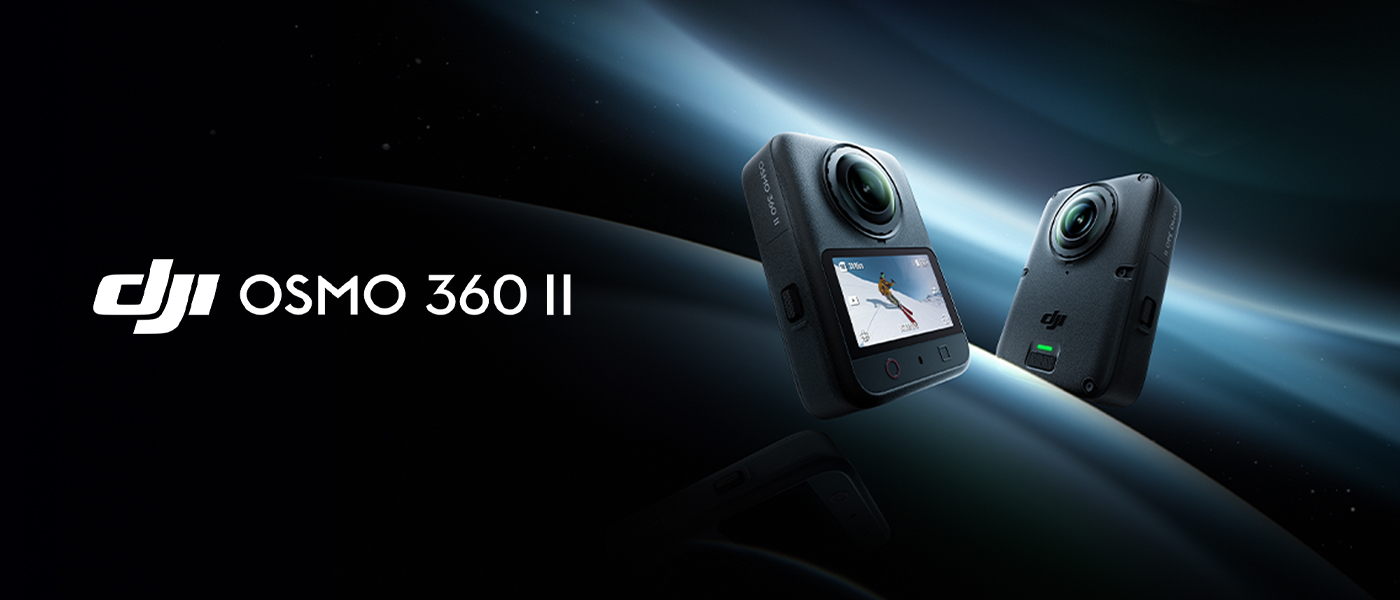
In terms of dimensions, both models are very similar.DJI The Osmo 360 and DJI Osmo 360 II have the following dimensions 61 × 36.3 × 81 mm and weigh 183 g.
Both devices also feature a 2-inch touchscreen with a resolution of 314 × 556 and a brightness of 800 cd/m².
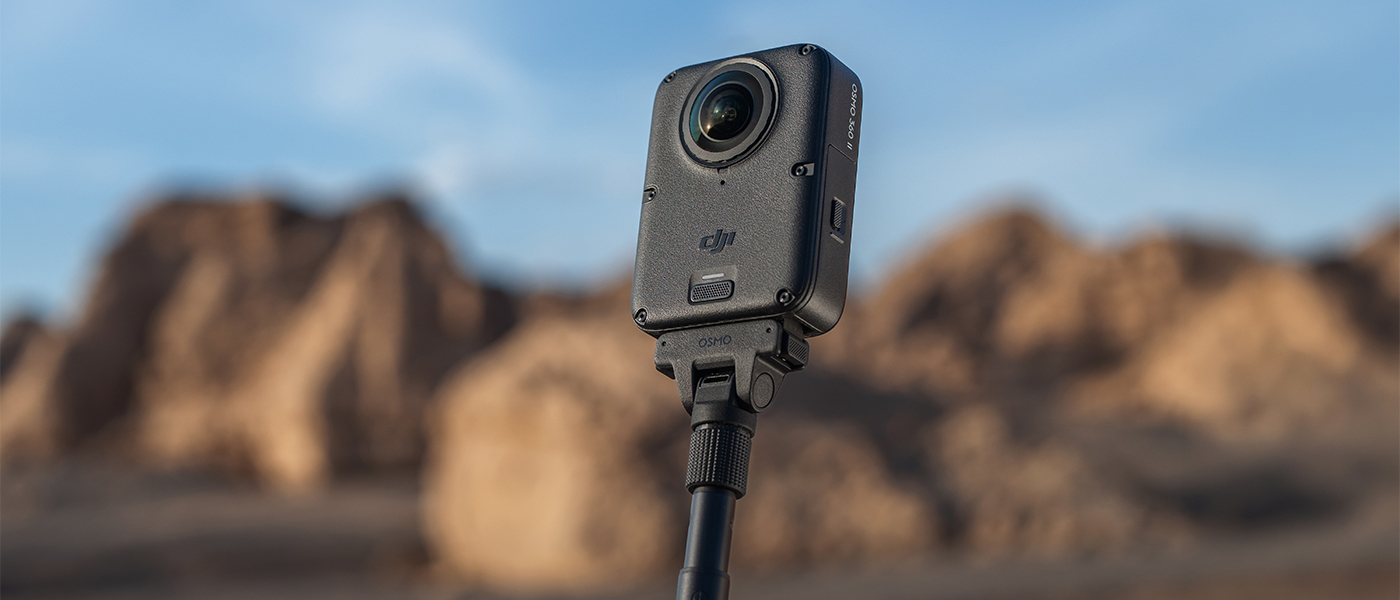
The new generation, on the other hand, features the Osmo Dual-Direction Quick-Release system, which allows you to magnetically attach accessories on both sides of the camera. There's also a standard 1/4" thread".
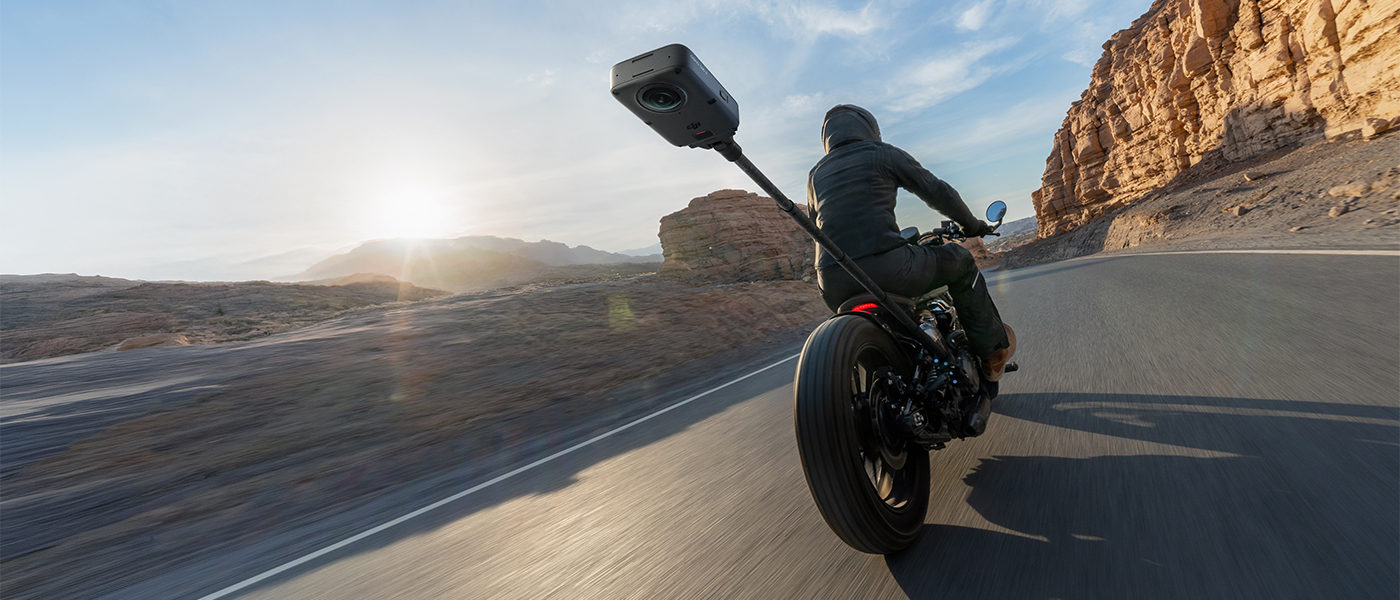
In the case of the Osmo 360 II Limitless Riding Combo ( DJI ), the set also includes the Osmo Heavy-Duty Clamp Mount Kit, in other words, a clamp mount that's useful, among other things, when filming from a motorcycle.
DJI Osmo 360 II – Image Quality
DJI The Osmo 360 II uses two 1/1.1-inch square CMOS sensors and an f/1.9 aperture. According to the data provided, each sensor uses an imaging area equivalent to that of a traditional 1-inch sensor.
The most significant improvements are in image fluidity and dynamics:
- DJI Osmo 360: 8K/50 FPS, 13.5 EV
- DJI Osmo 360 II: 8K/60 FPS, 14.5 EV
This is especially important when filming sports, motorcycle rides, or scenes with significant changes in lighting.
Both models take panoramic photos 120 MP, but the Osmo 360 II also offers 360° HDR photos.
The new generation also expands possibilities after dark.DJI The Osmo 360 uses SuperNight, while the Osmo 360 II features AI SuperNight 2.0 and lets you record SuperNight panoramic footage at up to 8K/60 FPS.
DJI nd Osmo 360 II Modes and Features
The biggest jump is visible in slow motion.
DJI The Osmo 360 records panoramic footage in 4K/100 FPS, a DJI Osmo 360 II increases this value to 4K/240 FPS.
The Vortex mode has also been expanded. The first Osmo 360 offers up to 6K/120 FPS, while the new model allows you to record at up to 8K/120 FPS.
The next change is Timelapse. The Osmo 360 has a maximum resolution of 8K, while the Osmo 360 II DJI increases it to 16K.
Also worth noting is Spotlight Follow. This feature automatically tracks the selected object and lets you convert 360° footage into standard video at up to 4K/30 FPS. This way, you don't have to manually adjust the frame for every part of the recording.
DJI Mimo also offers features such as Highlights, One-Tap Edit, Camera Movement, Intelligent Tracking, and Dual Recording, among others. The new model therefore makes greater use of AI not only during image capture, but also during subsequent editing.
Battery and Memory
DJI The Osmo 360 uses a rechargeable battery 1950 mAh, Meanwhile, the Osmo 360 II comes with a larger Extreme Battery Plus 2150 mAh.
Despite the increased capacity, the advertised recording time for 8K/30 FPS panoramic footage remains similar:
about 100 minutes for both models.
First DJI Osmo 360 It also offers up to 190 minutes of 6K/24 FPS recording.
Both cameras have 128 GB of internal storage, of which 105 GB is available, and support microSD cards up to 1 TB.
The new model increases the maximum bitrate from 170 Mb/s to 220 Mb/s, and with 16K time-lapse, it can reach up to 600 Mb/s.
Specification Comparison – DJI Osmo 360 II vs DJI Osmo 360
| Parameter | DJI Osmo 360 II | DJI Osmo 360 |
|---|---|---|
| 360° Video | 8K/60 FPS | 8K/50 FPS |
| Dynamic range | 14.5 EV | 13.5 EV |
| Panoramic photos | 120 MP HDR | 120 MP |
| Night Mode | AI SuperNight 2.0 | SuperNight |
| 360° Slow Motion | 4K/240 FPS | 4K/100 FPS |
| Vortex | 8K/120 FPS | 6K/120 FPS |
| Time-lapse | up to 16K | up to 8K |
| Spotlight Follow | yes | — |
| Single-Lens | 4K/60 FPS | 5K/60 FPS |
| Boost Video | 4K/120 FPS | 4K/120 FPS |
| Stabilization | RockSteady 3.0, HorizonSteady | RockSteady 3.0, HorizonSteady |
| Available memory | 105 GB | 105 GB |
| Battery | 2,150 mAh | 1,950 mAh |
| Duration: 8K/30 FPS | ok. 100 min | ok. 100 min |
| Weight | 183 g | 183 g |
| Water Resistance | 10 m | 10 m |
| NFC Quick Connect | yes | — |
| Interchangeable lenses | yes | — |
It's worth noting one thing: the new model doesn't come out on top in every single category. The first Osmo 360 DJI offers a 5K/60 FPS Single-Lens mode, while according to the specifications provided at DJI, the Osmo 360 II achieves 4K/60 FPS in this mode..
Is it worth upgrading from DJI Osmo 360 to DJI Osmo 360 II??
DJI The Osmo 360 still has a lot to offer: 8K/50 FPS, 120 MP photos, 10-bit color, SuperNight, 4K/120 FPS in Boost Video, and about 100 minutes of recording at 8K/30 FPS.
So if you already own this model, the mere ability to record in 8K/60 FPS may not be reason enough to upgrade.
DJI The Osmo 360 II makes more sense if you're looking for:
- better 4K/240 FPS slow motion,
- Recording after dark with AI SuperNight 2.0,
- a wider dynamic range,
- Spotlight Follow,
- interchangeable lenses,
- Faster workflow thanks to NFC and AI features.
For someone buying their first 360° camera, the newly released Osmo 360 II DJI simply offers a wider range of features and more room to grow.
Summary
DJI The Osmo 360 II is more than just an Osmo 360 with an additional 10 FPS.
The new model offers 8K/60 FPS, 14.5 EV, AI SuperNight 2.0, 4K/240 FPS, 16K Time-Lapse, Spotlight Follow, and interchangeable lenses. Those who shoot dynamic footage, work in challenging lighting conditions, and want to reduce the time spent on manual framing and editing will notice the biggest difference.
Does the Osmo 360 DJI Still Make Sense?? Yes. Especially if its current capabilities fully match what you're recording.
However, if you're looking for the latest, brand-new 360° camera DJI and if you want to take advantage of the most comprehensive set of features, DJI the Osmo 360 II is a clear step forward.