
Antigravity A1 FAQ - frequently asked questions and answers

1. What level of certification does the Antigravity A1 drone have in Europe?
Antigravity A1 is certified C0 using a standard battery (249 g), which allows you to fly without privileges. With the installation of a higher capacity battery (4345 mAh, drone weight 291 g), the drone moves into the class of C1, which means that the operator must have the appropriate A1/A3 authorization and training in accordance with EU regulations. It is worth remembering that the weight of the drone is crucial for the classification, so always control which battery is used.
2. What is the flight time of Antigravity A1?
Flight time depends on the type of battery and drone mode. With a standard 2360 mAh battery, the Antigravity A1 flies around 22 minutes in laboratory conditions (no wind, temperature 25°C, altitude <50 m, camera in 5.2K/30 fps mode./s without video recording). The high-capacity 4345 mAh battery allows flight up to 35 minutes. Actual time may vary depending on wind, altitude, temperature, flight mode and camera settings.
3. How long does it take to charge Antigravity A1 batteries?
A full charge of a standard battery from 0% to 100% takes about 45 minutes(or 58 minutes in a drone). Three batteries on a multi-port charger charge in about 2 hours and 15 minutes. In contrast, high-capacity batteries require 103 minutes for one and about 3 hours for a set of three pieces. Charging is done at 5-45°C, and the system will stop charging when 55°C is exceeded.
4. What is the maximum altitude and speed reached by Antigravity A1?
Maximum launch altitude: 4000 m with standard battery, 3000 m with large battery.
Maximum climb/descent speed:
- Sport mode: 8 m/s (28.8 km/h)
- Normal mode: 6 m/s (21.6 km/h)
- Cinematic mode: 3 m/s (10.8 km/h)
Maximum horizontal speed:
- Sport mode: 16 m/s (57.6 km/h)
- Normal mode: 12 m/s (43.2 km/h)
- Cinematic mode: 3 m/s (10.8 km/h)
Tests were conducted in a windless environment, temperature 25°C, altitude <50 m. Maximum wind resistance is 10.7 m/sec.
5. Is Antigravity A1 waterproof?
The drone does not have an IP rating, which means that it is not waterproof. Avoid rain, fog, snow and humid environment to avoid damaging the electronics and modules of the 360° camera. If the device is exposed to moisture, dry it and wait until it is completely dry before using it again.
6. What possibilities are offered by the 360° camera in Antigravity A1?
Thanks to the camera 360° in 8K quality the drone can capture images in all directions simultaneously. This means no need to adjust the frame while in flight, eliminating the risk of lost shots. In post-production, the perspective can be rotated at will, creating dynamic montage transitions and unique shots that are not possible with drones with traditional cameras.
7. Does the Antigravity A1 have image stabilization?
Yes, the drone is equipped with an advanced flowState stabilization system, supported by 6-axis gyroscope. This solution acts as a digital gimbal, compensating for vibrations, sudden changes in direction and wind-induced shocks. As a result, the recordings are smooth, stable and ready for professional editing.
8. In what quality does Antigravity A1 record??
The camera captures video footage in quality 8K 360°, which guarantees a very high level of detail. Even when the image is zoomed in the montage, clarity and sharpness are maintained. This is especially important for commercials, sports productions and field shots, where every detail countsal.
9. Is the Antigravity A1 suitable for recording extreme sports?
Yes, with its lightweight design, dynamic stabilization system and 360° camera, the Antigravity A1 is perfect for action footage. Full sphere registration allows you to capture any movement without the risk of "losing" the subject from the frame. In addition, shock resistance and a sensitive gyroscope allow for recordings even during dynamic maneuvers.
10. Does the Antigravity A1 have an autonomous flight mode?
Yes, the drone is equipped with basic autonomous functions to assist the operator, such as intelligent hovering, position stabilization and altitude control. The system also supports planning a stable flight trajectory for predictable, smooth panoramic shots. Even so, the A1 remains a design whose strength is manual dynamics and creative control over the frame in post-production.
11. Can I use FPV or VR goggles with Antigravity A1?
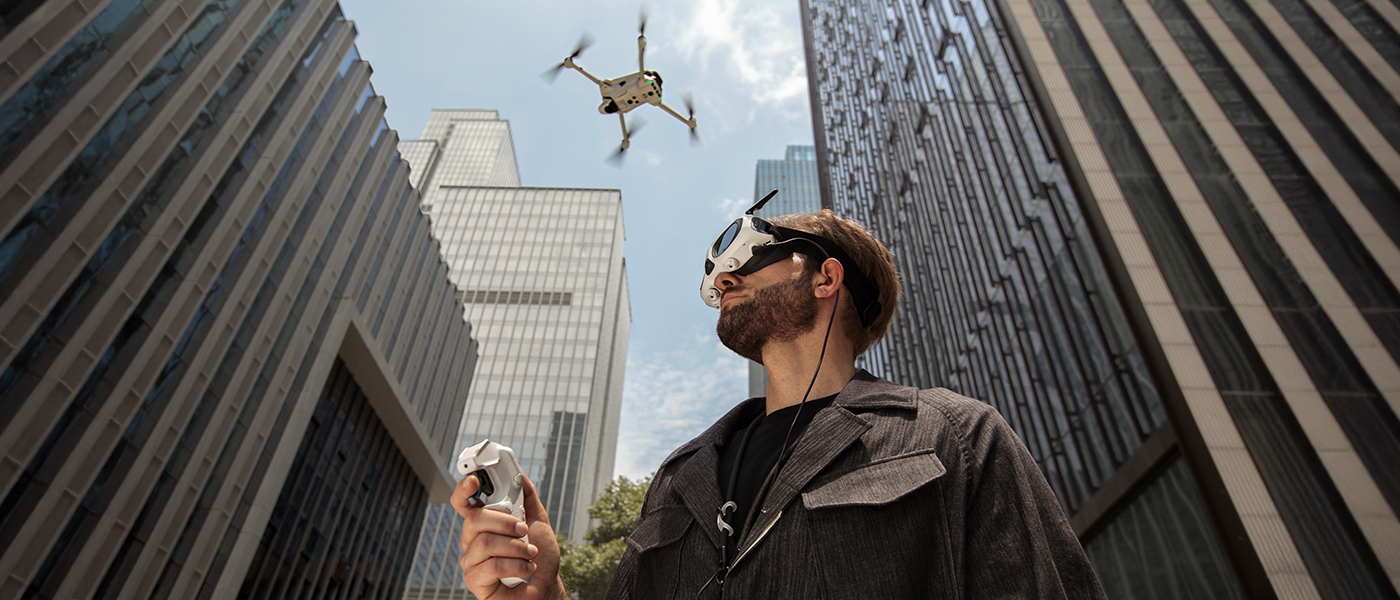
Yes, the drone is fully compatible with goggles Antigravity Vision (FPV/VR), which enable immersive real-time previews. Thanks to 360° transmission, the operator can feel as if he or she is on board the drone, observing the surroundings in full view, greatly enhancing the flight experience compared to classic FPV. It is ideal for both precision control and video recording in a unique perspective.
12. How 360° live camera viewing works?
Live View works in fixed angle FOV mode, which means that the operator chooses the perspective during transmission. However, the full 360° footage is stored in memory, so you can rotate the frame at will after the flight. It's a compromise that allows stable, low-latency video transmission.
13. Is the Antigravity A1 a drone for beginners?
Antigravity A1 is accessible to beginners thanks to its c0 class and intuitive control. Built-in autonomous functions, such as FreeMotion mode, automatic stabilization and intelligent tracking, allow you to make your first flight even without much previous experience. At the same time, the drone offers tremendous capabilities for professionals - a 360° camera in 8K quality and advanced recording and post-production modes allow you to create spectacular video footage, making it a piece of equipment for users of different levels of expertise.
As Megadron specialists we personally recommend Antigravity A1 to people who already have some experience in flying a drone and want to take full advantage of its advanced features. For complete beginner pilots who are just learning the basics of control, cheaper and simpler learning models may be a better choice.
14. What kind of transmission range Antigravity A1 has?
The coverage depends on the working environment, conditions and the region:
- Maximum range: 10 km (FCC), 8 km (SRRC), 6 km (CE), under ideal conditions (no obstructions or interference).
- Transmission operates in 2.4 GHz, 5.1 GHz and 5.8 GHz bands depending on local regulations.
- An anti-gravity solution of 4 2T2R antennas ensures a stable signal, while Wi-Fi and Bluetooth (BT5.0) support additional viewing and control functions.
15. Does the Antigravity A1 have an obstacle avoidance system?
Yes, the Antigravity A1 is equipped with the following intelligent 360° horizontal obstacle detection system, which uses front sensors that analyze the environment according to the drone's direction of movement. The system significantly increases flight safety, especially when maneuvering in tight spaces, although the operator should still exercise caution in difficult terrain. In addition, the drone has a smart landing gear that automatically retracts on takeoff and landing, protecting the lenses from damage, and the modular design allows easy replacement of lenses. This allows you to fully focus on creative 360° footage without worrying about basic collisions.
16. What the process of editing 360° footage looks like?
Recordings can be edited in the dedicated Antigravity Studio software, which automatically combines footage from the two lenses. The program includes tools for reframing, stabilizing and exporting in multiple formats. This makes it easy for even those with no VR experience to create professional shots.
17. Can you extract individual frames from 8K video?
Yes, thanks to the high resolution, it is possible to export sharp photos without any visible loss of quality. The detail of the footage makes it possible to create thumbnails, product shots or documentary shots. This is great for creatives who want to capture dynamic moments without having to take separate photographs.
18. How much memory do I need for 8K 360° footage?
8K 360° recordings require fast memory cards with high capacity - preferably 128 GB or more. A minute of footage can take up much more space than in classic 4K video due to the wide image sphere and high bitrate. That's why it's a good idea to get cards with speeds that allow continuous recording.
19. Can Antigravity A1 fly on windy days?
Yes, thanks to FlowState stabilization, the drone handles moderate winds well. The image correction system effectively compensates for vibrations, and the flight software maintains a stable position. However, in stronger gusts, caution should be exercised according to the manufacturer's recommendations. Antigravity A1 maintains stability in winds up to 10.7 m/s, allowing for recordings in more difficult weather conditions.
20. Does the Antigravity A1 camera have a night mode?
The drone does not have a dedicated night mode, but the high sensitivity of the 360° sensors allows it to capture shots in low-light conditions. Exposure and noise reduction can be further improved in post-production. However, the best results are obtained in twilight or at dusk.
21. Is the drone compatible with Android and iOS smartphones?
Yes, the Antigravity app is available for both systems and offers full support for the device. User can control camera settings, flight parameters and live view. Integration with 360° is fully optimized.
22. Can Antigravity A1 be used commercially?
Yes, the drone is perfect for event videos, commercials, sports and promotional materials. 360° camera in 8K quality gives huge creative advantage over classic drones. When using a high-capacity battery, the operator must have the appropriate C1 credentials.
23. What accessories support Antigravity A1 flights?
- Antigravity Vision Goggles: immersive 360° viewing, up to 2 hours of operation on 4500 mAh battery.
- Antigravity Grip: handheld remote control with drone parameter control, range up to 10 m in GFSK mode.
- Charging hub and high-speed GaN 65W chargers: allow you to charge several batteries simultaneously and reduce downtime.
24. Can Antigravity A1 record videos for Social Media?
Yes, Cinematic and FlowState modes allow you to record cinema-quality video that can be directly framed vertically or panoramically.